
2026 Irish Prices
Backup Generator Installation in Ireland: Costs, Sizing and What to Expect
Real 2026 installation costs by county, how to size a generator for your home, automatic vs manual transfer switches, and planning requirements.
Find a registered electricianHome Backup Generators in Ireland 2026
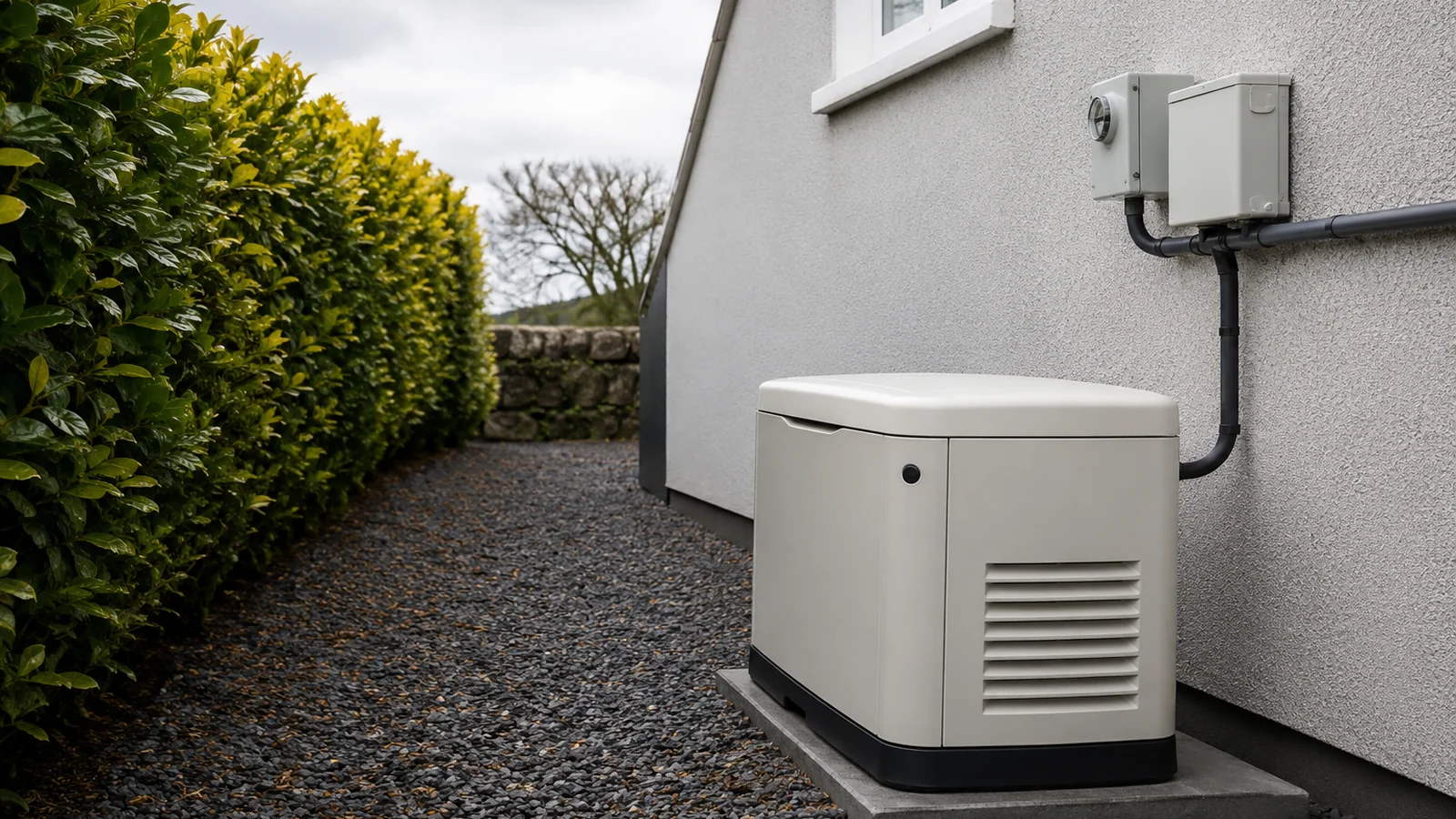
Power outage duration in Ireland is increasing, particularly in rural and Atlantic-facing counties. Storm Eowyn in early 2025 left over 750,000 homes without power, with some households in Donegal, Mayo and Clare offline for four days or more. For homes with medical equipment, farm operations, or home offices, a standby generator is no longer a luxury purchase.
A permanently installed standby generator must be connected to your home wiring via a transfer switch installed by a RECI-registered electrical contractor. This guide covers the full installation cost, sizing, fuel types, and what the job involves.
Backup Generator Installation Cost in Ireland 2026
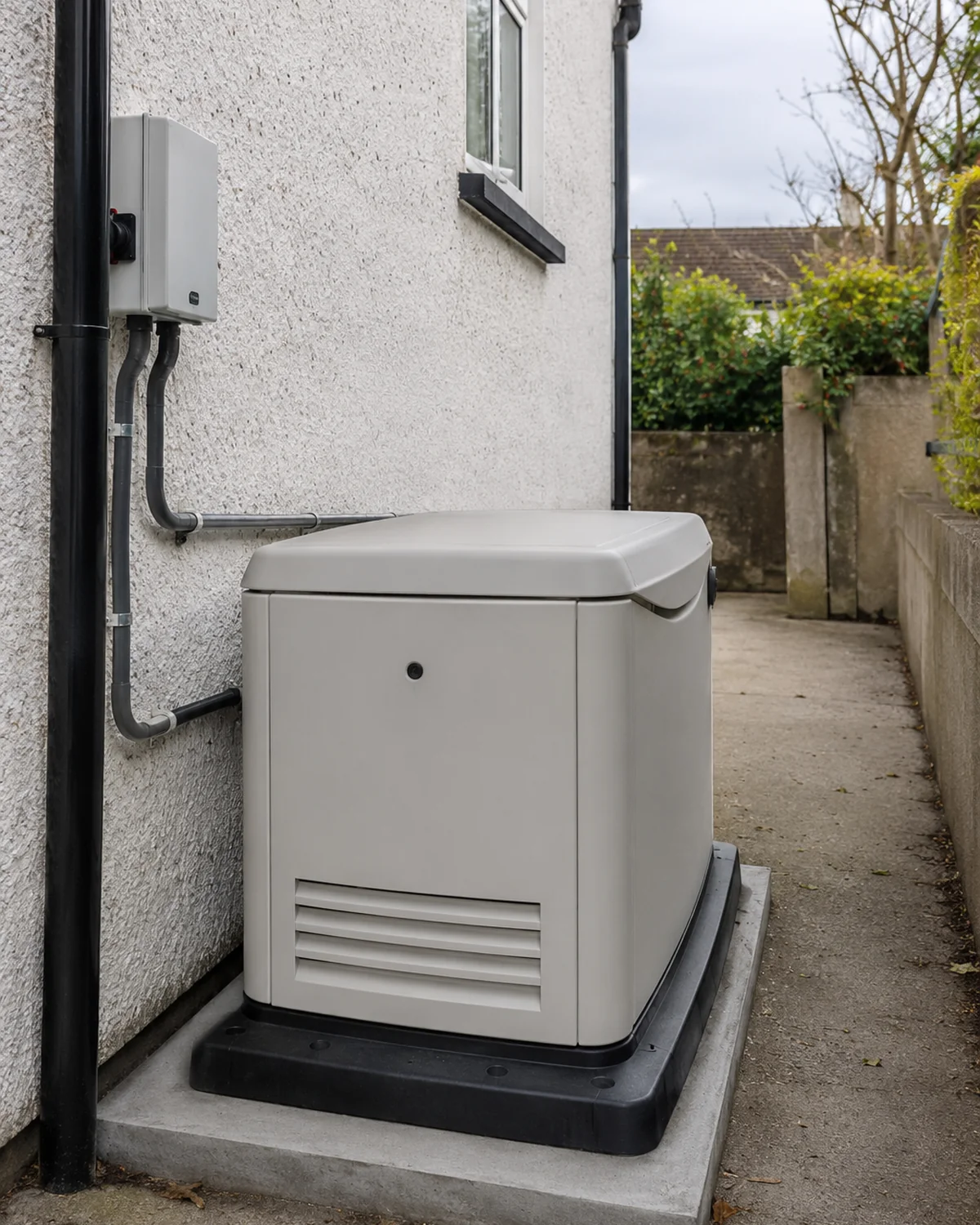
Prices include the generator unit and full electrical installation: transfer switch, cabling, earthing, and commissioning. Rural properties with long cable runs may see higher costs.
An automatic transfer switch (ATS) adds €400 to €800 to the installation cost compared to a manual changeover switch. For properties where no one may be present during an outage, the ATS is strongly recommended.
Ready to Install Backup Power for Your Home?
Find a RECI-registered electrician in your county who can install your generator, transfer switch, and issue the required completion certificate.
What Affects the Cost of Generator Installation?
Several factors can push the total cost up or down significantly beyond the base unit price.
01Generator size (kW)
A 5kW unit covers essentials: lighting, fridge, one or two sockets. 10kW covers most of a modern home. 15kW to 20kW supports whole-house load including heating pumps and EV charging. Size is the biggest single driver of unit cost.
02Automatic vs manual transfer
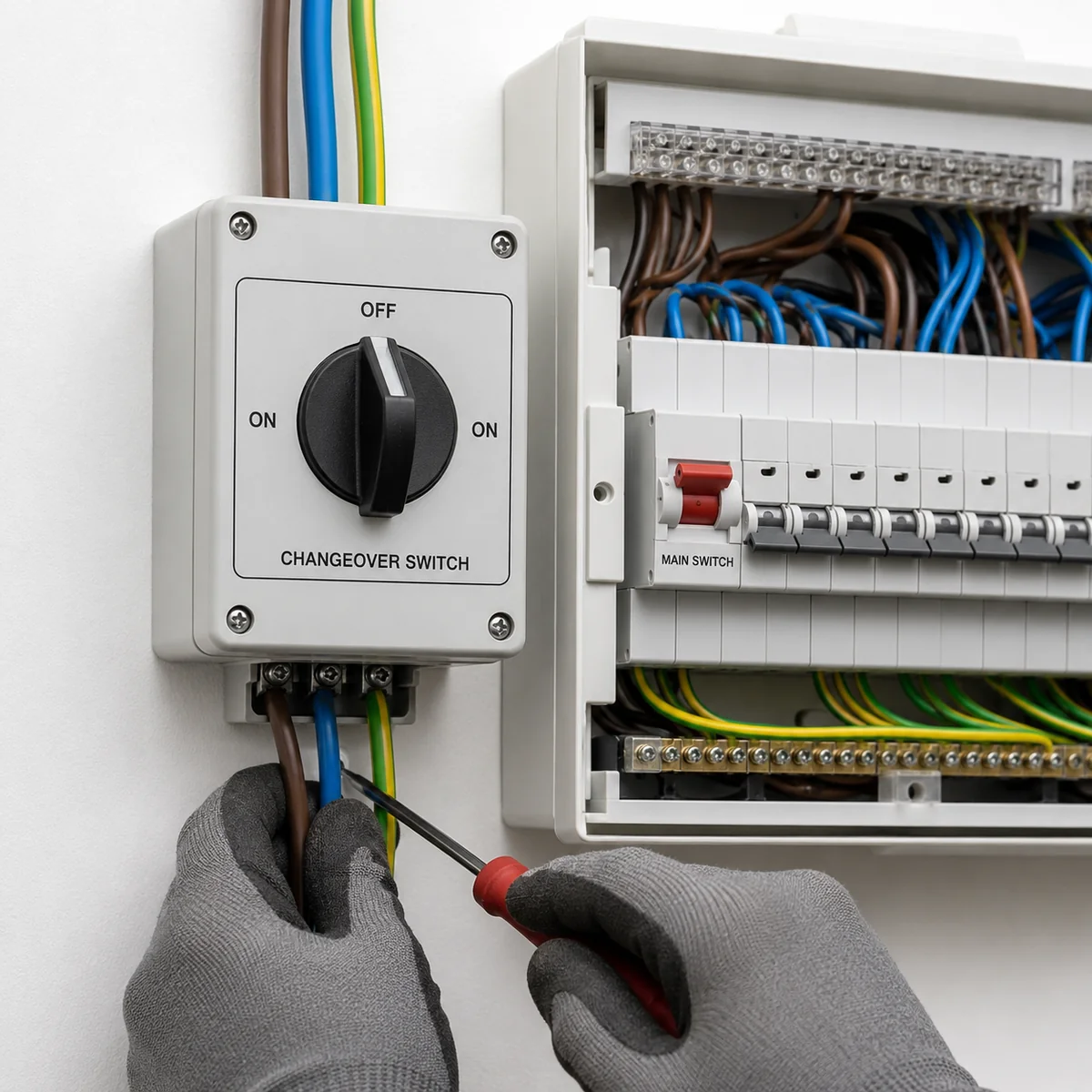
A manual changeover switch requires you to physically switch over when power fails. An automatic transfer switch (ATS) monitors the supply and starts the generator within seconds, without any manual action. ATS adds €400 to €800 but is essential for unattended properties.
03Fuel type
Diesel generators are the most common choice for standby use: good fuel shelf life, widely available. LPG is cleaner and suits properties without diesel storage. Natural gas generators connect to the mains gas supply and cost more but require no fuel storage.
04Distance from consumer unit
The generator is positioned outside or in an outbuilding. Long cable runs between the generator and the consumer unit require heavier cable and more installation time. Allow €100 to €200 per 10 metres of additional run.
05Earthing requirements
Generators require their own earthing arrangement. The type of earthing needed depends on the generator and the existing installation. In some cases a new earth electrode must be installed, adding cost.
06Planning and acoustic enclosure
A permanently sited generator may require planning permission from your local authority, depending on size and location. Noise is also a consideration: acoustic enclosures or anti-vibration mounts add cost but reduce neighbour impact.
What Does Generator Installation Involve?
A straightforward residential installation typically takes one to two days. Here is what happens at each stage.
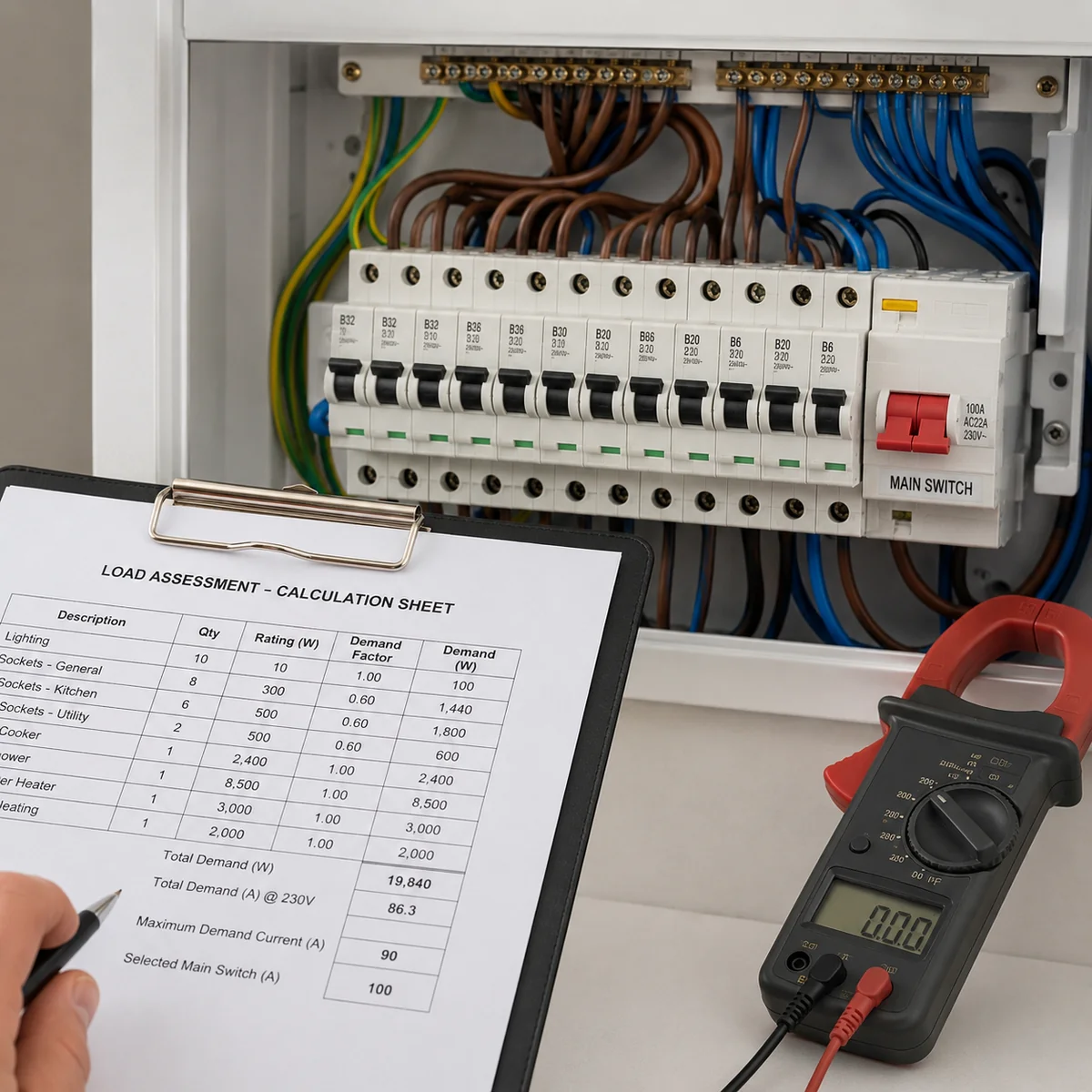
01Load assessment
The electrician calculates the total load of the circuits the generator needs to support. This determines the minimum generator kW rating required and whether essential-circuits-only or whole-home cover is needed.
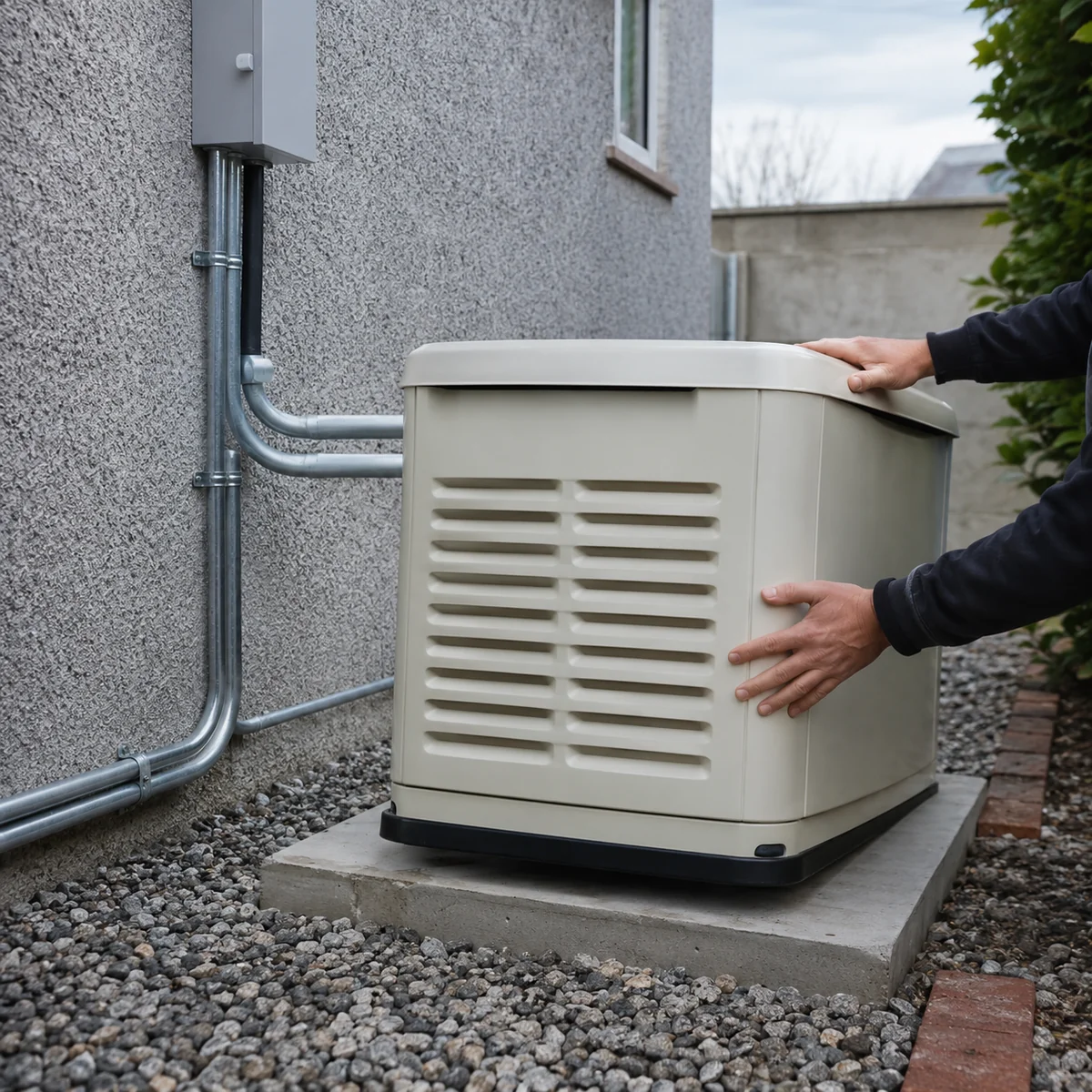
02Generator positioning
The generator is sited for adequate ventilation, safe exhaust routing, access for servicing, noise management, and fuel delivery. Positioning also determines the cable run length to the consumer unit.
03Transfer switch installation
Either a manual changeover switch or an automatic transfer switch (ATS) is wired between the incoming mains supply and the consumer unit. This is the critical safety component that prevents back-feed to the ESB network.
04Generator connection and commissioning
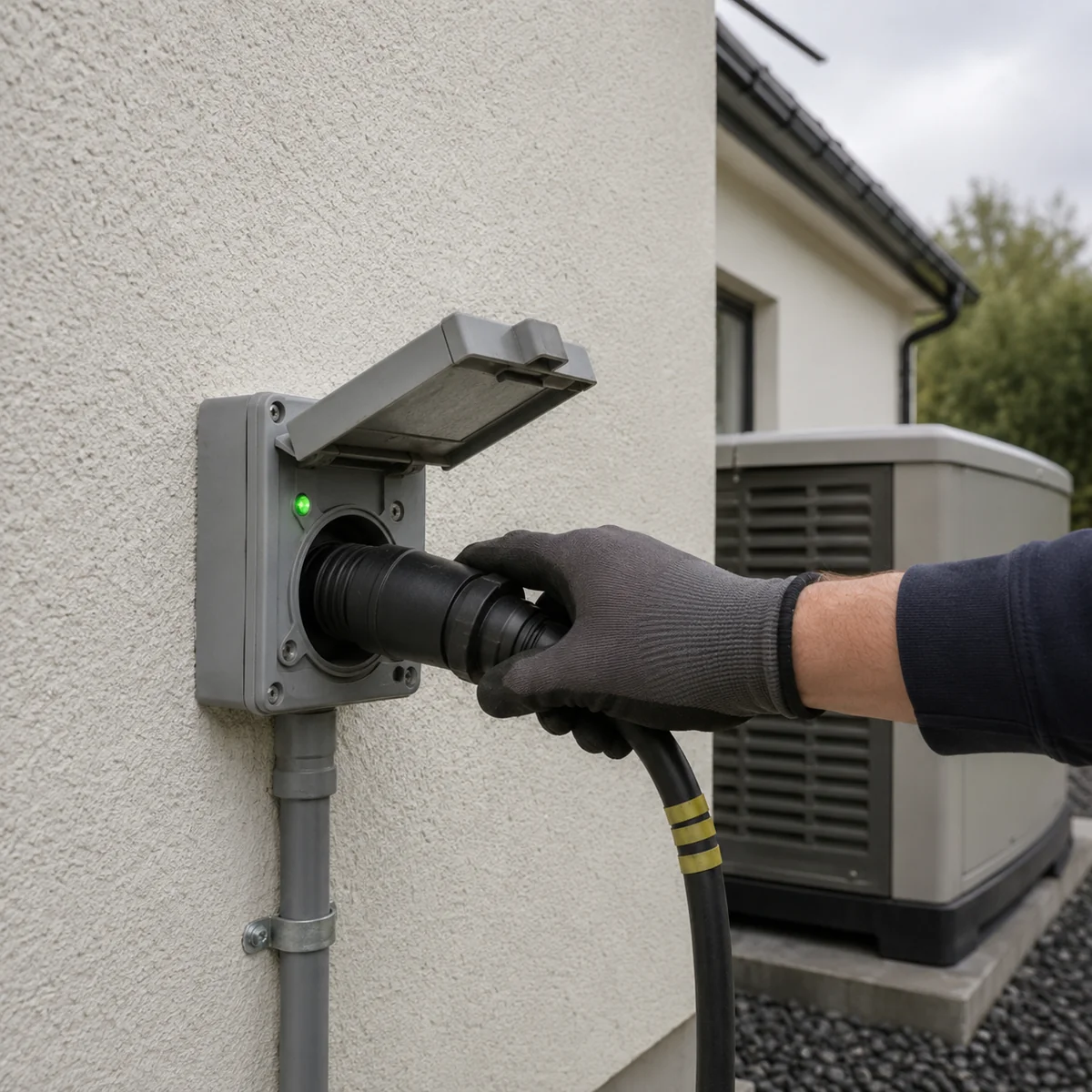
Output cable is run from the generator to the transfer switch. The generator is earthed, connected, and commissioned. Auto-start function and fuel supply are tested.
05Load test and handover
The generator is run under load to confirm rated output, stable voltage, and correct auto-start behaviour. The completion certificate is issued and the homeowner is walked through operation and maintenance requirements.
Which Fuel Type Is Right for Your Generator?
Fuel choice affects running cost, storage requirements, and suitability for standby use. Here is how the main options compare for Irish homeowners.
Diesel
Best shelf life for standby fuel. Widely available. Efficient at load. The default choice for residential standby generators in Ireland. Requires an outdoor diesel tank.
LPG
No on-site liquid fuel storage. Connects to an LPG tank already used for heating. Lower emissions than diesel. Slightly higher running cost per kWh.
Natural gas
Connects directly to the mains gas supply. No refuelling required. Only suitable for properties with a mains gas connection. Higher unit cost but no fuel management.
Petrol
Common in portable units but not suitable for permanently installed standby generators. Poor fuel shelf life and less efficient under continuous load than diesel.
Does a Standby Generator Need Planning Permission?
A portable generator requires no planning permission. A permanently sited standby generator may be considered exempted development under SI 600 of 2001 (as amended), provided it meets size, height, and boundary distance criteria.
Commercial or farm installations, properties in sensitive locations, or generators with acoustic enclosures above a certain volume should check with their local authority before installation. Your electrical contractor can advise on the likely planning position for your specific site.
Who Can Legally Install a Backup Generator in Ireland?
Connecting a generator to your fixed house wiring via a transfer switch is notifiable electrical work. It must be carried out by a RECI-registered electrical contractor who can issue the required completion certificate.
An unregistered installation cannot be certified and may invalidate your home insurance. Verify registration at safeelectric.ie before any work begins. The generator unit itself can be supplied by any reputable supplier, but the electrical connection must be done by a registered contractor.
Backup Generator Installation: Common Questions
What size generator do I need for my home in Ireland?
A 5kW generator covers essentials: lighting, fridge, a few sockets, and a gas boiler pump. A 10kW unit handles most modern homes comfortably. A 15kW to 20kW generator supports whole-house load including electric showers, heat pumps, and EV chargers. Your installer will carry out a load assessment to confirm the right size for your property.
Do I need planning permission for a home generator in Ireland?
Permanently sited generators may qualify as exempted development under planning regulations, depending on size, location, and proximity to site boundaries. Portable generators used outdoors do not require planning. Check with your local authority if the installation is large, adjacent to a boundary, or in a sensitive location.
What is an automatic transfer switch?
An automatic transfer switch (ATS) monitors the mains supply and, when it detects a power failure, automatically disconnects the home from the ESB network and starts the generator. The whole process typically takes 10 to 30 seconds. You do not need to be present for it to work. When mains power is restored, the ATS switches back and shuts down the generator.
Can I connect a portable generator to my house wiring?
Not without a proper transfer switch. Connecting a portable generator directly to a socket using a back-feed cable (a so-called suicide cable) is illegal, extremely dangerous, and can electrocute ESB engineers working on the line. If you want to use a portable generator with your house circuits, a registered electrician must install a manual transfer switch first.
How often should a standby generator be serviced?
Most manufacturers recommend a service every 12 months or after every 200 hours of run time, whichever comes first. A monthly test run of 20 to 30 minutes under load is also recommended to keep the engine in good condition and identify fuel or battery issues before they matter during an outage.
What fuel type is best for a home standby generator in Ireland?
Diesel is the most common choice for Irish residential standby generators. It has excellent shelf life (12 to 24 months with a fuel stabiliser), is widely available, and diesel engines are efficient under the continuous load a standby application demands. LPG is a good alternative for properties already using LPG for heating. Natural gas is the most convenient if you have a mains gas connection.
Find a registered generator installer in your county
Every contractor on Safe Electric is RECI-registered, can install your transfer switch, and will issue the completion certificate. Verified across all 26 counties.