
OVERVIEW
What Is Aluminium Wiring and Why Does It Matter?
Aluminium wiring was routinely installed in Irish homes built during the 1960s and 1970s. At the time, copper prices were high and aluminium offered a cheaper alternative that met the wiring standards of the day. Estimates suggest that between 10% and 15% of homes built in that period in Ireland still contain at least some aluminium cabling, particularly in ring main circuits and lighting circuits on upper floors.
The material itself is not automatically illegal or immediately dangerous. The problem arises with age: aluminium oxidises at connection points, increasing electrical resistance and generating heat. It also expands and contracts more than copper with changes in temperature, which gradually loosens terminals and sockets. Under IS 10101 (the Irish Wiring Rules), deteriorating aluminium wiring must be either remediated or replaced. If you are selling, letting, or remortgaging a property built in that era, this is something you need to understand before you proceed.
IDENTIFICATION
How to Tell If Your Home Has Aluminium Wiring
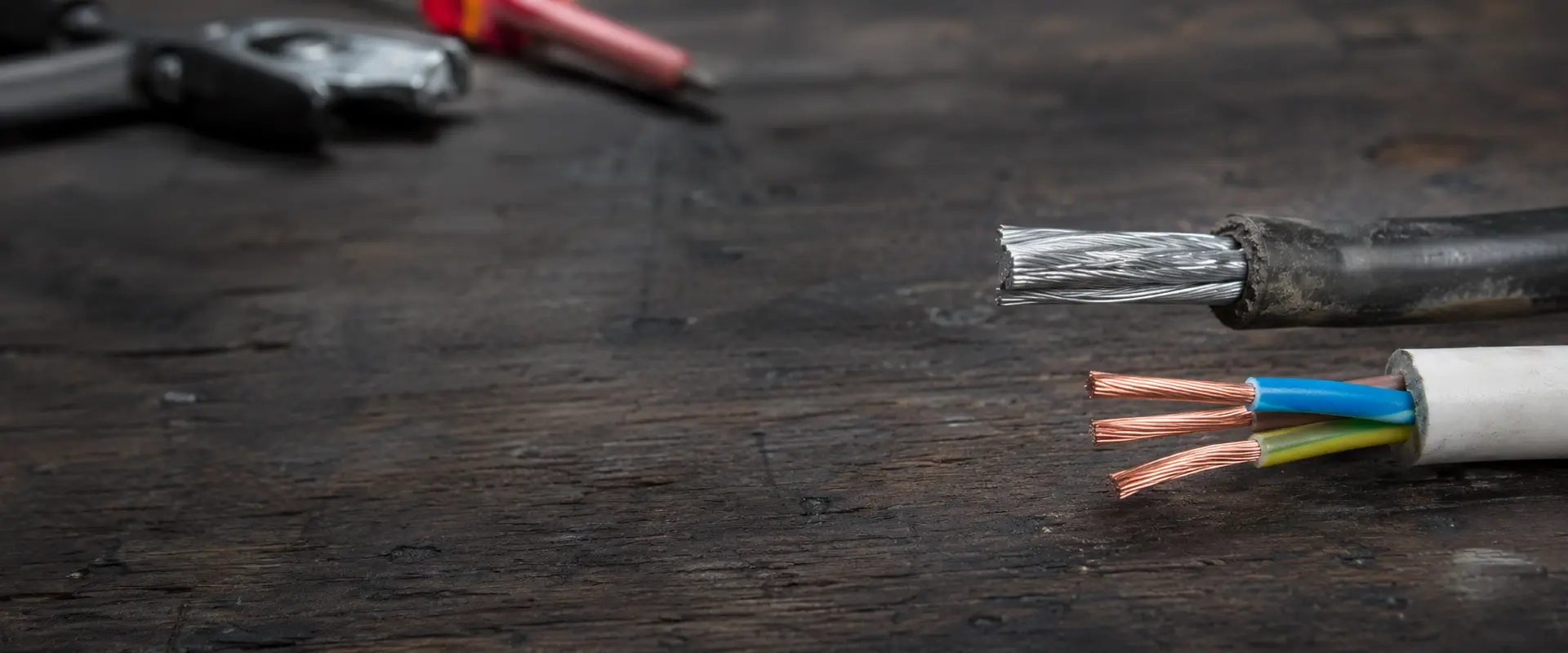
The most immediate indicator is the colour of the cables. Copper wiring has a warm orange or brown tint visible at connection points and at the fuse board in your hall cupboard or utility room. Aluminium wiring is a cooler silver-grey, similar in appearance to the metal itself. If a RECI electrician removes a socket faceplate or opens a junction box, the difference is immediately apparent. You should never attempt to open electrical fittings yourself if you suspect a problem.
Secondary indicators include a property built between roughly 1960 and 1978, flickering lights that are not caused by a failing bulb, warm or discoloured socket faceplates, and a faint burning or warm plastic smell near sockets. Any of these signs in a property of that age warrants an ECIR from a registered electrician listed on the Safe Electric register. Safe Electric is the scheme operated by the CRU (Commission for Regulation of Utilities) to register and regulate electrical contractors in Ireland. Only RECI-registered contractors are authorised to issue an Electrical Condition Inspection Report (ECIR) in Ireland. Do not accept an inspection from an unregistered individual regardless of price.
Visible signs to look for
- Silver-grey cable colour at exposed connections
- Warm or discoloured socket and switch plates
- Flickering lights with no obvious bulb fault
- Faint burning smell near sockets
- Tripping fuses without an obvious load cause
Property profile indicators
- Semi-detached or terraced homes built 1960 to 1978
- Local authority housing from the same era
- No record of rewire in the property history
- Fuse board with original ceramic fuses still in place
- No ECIR on file from the last 5 years
Get an ECIR Before Any Remediation Work
A RECI electrician will assess the extent of degradation and advise on the right option.
COST FACTORS
What Affects the Cost of Dealing With Aluminium Wiring?
The right approach and final price depends on several factors. Understanding them helps you have a more informed conversation with your electrician.
Extent of degradation
If oxidation is confined to a small number of connection points, targeted remediation is possible. If the cabling itself has deteriorated throughout, a full rewire is the safer and more cost-effective long-term solution.
Property size and layout
A three-bed semi-detached will cost noticeably less than a five-bed detached. Solid concrete walls (common in Irish construction) increase labour significantly compared to stud-wall or timber-frame builds.
Location in Ireland
Dublin electricians charge a premium reflecting city labour costs. The lowest rates are generally found in rural west counties such as Mayo, Donegal, and Roscommon. Rates across Leinster and larger towns sit in the middle.
Remediation vs full rewire
Connection-only remediation using bi-metallic connectors and anti-oxidant compound is cheaper but not always appropriate. A full rewire replaces every cable and is the only permanent solution where degradation is widespread.
Redecoration requirement
A full rewire requires chasing cables into walls and reinstating plaster. The electrical work itself is one cost; allow a similar amount again for a plasterer and decorator to restore finished surfaces throughout the house.
Consumer unit upgrade
Homes with original ceramic fuse boards from the 1960s will need the fuse board in the hall cupboard replaced with a modern unit fitted with RCDs and MCBs. This is generally included in rewire quotes but should be confirmed explicitly.
OPTIONS AND PRICING
Your Three Options and What Each Costs
An ECIR assessment from a RECI electrician will clarify which approach is appropriate for your property. The three main routes are set out below with 2026 price ranges for Ireland. Note that these are ballpark figures: always get at least two written quotes from RECI-registered contractors before proceeding.
Connection remediation only
Where the aluminium cabling itself is intact but the connection points have oxidised, a RECI electrician can replace all the connection points with specialist bi-metallic connectors and apply an anti-oxidant compound. This addresses the immediate fire and resistance risk without replacing the full cable runs. It is appropriate only where the ECIR confirms the cable insulation is still in sound condition throughout. The ECIR will need to be re-issued after the work is completed.
Partial rewire of affected circuits
Where degradation is confined to one or two circuits, for example the upstairs ring main or the kitchen circuit, it may be possible to replace only those cable runs with new copper wiring while leaving the rest of the installation in place. This is a middle-ground option that costs more than connection remediation but substantially less than a full house rewire. The retained aluminium circuits must still pass ECIR inspection.
Full house rewire
A full rewire replaces every cable in the property with modern copper wiring, installs a new consumer unit with RCDs and MCBs in the hall cupboard, and results in a clean ECIR that satisfies IS 10101, mortgage lenders, and the RTB (Residential Tenancies Board) rental requirements. It is the most disruptive option, requiring access throughout the house and reinstatement of plaster, but it is the only option that eliminates aluminium wiring entirely and future-proofs the property for decades. Dublin rates are higher; rural west rates are lower.
LEGAL OBLIGATIONS
Selling, Letting, or Remortgaging: What You Need to Know
Rental properties
Landlords are legally required to ensure that electrical installations in rented properties are safe and in good repair. A property with deteriorating aluminium wiring cannot be let without a valid ECIR from a RECI-registered electrician confirming that the installation is either safe in its current condition or has been fully remediated. An ECIR has a validity period and must be renewed. Failure to hold a valid ECIR exposes landlords to enforcement action by the RTB and potential prosecution under the Housing (Standards for Rented Houses) Regulations.
Selling a property
Aluminium wiring is a material fact that should be disclosed to a buyer's solicitor during the conveyancing process. A buyer's surveyor is likely to flag it if they inspect the fuse board or any exposed cabling. In practice, many property sales in Ireland have stalled because a buyer's mortgage lender required evidence of electrical remediation before releasing funds. Addressing the wiring before listing the property avoids delays and the possibility of a buyer renegotiating price after survey.
Mortgage and remortgage
Irish mortgage lenders, including AIB, Bank of Ireland, and Permanent TSB, may require an ECIR as a condition of approving a mortgage on a property built before 1980. Where the ECIR identifies aluminium wiring with signs of deterioration, lenders typically require written evidence of remediation or a full rewire before funds are released. If you are remortgaging a property you already own, this is unlikely to arise unless a valuation survey flags it, but it is worth being aware of if your property is of that era.
Home insurance
Some Irish home insurance providers treat undisclosed aluminium wiring as a material non-disclosure. In the event of a fire caused by an electrical fault, a policy could be voided if the insurer establishes that the policyholder was aware of deteriorating aluminium wiring and failed to disclose it. Check your policy wording and, if in doubt, contact your broker before obtaining an ECIR.
FAQ
Common Questions About Aluminium Wiring in Ireland
Is aluminium wiring illegal in Ireland?
No. Aluminium wiring is not automatically illegal under IS 10101 (the Irish Wiring Rules). The standard requires that any deteriorating or non-compliant wiring be remediated or replaced, but aluminium wiring that is intact, correctly terminated with appropriate connectors, and confirmed safe by a RECI-registered electrician is not prohibited. The problem is that aluminium wiring installed in the 1960s and 1970s is now 50 to 60 years old and is very frequently in a deteriorated condition when inspected. An ECIR will determine whether the specific installation in your property is compliant or requires action.
Can I just leave the aluminium wiring if it seems to be working fine?
Working normally from a user's perspective is not the same as being safe. Increased resistance at oxidised connections generates heat that may not be obvious until it causes insulation damage or, in a worst case, ignites nearby materials inside a wall cavity. The absence of visible symptoms does not mean the installation is compliant under IS 10101. If your home was built in that era and has never been rewired, the prudent step is to commission an ECIR from a RECI electrician. The inspection itself is not expensive, typically €150 to €300, and gives you an accurate picture of what, if anything, needs to be done.
What is an ECIR and why is it needed first?
An ECIR (Electrical Condition Inspection Report) is a formal assessment of a property's electrical installation carried out by a RECI-registered electrician and issued under the Safe Electric scheme, which is administered by the CRU. It documents the condition of all circuits, identifies any defects or non-compliances with IS 10101, and classifies each issue by severity. It is the starting point for any remediation work because it defines the scope: without it, an electrician is working without a baseline and cannot issue the post-remediation ECIR that landlords, mortgage lenders, and solicitors require. Always verify that any electrician you engage appears on the Safe Electric register at safeelectric.ie before work begins.
How long does a full rewire take in a typical Irish home?
For a standard three-bed semi-detached, an experienced RECI crew will typically complete the electrical work itself in three to five days. Properties with solid concrete walls take longer than those with dry-lined or stud partition walls because the chasing work is more labour-intensive. The total project, including plaster reinstatement and redecoration, typically runs two to three weeks. Most families remain in the property during a rewire, moving from room to room as each is completed, although it is disruptive. Your electrician will advise on the likely programme when they provide a quote.
Are there any grants available for rewiring due to aluminium wiring?
There is no dedicated SEAI or government grant specifically for aluminium wiring remediation. However, if a full rewire is being carried out as part of a broader home energy upgrade, some elements of the electrical work may be eligible under SEAI's Better Energy Homes scheme or the One Stop Shop retrofit service, depending on the scope of work. It is worth discussing this with your contractor and checking current SEAI grant categories at seai.ie before work begins. Local authorities in some counties also operate housing aid and essential repairs schemes for older or lower-income households that may cover part of the cost: contact your local authority housing office to check eligibility.
Ready to Get Your Wiring Assessed?
Use our directory to find a RECI-registered electrician in your county. All listed contractors are verified on the Safe Electric register.
Find a registered electricianRELATED GUIDES