
2026 Irish Prices
How Much Does a House Rewire Cost in Ireland?
Full and partial rewire costs by county, what the job involves, and when you actually need one.
Find a registered electricianFull Rewire vs Partial Rewire Ireland
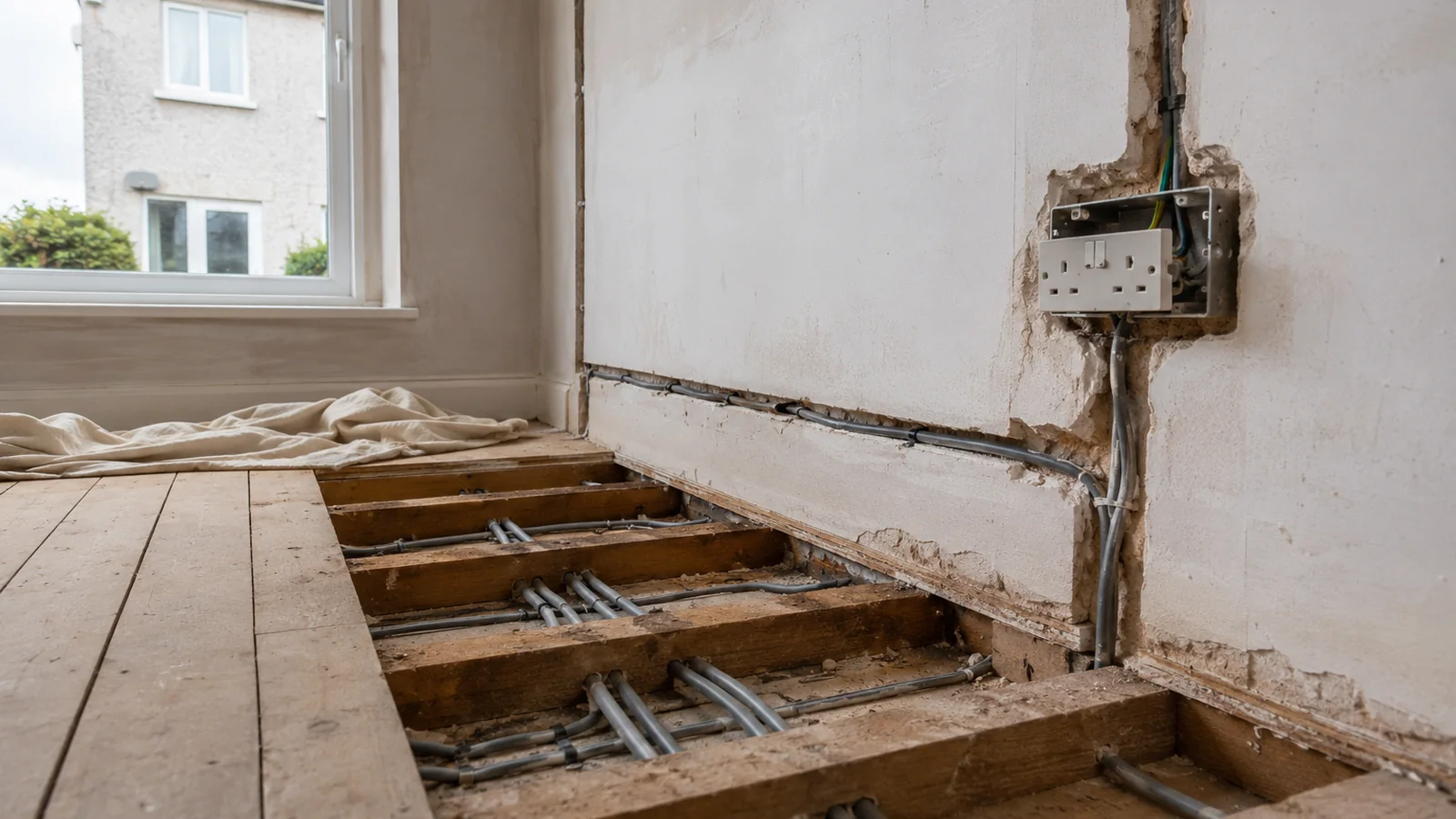
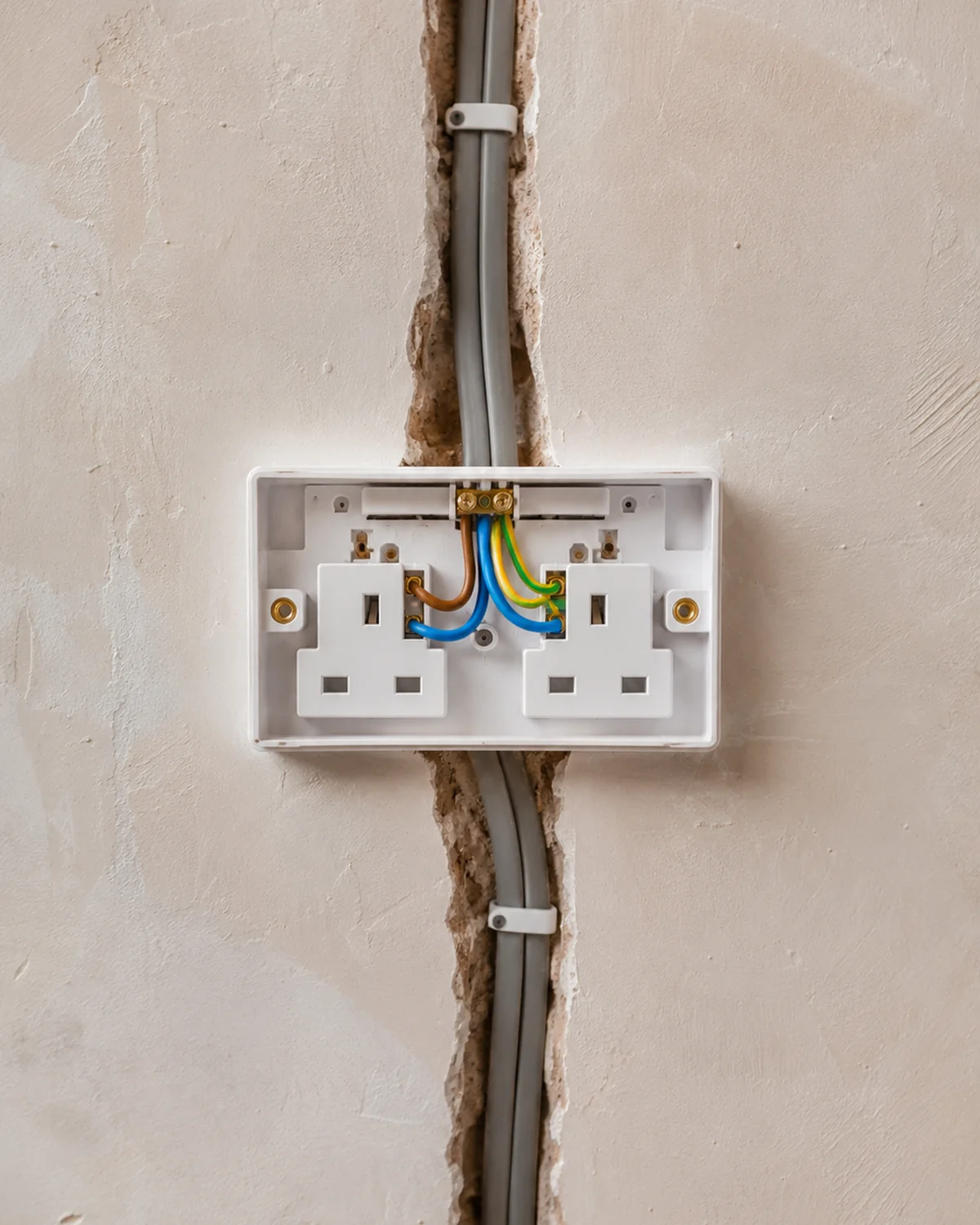
A full rewire replaces all wiring from the consumer unit outward, covering every circuit in the property. This is typically required in pre-1980 homes, properties with aluminium wiring (common in Irish houses built in the 1960s and 70s), or buildings being significantly extended or converted. The work involves chasing cables into walls, lifting floors, and replastering, which is why the job is best carried out in a vacant property.
A partial rewire replaces specific circuits rather than the entire installation. This is common in houses that have been extended, where one area has outdated wiring, or where a periodic inspection (ECIR) has flagged defects on particular circuits. A partial rewire is less disruptive and costs considerably less, but it is only appropriate when the rest of the installation is in good condition.
House Rewire Cost Ireland 2026
Prices below are for a standard 3-bed semi-detached house, vacant during works. Occupied properties cost significantly more due to the need to work around furniture and phase the job to maintain power to the household.
These prices are for vacant properties. If the property is occupied during the works, add 20 to 30 percent for the additional time and phasing required. Prices do not include replastering or redecoration after cable chasing — budget an additional €2,000 to €5,000 for that work.
Ready to Get Your Rewire Done?
Find a RECI-registered electrician in your county. Every contractor listed is verified on the Safe Electric register and can issue a completion certificate for your rewire.
What Affects the Cost of a House Rewire?
A rewire quote can vary by thousands of euro even for similar-sized properties. These are the six factors that move the price most significantly.
01Property size and circuit count
A 3-bed house typically has 8 to 12 circuits. A 5-bed with home office, garage, and outdoor circuits can have 18 or more. Labour and materials scale directly with the number of circuits being replaced.
02Occupied vs vacant
Vacant properties allow the full job to proceed in one pass. Occupied properties require phased working: partial circuits are left live while others are replaced, which can almost double the labour time on site.
03Type of existing wiring
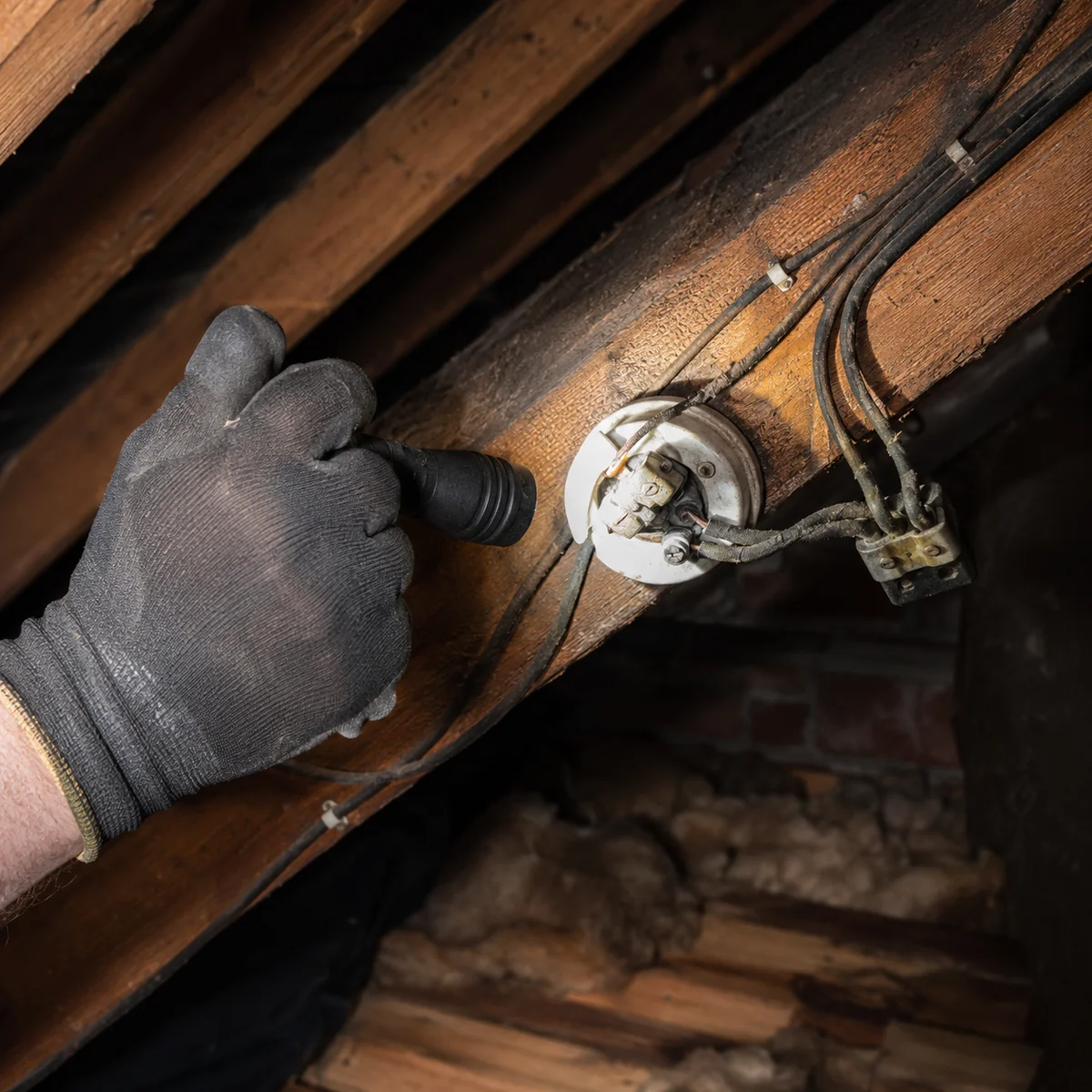
Aluminium wiring, common in Irish homes built in the 1960s and 70s, requires extra care and specialist connectors. Rubber-insulated wiring (pre-PVC) can be brittle and adds time when tracing and removing it safely.
04ESB Networks disconnection
ESB Networks must de-energise the supply before first fix begins. Arranging this takes time and adds a day to the schedule. In rural areas the wait for an ESB Networks appointment can add cost if the crew must return for a second visit.
05Access and construction
Solid concrete floors cost more to lift and reinstate than timber suspended floors. Chasing cables into block walls takes longer than stud partition walls. Properties with tiled floors throughout add reinstatement cost.
06Specification of the new installation
A basic rewire to IS 10101 standard is the minimum. Upgrading to RCBO protection on every circuit (vs shared RCDs), adding smoke alarm circuits, or including EV charger prep work all increase the total.
How Long Does a Rewire Take in Ireland?
Duration depends primarily on property size and whether it is vacant. Here is a realistic guide to planning your schedule.
01Survey and ESB Networks booking
Before work starts, the electrician surveys the property and arranges the ESB Networks disconnection. Allow 1 to 2 weeks lead time for the ESB Networks appointment, particularly in rural counties. The supply must be de-energised before first fix begins.
02First fix: cable installation
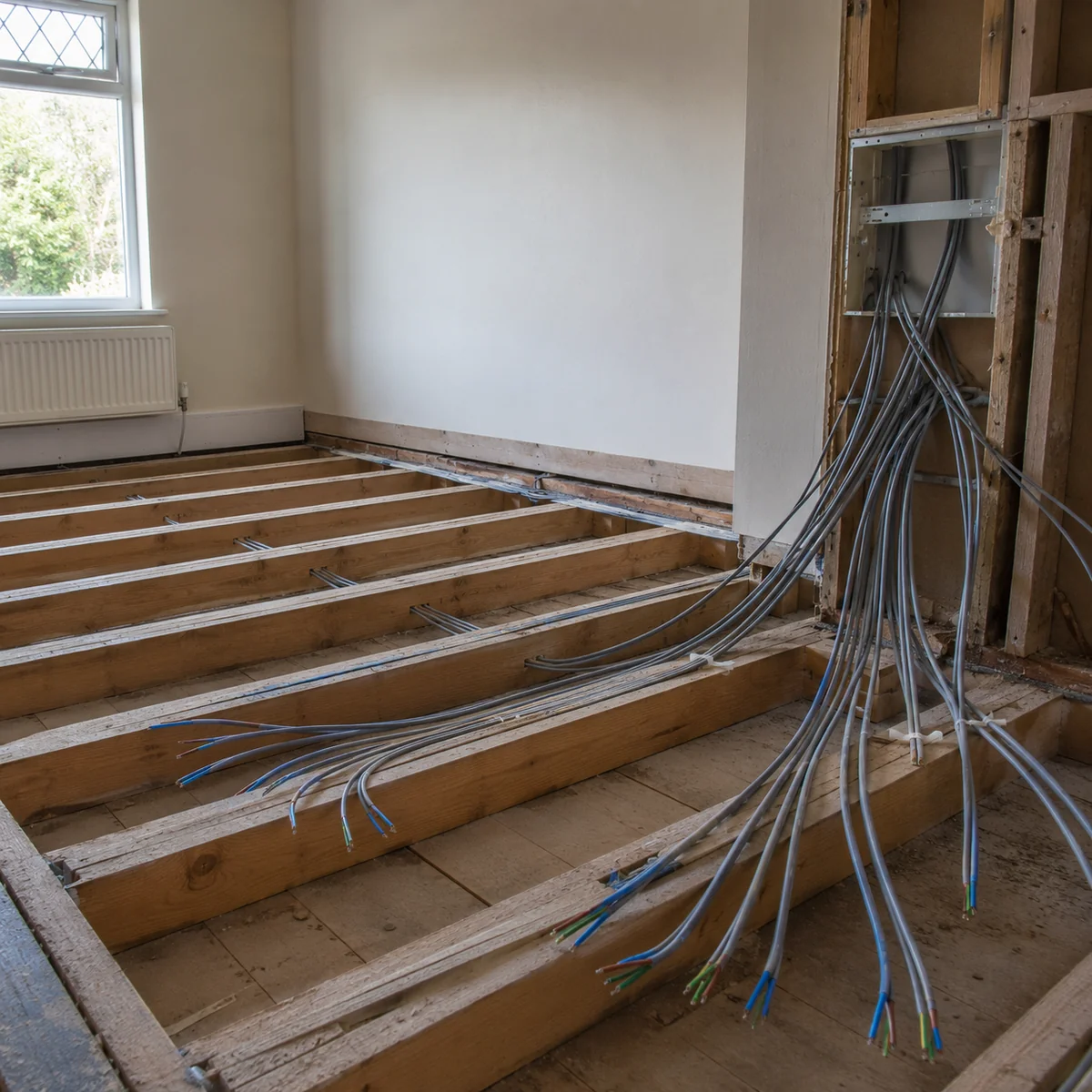
The crew chases out walls, lifts floor coverings, and installs all new cables back to the consumer unit location. This is the most disruptive phase. A 3-bed vacant house typically takes 3 to 4 days for first fix.
03Reinstatement and plastering
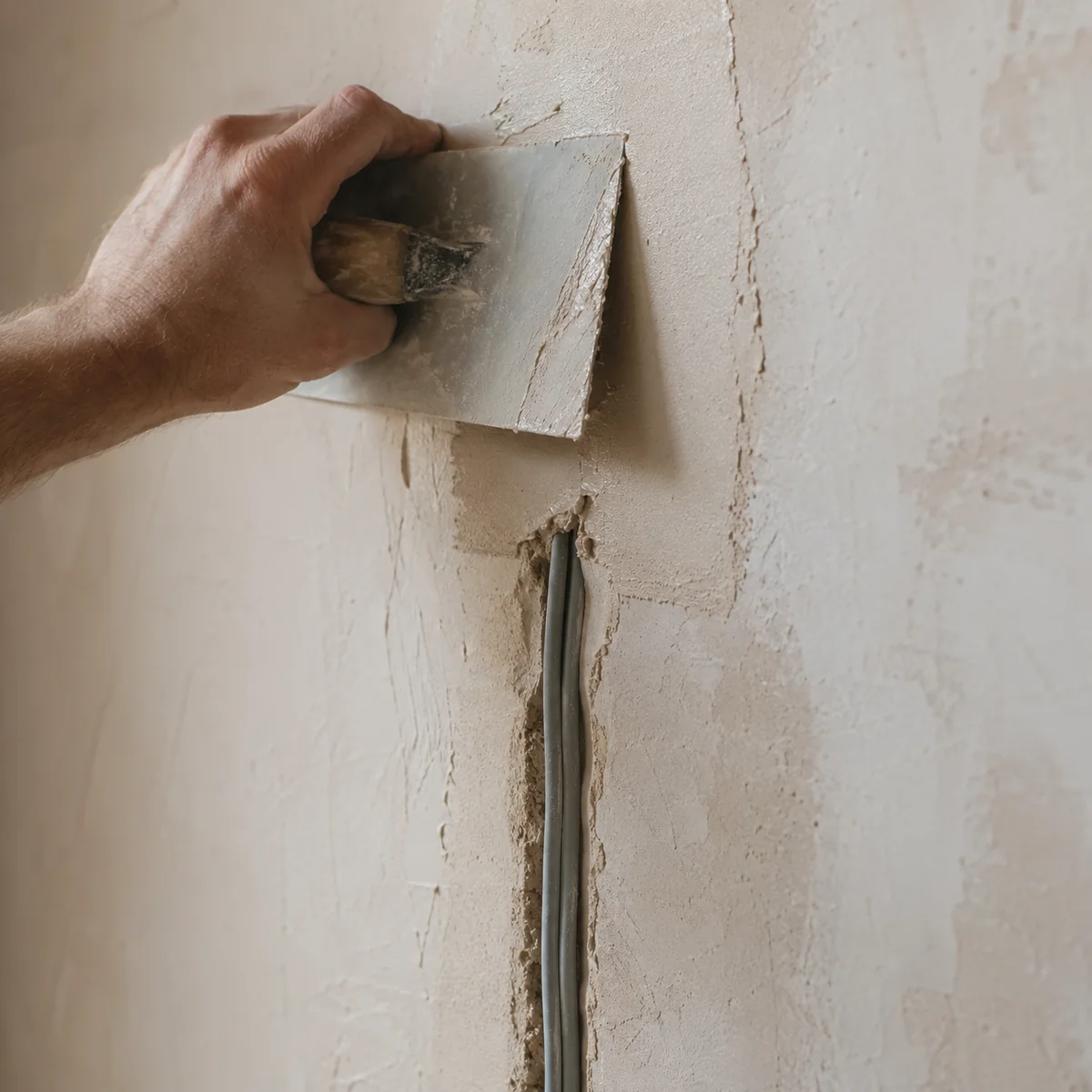
After cables are in, chased channels are filled and skimmed. This work is typically carried out by a plasterer engaged separately. Allow 1 to 2 days for a 3-bed. Painting is a further separate trade.
04Second fix: fittings and consumer unit
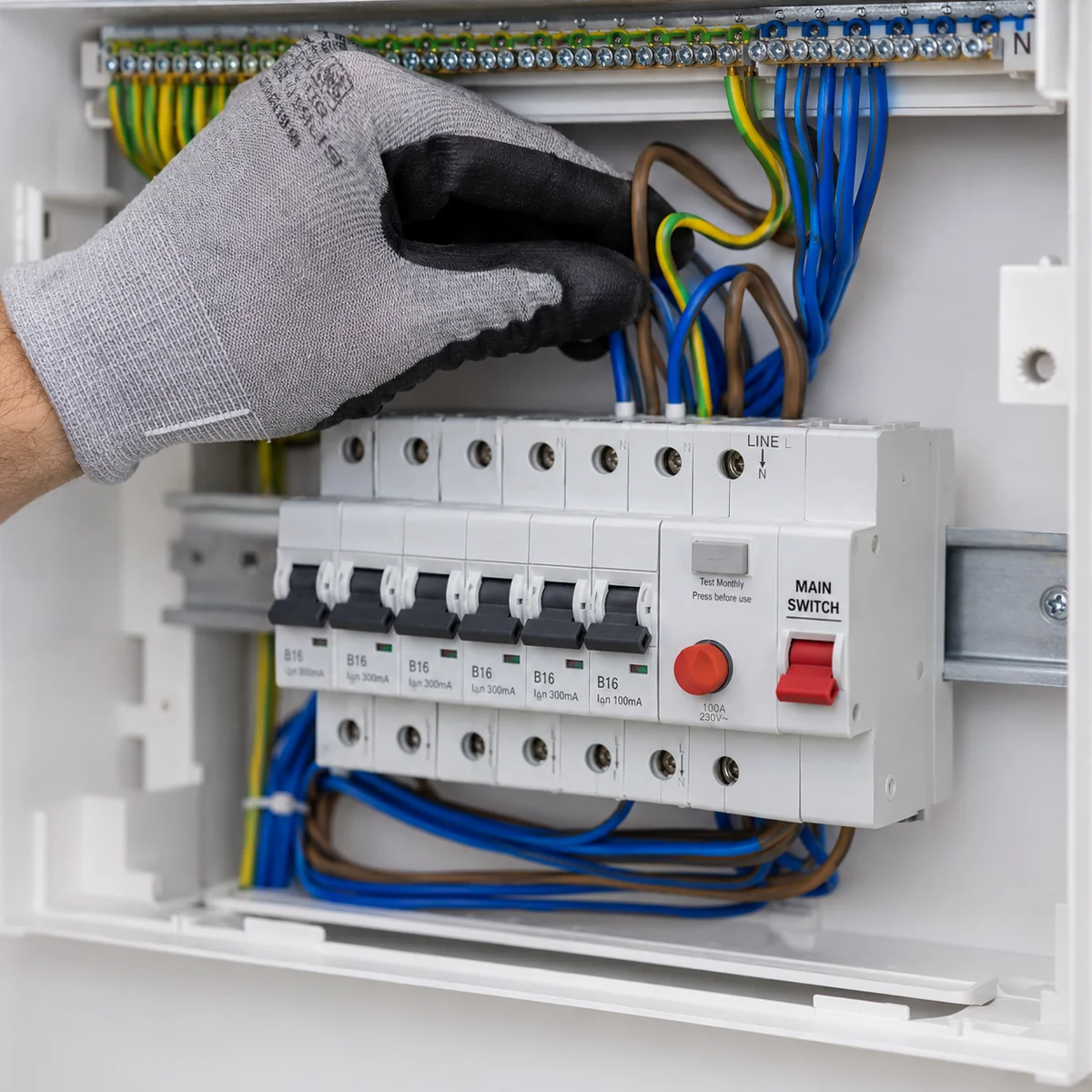
Sockets, switches, light fittings, and the new consumer unit are installed. RCDs and MCBs are wired and labelled. The supply is restored by ESB Networks. Testing and certification follows on the same day.
Full Rewire vs Partial Rewire: What to Watch Out For
Not every property needs a full rewire, but a partial rewire is only appropriate when the rest of the installation is genuinely in good condition. Here is what each option involves in practice.
Full rewire
Pre-1980 homes, aluminium wiring, total renovation projects, properties with no RCD protection, or where an ECIR has returned Category 1 defects across multiple circuits. The only option when wiring is unsafe throughout.
Partial rewire
Properties where specific areas or circuits are faulty but the rest of the installation has been inspected and is sound. Common after an extension, loft conversion, or targeted ECIR finding on one or two circuits.
Consumer unit only
Replacing just the fuseboard upgrades protection devices (MCBs and RCDs) but does not replace the cables. This is valid when cables have been inspected and confirmed in good condition. It does not address wiring defects.
Rewiring a Rental Property in Ireland
Under SI 137 of 2019 (Housing Standards for Rented Houses Regulations), landlords must ensure the electrical installation meets current safety standards. An Electrical Condition Inspection Report (ECIR) is required every five years from a RECI-registered electrician.
If the ECIR returns Category 1 defects, a rewire is almost always required before the property can legally be re-let. Failing to act on a Category 1 finding is a breach of the Housing Standards regulations and can result in a prohibition notice from your local authority.
RECI Rewire Certificate Ireland
On completion, your electrician must issue a completion certificate confirming the work complies with IS 10101 (the Irish Wiring Rules). This certificate is issued through the RECI scheme and is the document you will need to show your home insurer, mortgage lender, or prospective buyer.
Keep the original certificate with your property documents. If you are buying a property, always ask the vendor for the RECI completion certificate for any rewire work carried out. A rewire without a valid certificate should be treated as unverified work. You can verify a contractor at safeelectric.ie.
House Rewire: Common Questions
Do I need to move out during a rewire?
For a full rewire, moving out is strongly recommended. Chasing cables through walls, lifting floors, and working on multiple circuits simultaneously creates significant dust and noise, and parts of the house will be without power for days at a time. Occupied rewires are possible but take 50 to 100 percent longer and cost proportionally more, as the crew must phase the work to keep living areas functional.
Will my home insurance cover rewiring costs?
Standard home insurance does not cover the cost of rewiring as a maintenance or improvement item. However, some policies will cover damage caused by a wiring fault, such as a fire or an escape of water triggered by an electrical fault. If your insurer has flagged outdated wiring as a risk and you have not acted, they may reduce or refuse a claim related to that wiring. Always notify your insurer after a rewire is completed and provide the RECI certificate.
Can a rewire be done in stages?
Yes. A staged or phased rewire is common in occupied properties or where budget is a constraint. The electrician rewires one floor or one set of circuits at a time, restoring power before moving to the next section. This approach takes longer overall and typically costs more in total, but it avoids the need to vacate the property in one go. Discuss the phased option explicitly with your contractor when getting quotes.
What certificate do I get after a rewire?
Your RECI-registered electrician issues a completion certificate on completion of the rewire. This certificate confirms the installation complies with IS 10101 (the current Irish Wiring Rules) and is registered with the RECI scheme. It is the document required by home insurers, mortgage lenders, and the RTB if you are re-letting a rental property. The Safe Electric scheme provides an additional verification layer: the certificate number can be checked at safeelectric.ie.
Does a rewire include replastering?
No. Replastering is a separate trade and is not included in a standard rewire quote. Chasing cables into blockwork walls leaves channels that need filling and skimming before decoration. Make sure to budget for a plasterer separately, or ask your electrician if they can recommend one. In a full rewire of a 3-bed house, allow €1,500 to €3,500 for plastering and €1,000 to €2,000 for redecoration on top of the rewire quote.
How do I know if my house needs rewiring?
The most reliable way is an Electrical Condition Inspection Report (ECIR) from a RECI-registered electrician. Warning signs that a rewire may be needed include: a ceramic fuse box with rewireable fuses, rubber or fabric-insulated cables visible in the attic or under floors, no RCD protection on any circuit, sockets that spark or feel warm, and a build date of pre-1980 with no record of rewiring. If the property was built or last rewired before 1990 and has never had an ECIR, book one before buying or letting.
Find a RECI-registered electrician
Only a registered electrical contractor can carry out a full or partial rewire and issue a valid completion certificate. Find a qualified electrician in your county today.