SEAI grants 2026
Solar PV in Ireland: Roof, Wiring, Battery and SEAI Grants
Everything you need before buying panels: from checking your roof to connecting to the grid, choosing battery storage, and claiming your SEAI grant.
Find a registered electricianHow Solar PV Works in an Irish Home
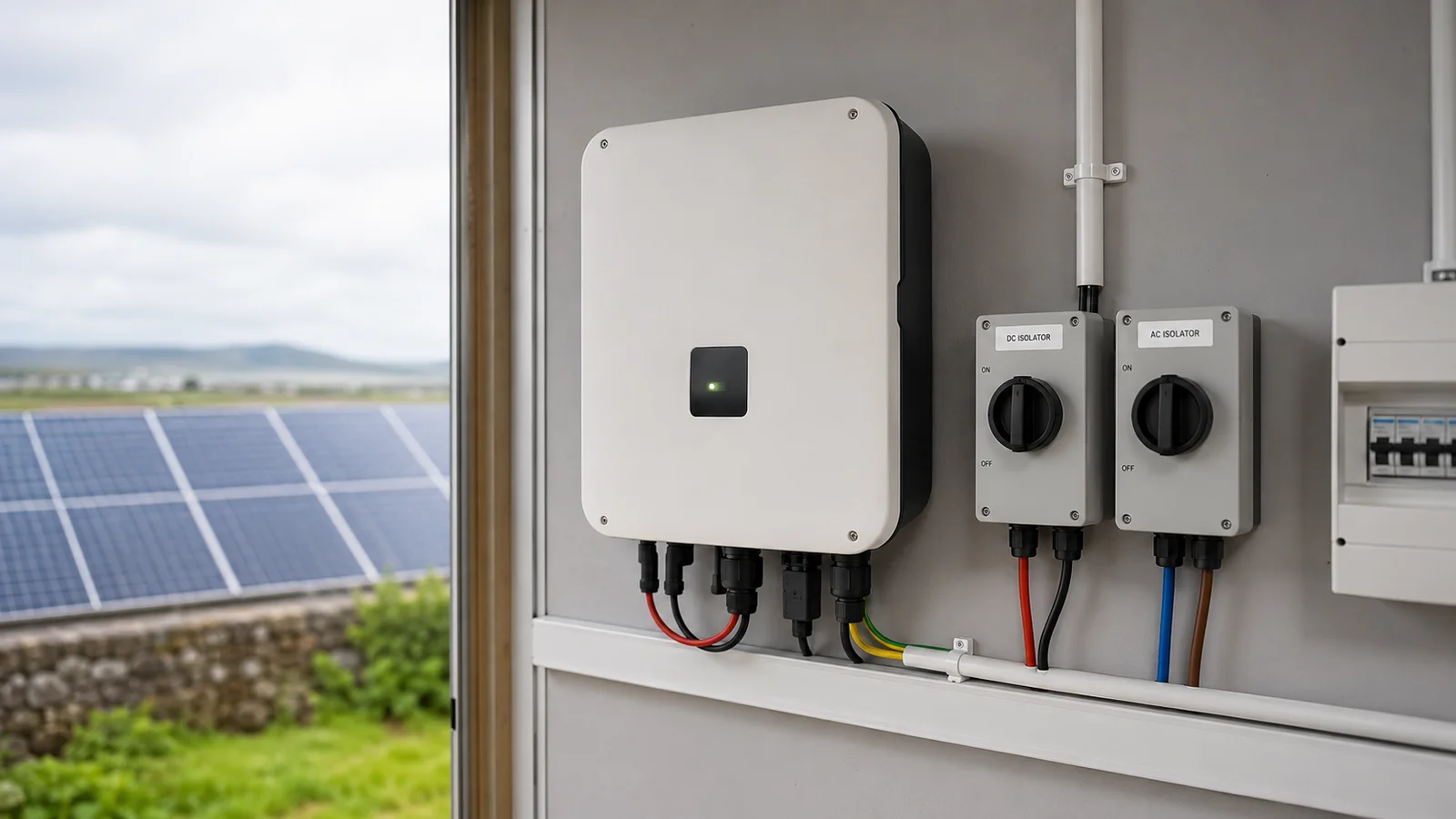
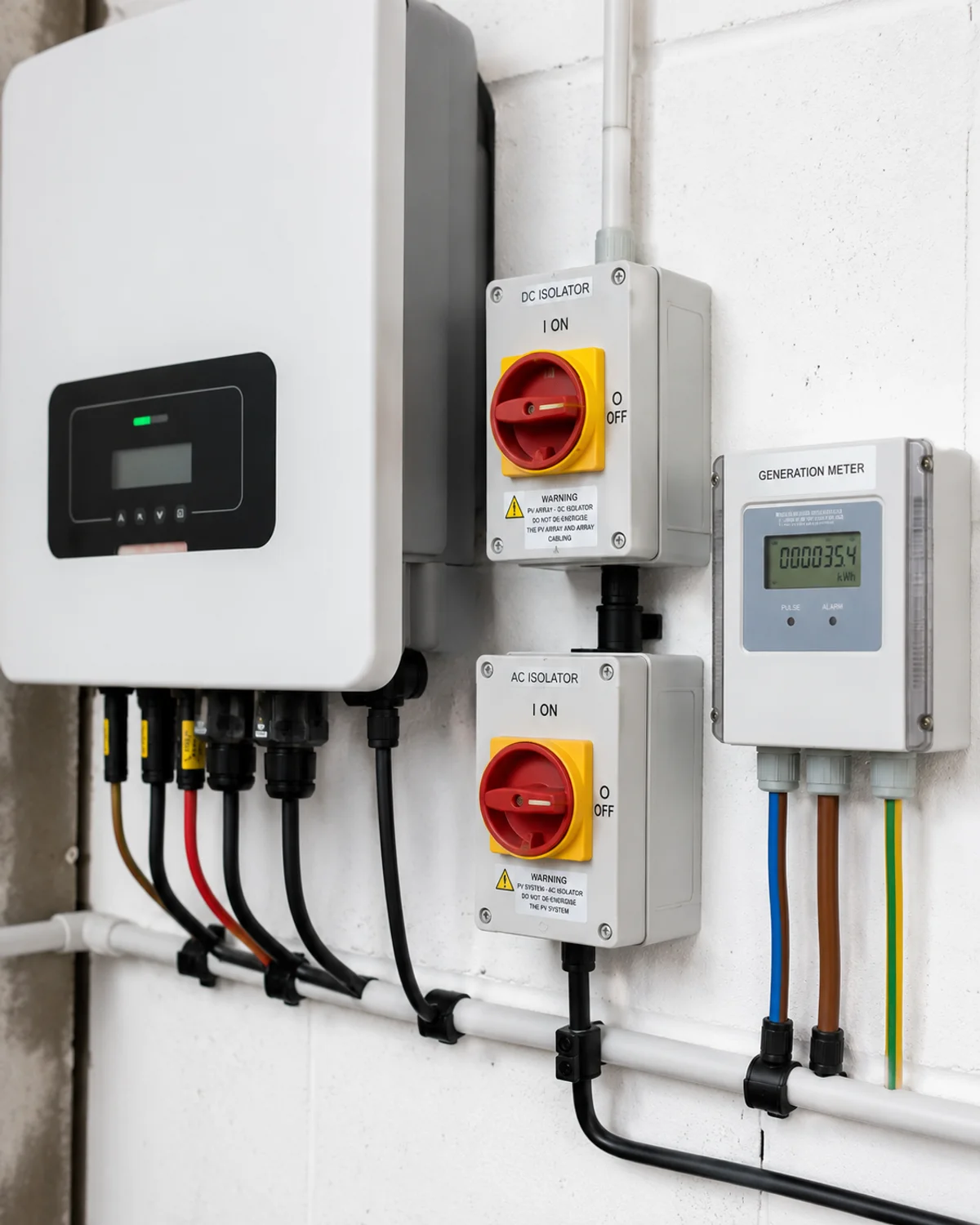
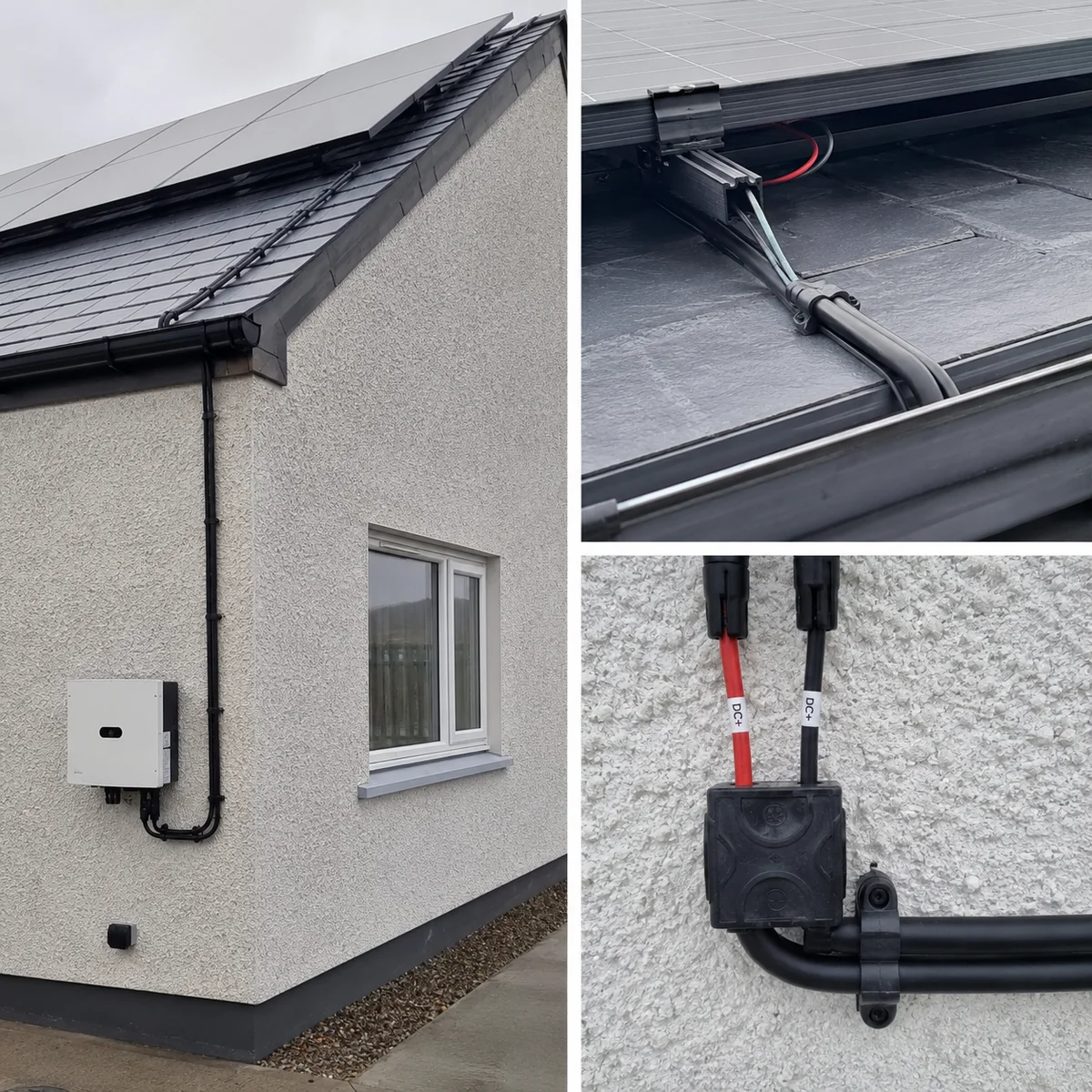
Solar PV in Ireland generates electricity from daylight rather than direct sunshine, so the system produces power on overcast days, which matters given the Irish climate. Photovoltaic panels mounted on your roof convert daylight into direct current (DC) electricity. An inverter, typically fitted in a garage, utility room or hot press cupboard, converts that DC output into alternating current (AC) for use in your home circuits.
A generation meter records the total output of your system, and a smart meter (installed free by ESB Networks) tracks what you import from the grid and what you export back. Surplus electricity is paid for under the Clean Export Guarantee scheme at a rate set by your energy supplier.
A typical 4kWp system on an Irish home generates 3,400 to 4,200 kWh per year depending on location and roof orientation. Without battery storage, roughly 30 to 40% of that generation is self-consumed. Adding battery storage raises self-consumption to 70 to 80%.
Is Your Roof Ready for Solar Panels?
Before a solar PV installer visits, the structural condition of your roof should be checked. Panels are warrantied for 25 years; a roof that needs re-felting or batten replacement within the next ten years will need those works done before or alongside the installation, because removing and refitting panels to access the roof later adds significant cost.
South-facing roofs at a pitch between 30 and 40 degrees produce the highest annual output in Ireland. East-west split arrays, with panels on both sides of a pitched roof, give a broader generation window across the day. North-facing slopes are not viable. Any significant shading from chimneys, dormers, or nearby trees should be assessed before system sizing.
If your roof is nearing the end of its lifespan, address that first. A registered roofer can assess the condition of the felt, battens, and tiles and advise whether the roof is ready for a 25-year panel installation.
- Roof age and condition of felt, battens and tiles
- Pitch between 30 and 40 degrees for best output
- South or east-west orientation preferred
- No significant shading from chimneys or trees
- Structural loading capacity for panel weight
What Electrical Work Does Solar PV Require?
The grid connection for a solar PV system is restricted electrical work under the Electricity Regulation Act. It must be carried out by a RECI-registered electrician, separate from the solar PV installer who mounts the panels. Many SEAI-registered PV companies sub-contract the electrical connection to a RECI-registered contractor; some have an in-house RECI electrician. Either way, confirm the RECI registration before work starts.
After completing the connection, the electrician submits an NC6 notification to Safe Electric Ireland. This is the legal record that restricted electrical work has been completed to the required standard. You should receive a copy with your completion documents.
This is distinct from the solar PV company's own paperwork. For more detail on what qualifies as restricted works, see the restricted electrical works guide.
What a RECI Electrician Does for Solar PV
01Consumer unit assessment
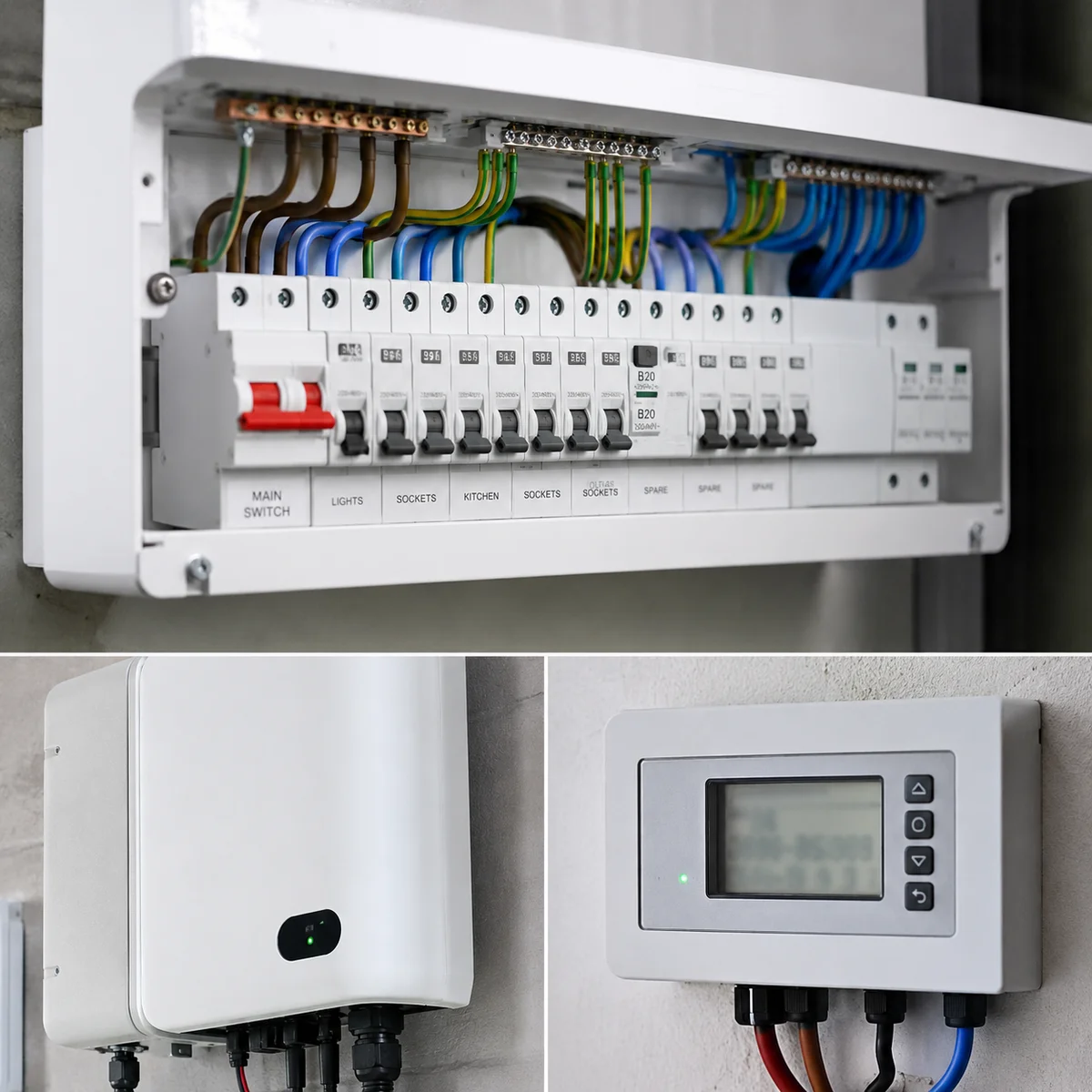
Check whether the existing consumer unit has a spare way for the solar circuit, or needs upgrading to accommodate it.
02AC circuit from the inverter
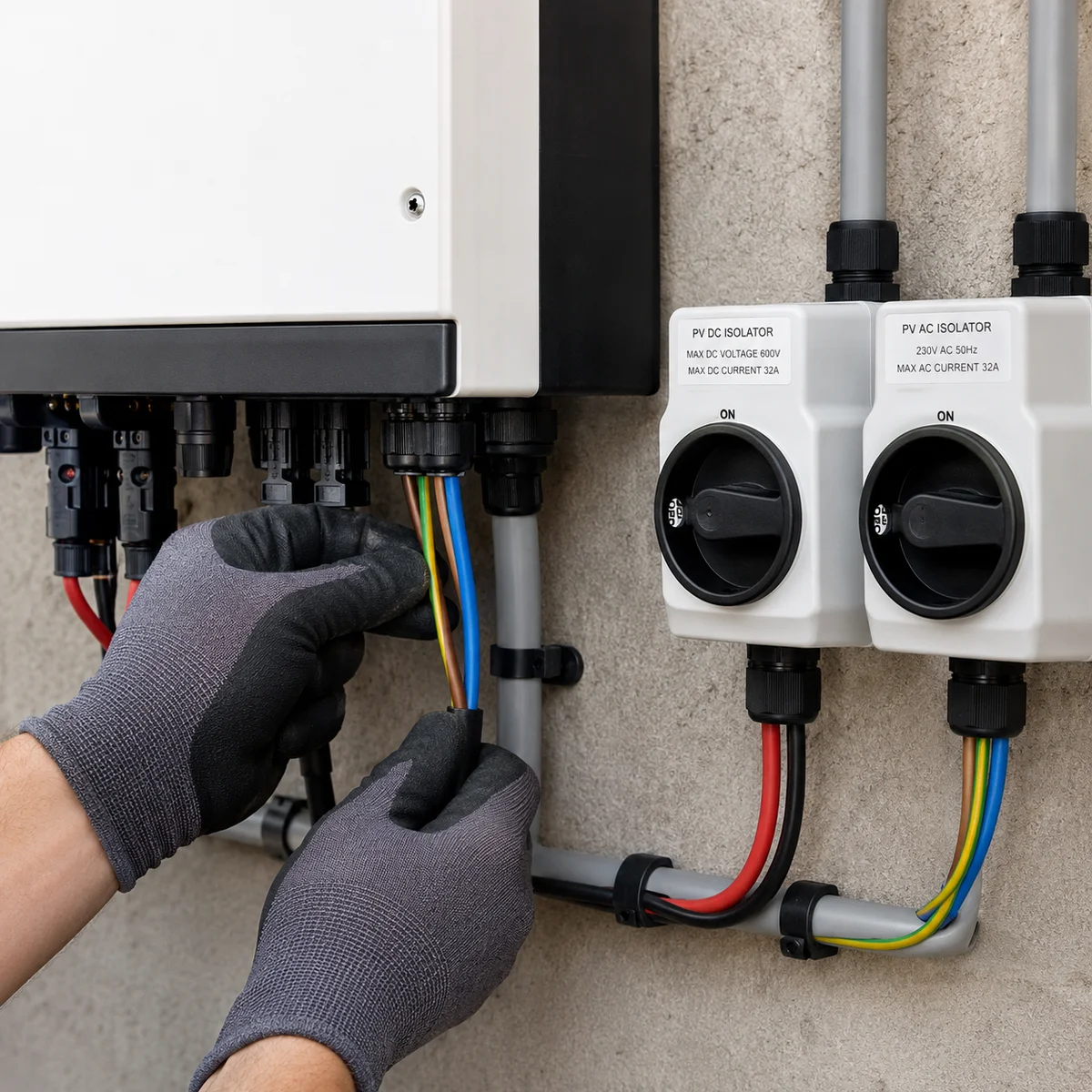
Wire the dedicated circuit from the consumer unit to the inverter with correct MCB and RCD protection per IS 10101.
03Generation meter installation
Fit the generation meter between the inverter and consumer unit to record solar output.
04NC6 notification
Submit the legal notification to Safe Electric Ireland that restricted electrical work has been completed.
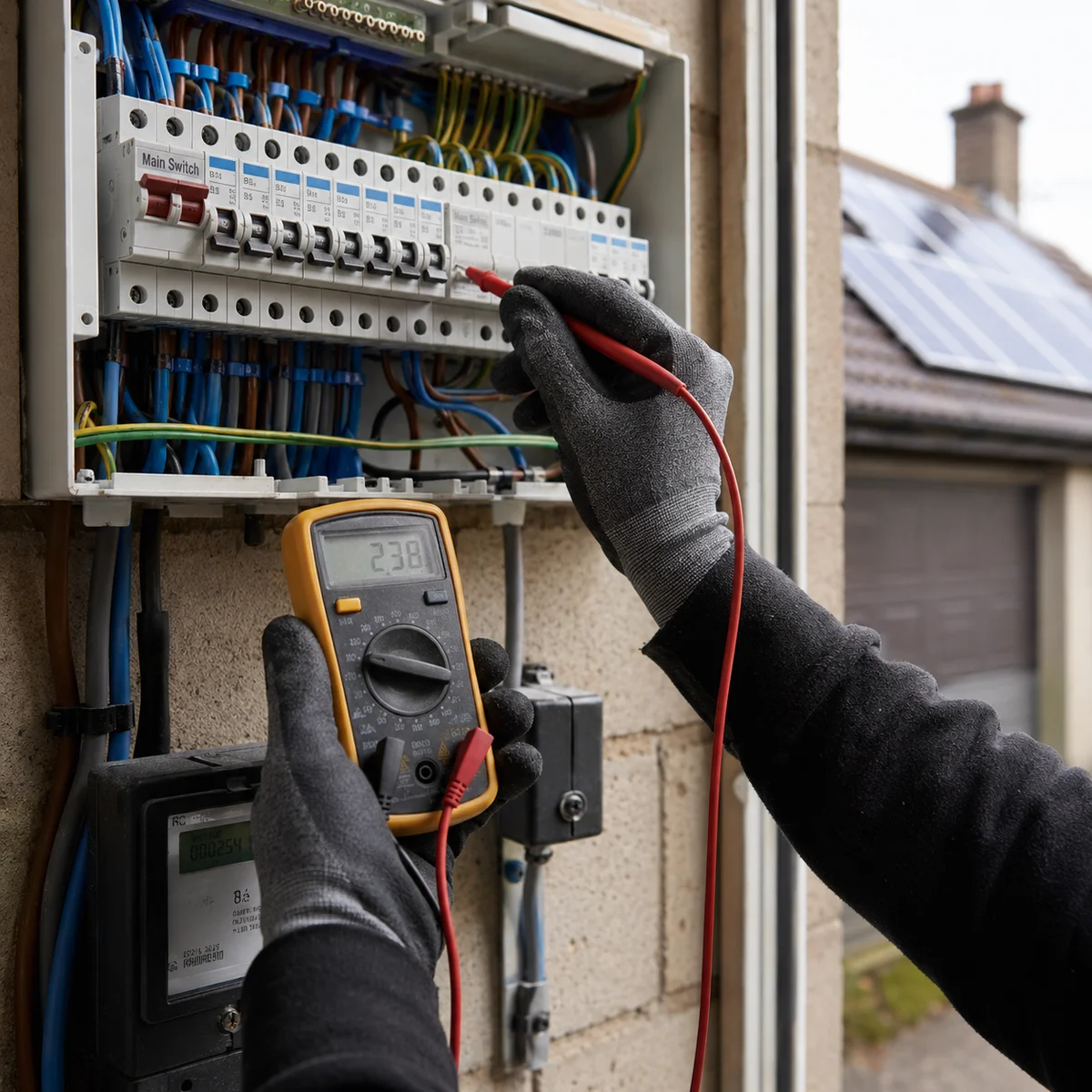
Verify Your Electrician Before Any Work Starts
10 seconds. Free. Check RECI registration on the Safe Electric Ireland register.
Is Battery Storage Worth It for Irish Homes?
A home battery stores electricity your panels generate during the day so you can use it in the evening, when panels are no longer generating but consumption is highest. Without storage, a typical Irish household self-consumes 30 to 40% of what its panels produce. Adding a battery raises that to 70 to 80%, significantly cutting what you import from the grid at peak evening rates.
A 5 to 10 kWh battery is the most common range for a three-bedroom Irish home paired with a 4kWp PV system. Systems from Huawei LUNA, SolarEdge, Solis, and Sungrow are widely installed by Irish contractors. The battery connects to the inverter and is typically wall-mounted in a garage or utility room. All electrical wiring to and from the battery must be carried out by a RECI-registered electrician.
The SEAI solar PV grant covers battery storage as part of the same system. For a full breakdown of the electrical installation side, see the solar battery storage guide.
SEAI Solar Grants: What You Can Claim in 2026
The SEAI Better Energy Homes scheme covers domestic solar PV installations by SEAI-registered contractors. The grant is applied for on the SEAI website and paid directly to your bank account after the work is completed and verified.
To qualify, the installer must be SEAI-registered, the property must be owner-occupied and built before 2021, and the installation must improve the home's BER rating. See the full SEAI grants breakdown for all conditions and the application process.
Insulate Your Home Before Adding Solar
SEAI's recommended sequence for a whole-house retrofit is fabric first, then renewables. Insulating your attic and walls reduces the amount of heat energy your home loses, which means a smaller solar PV system and a smaller heat pump can do more work. Installing solar panels before addressing insulation means the system compensates for heat loss that could have been eliminated cheaply first.
Attic insulation, cavity wall insulation, and external wall insulation all qualify for SEAI grants under the Better Energy Homes scheme. Combined with a solar PV system, the total eligible grant can reduce the overall cost of a home retrofit significantly. SEAI-registered insulation contractors can assess your home and advise which upgrade delivers the best return before you move to solar.
If you are considering a heat pump alongside solar PV, the combination qualifies for the SEAI Home Energy Upgrade scheme, which can cover up to 80% of the total cost of an approved deep retrofit package. See the SEAI Home Energy Upgrade guide for how the scheme works.
Find a Solar PV Installer in Ireland
A solar PV installation in Ireland involves two distinct trades. The solar contractor mounts the panels, installs the inverter, and runs the DC cable from the roof. The electrical grid connection must be carried out by a RECI-registered electrician, either in-house or sub-contracted. Both must be in place before the system is commissioned and before the SEAI grant application can proceed.
For SEAI-registered solar PV installers across all 26 counties, hvacinireland.ie lists verified contractors with the relevant SEAI and MCS credentials. Once you have chosen an installer, verify the RECI number of the electrician doing your grid connection before work starts.
What to check before signing
- SEAI registration for the solar PV company
- RECI registration for the electrician doing the grid connection
- MCS (Microgeneration Certification Scheme) accreditation for the installer
- Evidence of public liability and employer liability insurance
- NC6 notification and completion certificate included in the quote
- SEAI grant application handled by the installer on your behalf
Solar PV Costs in Ireland 2026
Prices below cover complete supply and installation from an SEAI-registered contractor, including panels, inverter, racking, electrical grid connection, generation meter and NC6 notification. Shown before SEAI grant.
After-grant figures assume the maximum SEAI solar PV grant of €2,100 (up to 4kWp) or €2,400 (4-6kWp). Actual prices vary by contractor, system spec, and roof access. For a full breakdown of electrical job costs, see the Irish electrician cost guide.
Solar PV in Ireland: Frequently Asked Questions
Do I need planning permission for solar panels in Ireland?
Most domestic solar PV systems are exempt from planning permission under SI 83 of 2007. The exemption applies where panel area is under 50% of the roof area, panels project no more than 15cm above the roof plane, and no solar tracker is used. Protected structures and architectural conservation areas require separate consent.
Can I sell electricity back to the grid in Ireland?
Yes. The Clean Export Guarantee (CEG) scheme pays you for surplus electricity exported to the grid. You need a smart meter, installed free by ESB Networks, and your system must be registered. Rates vary by supplier, typically between 18 and 24 cent per kWh exported.
Does the SEAI solar grant cover battery storage?
Yes. The SEAI solar PV grant covers the combined system including battery storage. The grant is €2,100 for a system up to 4kWp, plus €300 per additional kWp up to 2kWp, giving a maximum of €2,400 for a 4 to 6kWp system regardless of whether a battery is included.
What is the NC6 notification and do I need one?
The NC6 is the notification submitted to Safe Electric Ireland by the RECI-registered electrician after completing the grid connection. It is a legal requirement under the Electricity Regulation Act. Your electrician submits it automatically. You should receive a copy with your completion documents.
How long does a solar PV installation take in Ireland?
The physical installation typically takes one to two days for panel mounting and wiring. The electrical grid connection usually takes a further half-day. The SEAI grant application, smart meter upgrade, and CEG registration add several weeks but do not delay the system going live.
Does my roof need to face south for solar to work in Ireland?
South-facing roofs at 30 to 40 degrees produce the highest annual output. East-west split arrays are also effective and increasingly common. North-facing slopes are generally not viable. Shading from chimneys, dormers, or trees should be assessed before system sizing.
Related Guides
- Solar battery storage. Electrical installation costs and what is involved
- Heat pump electrical work. What a RECI electrician does for a heat pump installation
- SEAI Home Energy Upgrade. The whole-house retrofit scheme and where electricity fits in
- EV charger installation. Home charger costs and SEAI grant in 2026
Solar PV in Ireland starts with checking who is doing your wiring
Before signing any contract for solar PV in Ireland, verify that the electrician carrying out your grid connection is on the Safe Electric Ireland register. It takes 10 seconds and it is free.