
2026 Irish Prices
Domestic Smoke Alarm Regulations in Ireland: IS 3218, Costs and What's Required
Real 2026 costs by county, IS 3218:2013 requirements, what the installation involves, and why it must be done by a registered electrician.
Find a registered electricianIS 3218: The Irish Standard for Smoke and Heat Alarms
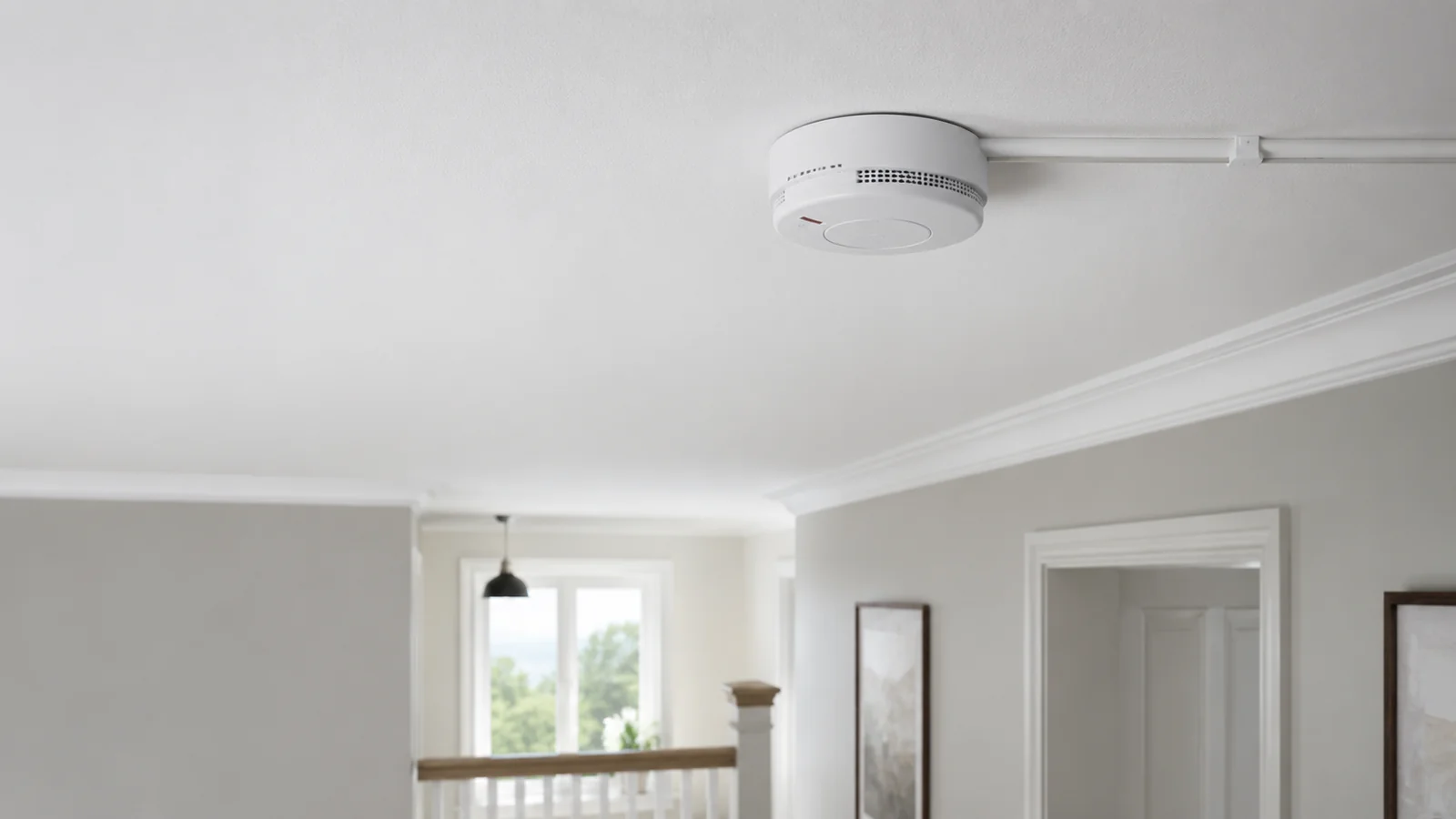
The domestic smoke alarm regulations in Ireland are set out in IS 3218:2013 (updated in 2022), the Irish standard governing fire detection and alarm systems in domestic properties. It specifies which alarm types are required in which rooms, how alarms must be interconnected, and the grade of system required based on property type and use.
For most Irish homes, the standard requires a Grade D system: mains-powered alarms with battery backup, all interconnected so that when one alarm triggers, every alarm in the house sounds. Mains-wired interconnected alarms must be installed by a RECI-registered electrical contractor.
Smoke Alarm Installation Cost in Ireland 2026
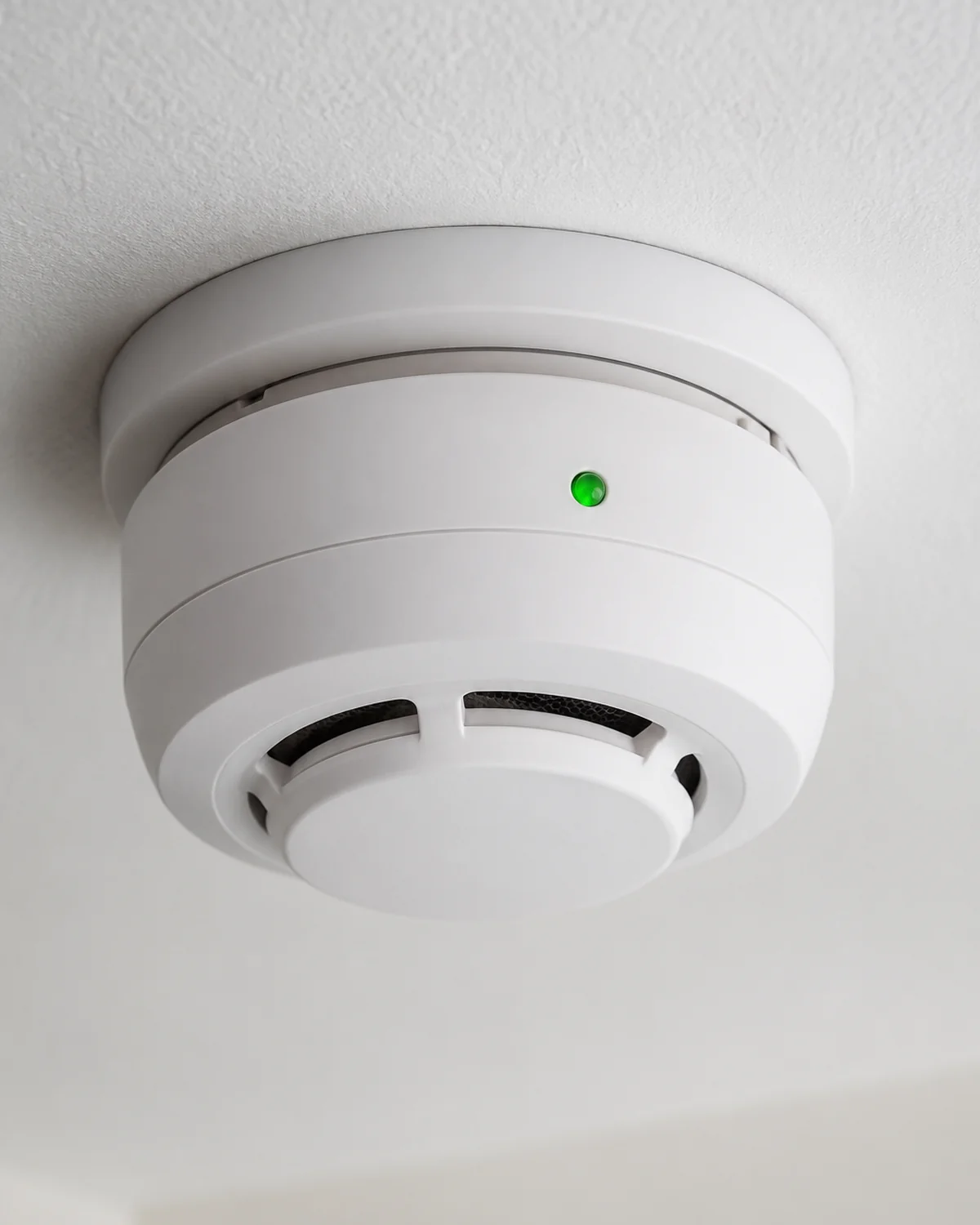
Prices below are for a full IS 3218-compliant mains-wired, interconnected system in a standard 3-bedroom house with no existing alarm wiring. This typically means 5 alarm heads: smoke alarms in the hallway, landing and living room, a heat alarm in the kitchen, and a CO alarm where required.
Larger homes, properties with concrete or suspended ceilings, and homes requiring a Grade A panel system will cost more. If interlink wiring from a previous installation already exists, labour costs may be lower. Always confirm the number of alarm heads required before accepting a quote.
Ready to Upgrade Your Alarm System?
Find a RECI-registered electrician in your county who can install a fully compliant IS 3218 mains-wired alarm system. Every installer is verified on the Safe Electric register.
What Affects the Cost of Smoke Alarm Installation?
The installation price depends on the property, the existing wiring, and the alarm grade required. Here are the main variables.
01Number of alarms required
A 3-bedroom house needs a minimum of 5 alarm heads under IS 3218: smoke alarms in the hallway, landing, and living room; a heat alarm in the kitchen; and a CO alarm where a combustion appliance is present. Larger homes need more heads, which increases both material and labour cost.
02Existing wiring
Homes with no previous alarm installation need new cable runs from the consumer unit to each alarm position. This is the most labour-intensive part of the job. If interlink wiring from a previous mains system already exists in the right positions, the electrician can reuse it and save time.
03Alarm grade chosen
Grade D (mains-powered with battery backup, locally interconnected) suits most Irish homes. Grade A systems use a central panel and are required for larger or higher-risk properties. Grade A systems cost significantly more to install due to the panel hardware and additional wiring.
04CO detector inclusion
Homes with gas boilers, oil boilers, solid fuel stoves, or any other combustion appliance require a carbon monoxide alarm. Each CO alarm adds €60–€120 to the material cost. Properties with combustion appliances in multiple rooms may need more than one CO detector.
05Ceiling type
Plasterboard ceilings are the most straightforward to work with. Notching through concrete ceilings or working above suspended tile systems adds significant labour time. Some rural Irish homes have exposed block or concrete construction throughout, which can add €80–€150 per alarm position.
06Existing interlink cable
Older battery-only alarm systems typically have no interlink cable between units. If no interlink cable exists at all, the electrician must run new cable to every alarm position. If partial interlink wiring exists, it may still not be in the right positions to reuse under IS 3218, requiring new runs anyway.
What Does Smoke Alarm Installation Involve?
A full IS 3218 installation in an average Irish home typically takes 4 to 6 hours. Here is what the electrician does from start to finish.
01Site survey and alarm positioning
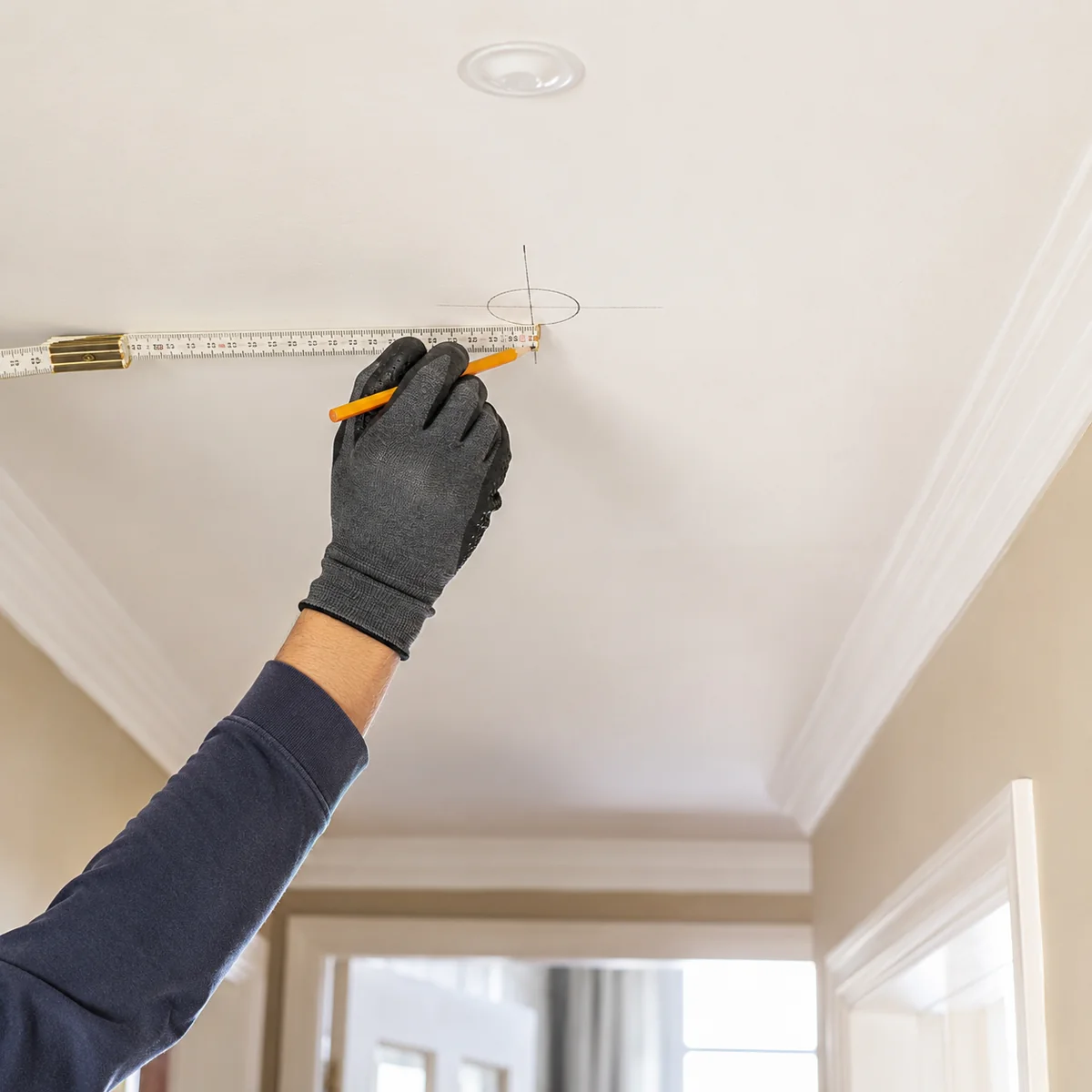
The electrician identifies where each alarm must be positioned under IS 3218 room coverage rules, checks the consumer unit for a suitable circuit to feed the alarms from, and agrees the cable routing with the homeowner before any work starts.
02Cable runs from consumer unit
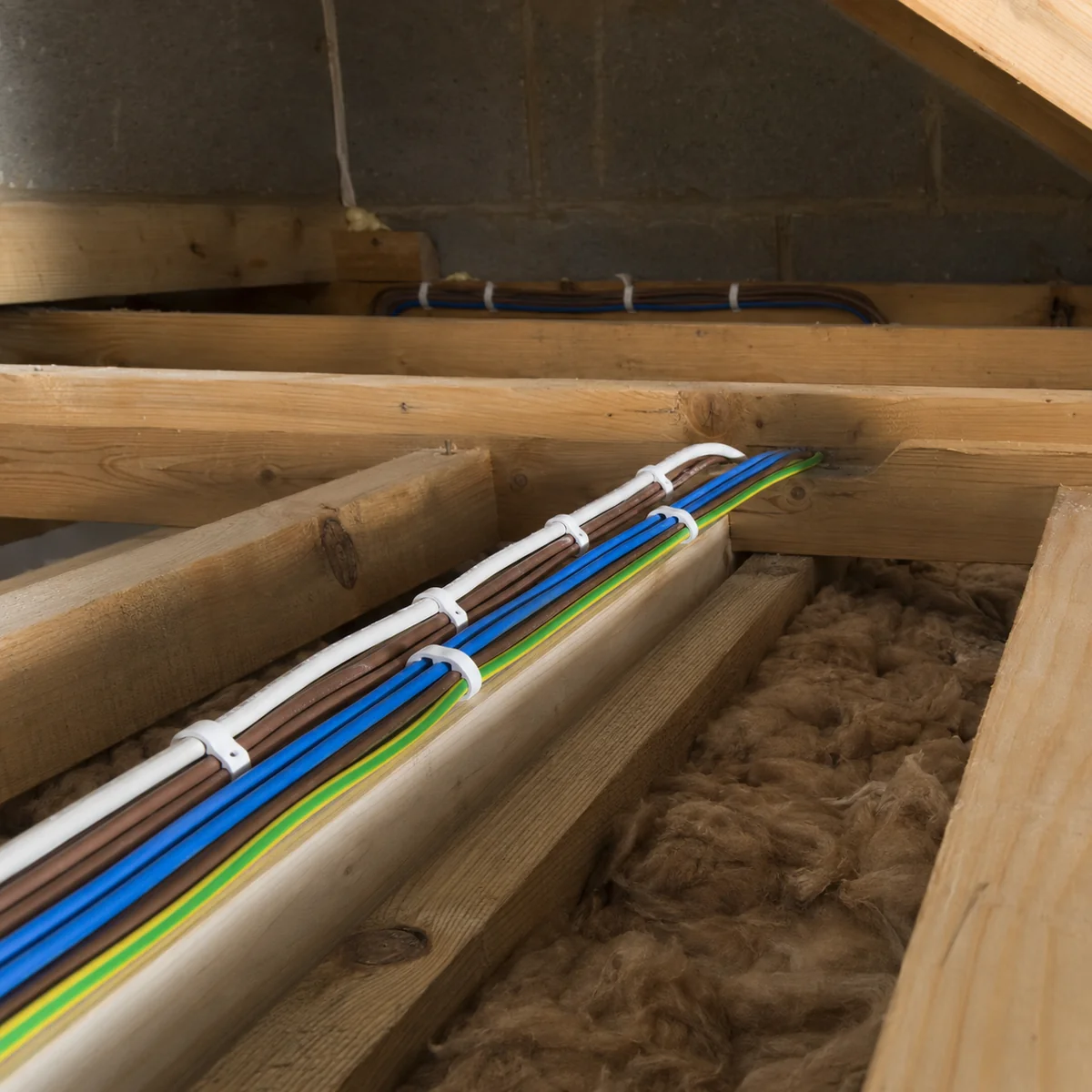
New cable is run from the consumer unit to each alarm position. In most homes this involves working in the roof space, notching through internal walls, or running cable under floor coverings. The new alarm circuit is connected to a dedicated way in the consumer unit.
03Alarm head fitting and interconnection
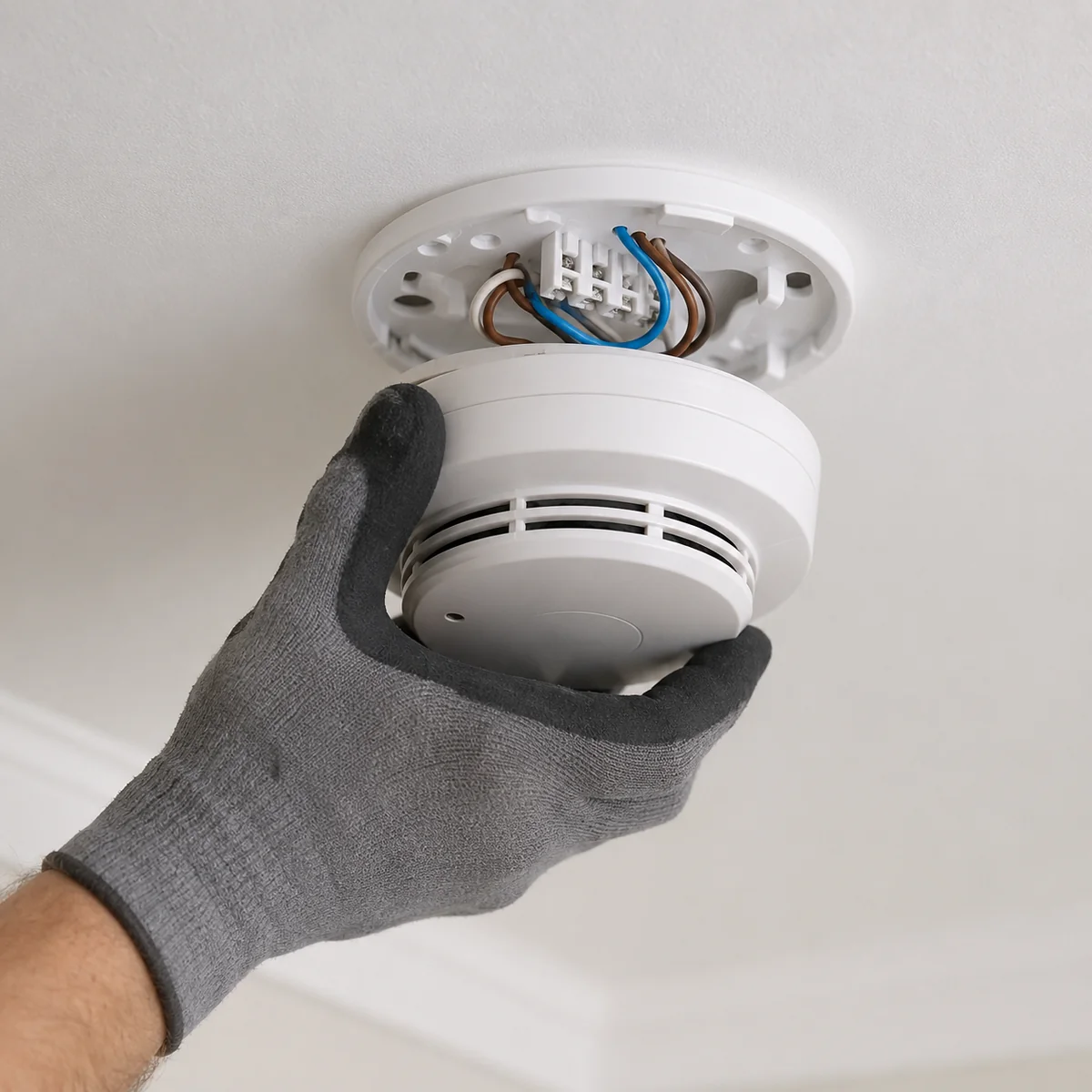
Each alarm base is fixed to the ceiling, the cable is terminated, and the alarm head is fitted. The interconnect wire links every alarm together so that one trigger activates all alarms simultaneously throughout the property.
04Full trigger test
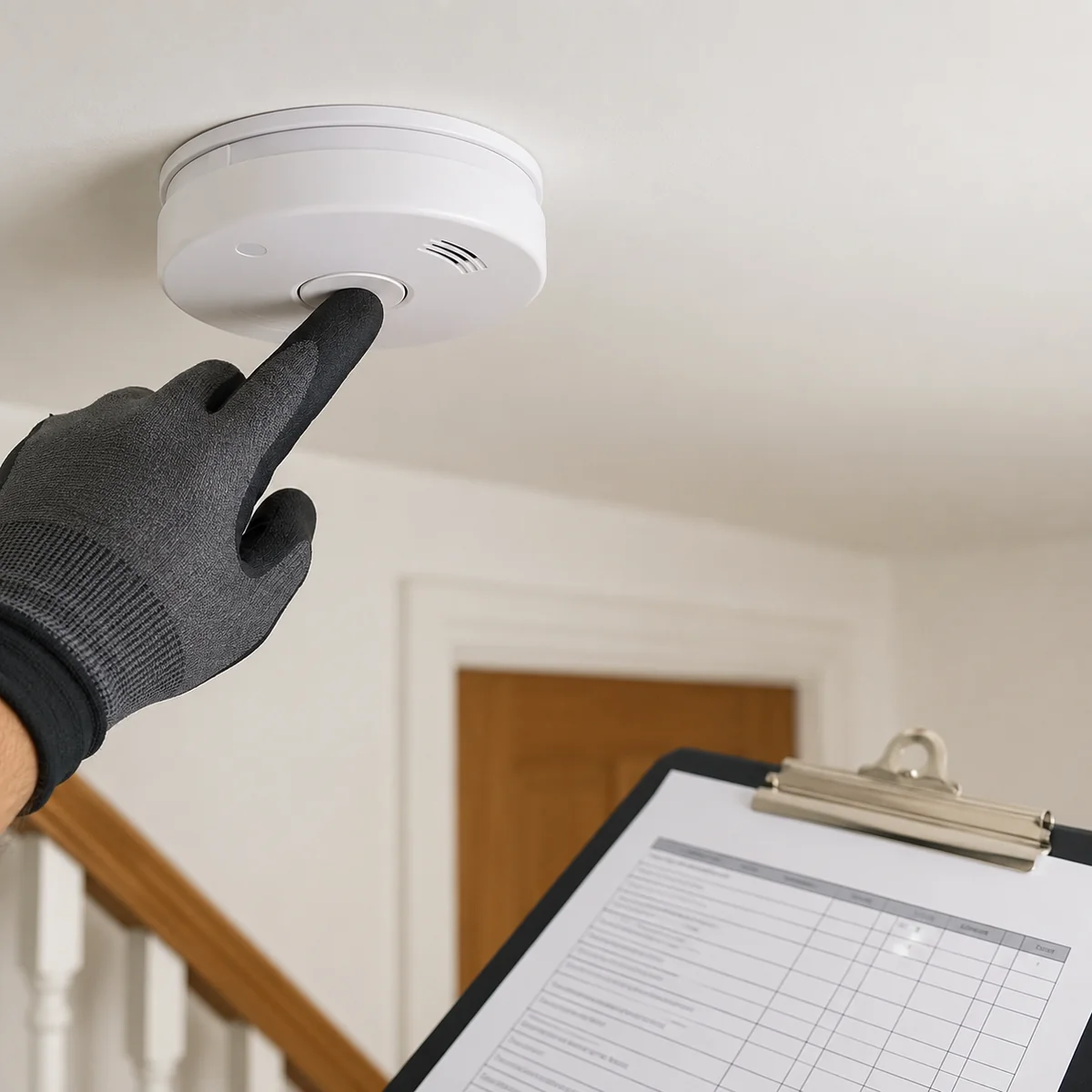
Every alarm is individually triggered using a test magnet or aerosol. The electrician confirms that when any one alarm activates, every other alarm in the installation also sounds. This is the key IS 3218 interconnection requirement.
05Certification and handover
The electrician issues a completion certificate confirming the installation meets IS 3218. This document is important for landlord compliance, home insurance, and future property sales. The homeowner receives written confirmation of the standard achieved.
Smoke, Heat and CO: Which Alarm Goes Where?
IS 3218 specifies which type of alarm is appropriate for each room. Using the wrong type in a location can lead to either nuisance alarms or inadequate protection.
Optical smoke alarm
Optical alarms detect slow, smouldering fires best. Required on each floor in the escape route and in living areas. They can false-trigger near kitchens, which is why kitchens require a heat alarm instead.
Ionisation smoke alarm
Ionisation alarms detect fast, flaming fires more quickly than optical. Some installers use them in bedrooms as an additional layer of protection, though optical alarms are standard in most IS 3218 installations.
Heat alarm
Heat alarms activate at a fixed temperature rather than detecting smoke. They are the only alarm type suitable for kitchens, where cooking steam and vapour cause false triggers in smoke alarms. Required in every kitchen under IS 3218.
CO alarm
Carbon monoxide alarms are required in any room containing a combustion appliance: gas boiler, oil boiler, solid fuel stove, or open fireplace. Under rental regulations, CO alarms must also be interconnected with the smoke and heat alarm system.
Is IS 3218 a Legal Requirement in Ireland?
For rental properties, mains-wired, interconnected smoke and heat alarms are required under the Housing (Standards for Rented Houses) Regulations 2019. Battery-only alarms do not meet the rental standard. Failure to comply can result in an RTB improvement notice.
For owner-occupied homes, IS 3218 compliance is strongly recommended by the Department of Housing and fire safety authorities, and is increasingly required by home insurers. New builds must comply under the Building Regulations.
Who Can Install Mains-Wired Smoke Alarms in Ireland?
Connecting mains-wired alarms to a new circuit from the consumer unit is restricted electrical work and must be carried out by a RECI-registered electrical contractor. A non-registered installer cannot issue a valid completion certificate and the work will not satisfy landlord regulations or home insurance requirements.
Always verify the contractor on the Safe Electric register at safeelectric.ie before work starts. Ask for a completion certificate confirming IS 3218 compliance when the job is done.
Smoke Alarm Installation: Common Questions
What alarms are required under IS 3218 in Ireland?
IS 3218 requires at minimum: a smoke alarm in every hallway and on every landing on the escape route, a smoke alarm in every living room, a heat alarm in every kitchen, and a CO alarm in every room containing a combustion appliance. All alarms must be interconnected so that triggering one activates all others. For most 3-bedroom houses, this means at least 5 alarm heads.
Do I need a heat alarm in the kitchen?
Yes. Kitchens require a heat alarm, not a smoke alarm. Steam, cooking vapour, and toast are common causes of nuisance triggers in smoke alarms. A heat alarm activates at a set temperature rather than detecting airborne particles, making it far more reliable in kitchen environments while still providing meaningful protection.
Can I use wireless interconnected alarms instead of wired?
Wireless interconnected alarms (radio frequency interconnect) can meet IS 3218 requirements in some situations, particularly for owner-occupied homes where running new cable would cause significant disruption. However, the Housing Regulations for rental properties generally require mains-wired alarms. A RECI-registered electrician can advise on whether wireless interconnection is appropriate for your situation.
Is a CO detector required by law in Ireland?
For rental properties, yes. The Housing (Standards for Rented Houses) Regulations 2019 require a carbon monoxide alarm wherever there is a combustion appliance. For owner-occupied homes, CO alarms are not currently a statutory requirement in existing dwellings, though new builds must comply with the Building Regulations which require CO detection near combustion appliances.
How often should smoke alarms be replaced?
Smoke alarm heads have a recommended service life of 10 years. After this period, the sensing chamber can become contaminated or the electronics can degrade, making the alarm less reliable. The manufacture date is usually printed on the back of the alarm head. If your alarms are approaching or past 10 years old, replacement is strongly recommended regardless of whether they appear to be functioning.
Does a new-build need a different alarm standard?
New residential buildings in Ireland must comply with Part B of the Building Regulations (Fire Safety) which references IS 3218. New builds typically require a higher grade of system than existing homes being upgraded: a Grade D system as a minimum, and Grade A (panel-based) systems for larger or higher-risk new builds. Your architect or engineer will specify the required grade in the design documentation.
Get your alarms installed to IS 3218 today
Find a RECI-registered electrician in your county who can install a fully compliant mains-wired, interconnected alarm system and issue a completion certificate.