
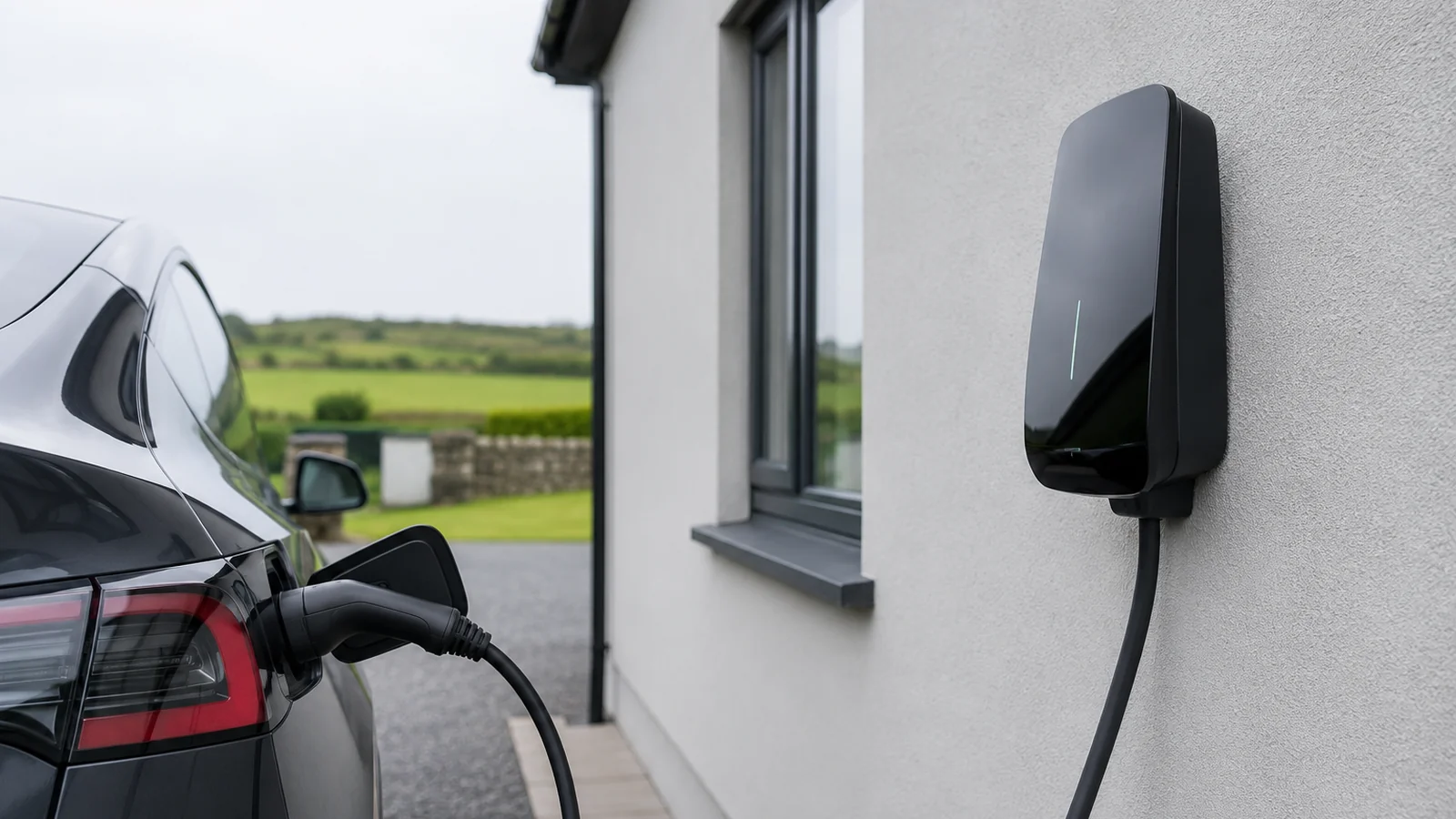
2026 Irish Prices
EV Charger Installation in Ireland: Costs, Grants and What to Expect
SEAI grant, real 2026 installation costs by county, what the job involves, and why it must be done by a registered electrician.
Find a registered electricianThe SEAI EV Charger Grant 2026
The Sustainable Energy Authority of Ireland (SEAI) offers a grant of up to €300 towards the cost of a home EV charger installation. The grant applies to homeowners installing a 7kW single-phase wall-mounted charger at their principal private residence.
The grant is processed directly by the installer on your behalf. You pay the net price after the grant has been deducted: you do not need to claim it separately. All costs quoted on this page are after the SEAI grant has been applied. See all SEAI electrical grants available in 2026.
EV Charger Installation Cost in Ireland 2026
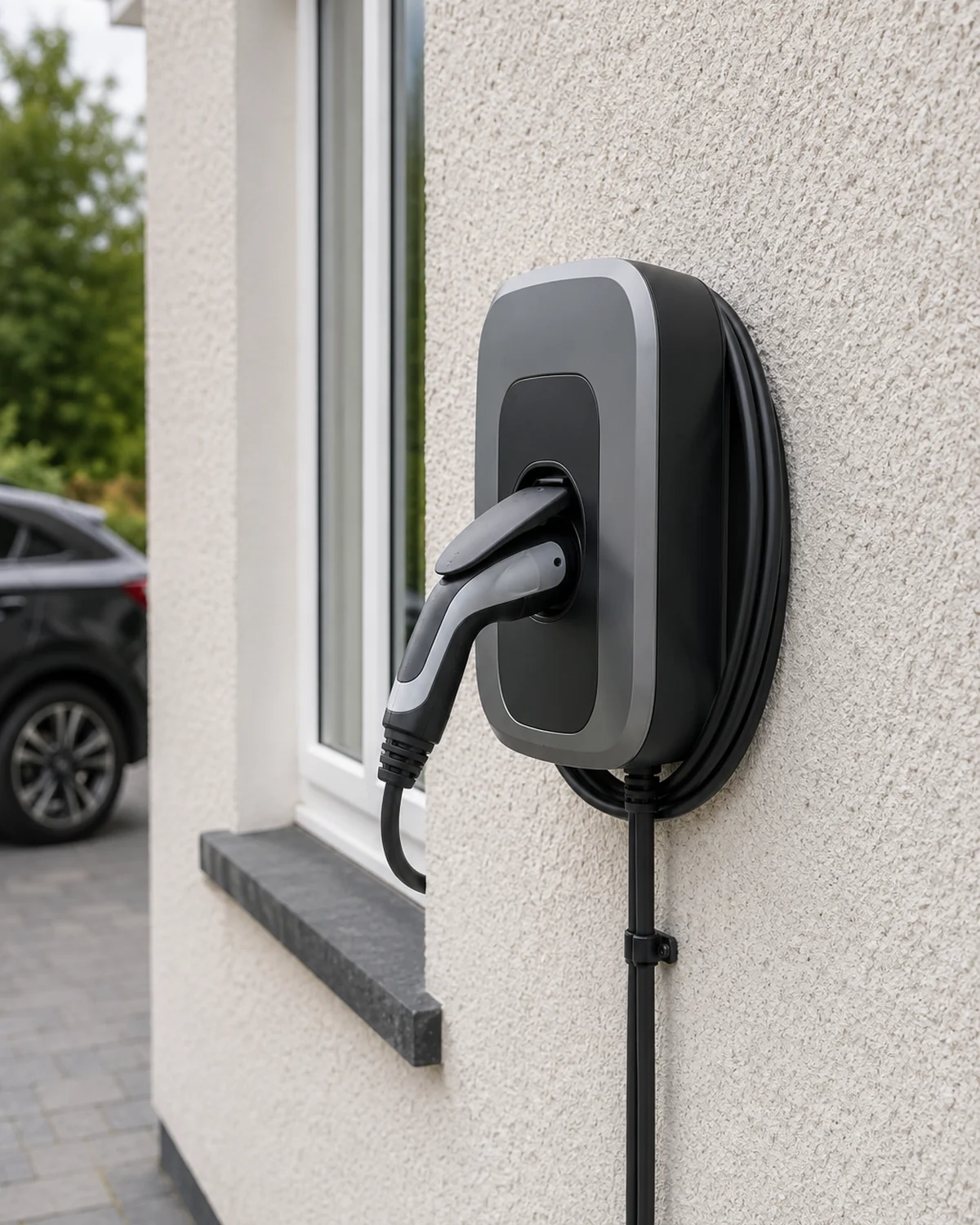
The ev charger installation cost in Ireland in 2026 ranges from around €610 to €1,800 depending on where you live, the charger model, and your existing electrical setup. A standard 7kW single-phase charger (Zappi, Ohme, Wallbox or similar) typically costs €800 to €1,400 installed. If your property has 3-phase supply and you opt for a 22kW charger, expect €1,200 to €2,000. All prices below are after the €300 SEAI grant.
A standard installation assumes the consumer unit is in good condition and the charger is fitted within 10 metres of the unit. Longer cable runs increase the price.
Rural properties may need a longer cable run from the consumer unit to the parking area. Allow an additional €150–€400 for runs over 15 metres. If the consumer unit needs upgrading first, add €800–€1,400 for that work.
Ready to Get Your Home Charger Installed?
Find a RECI-registered electrician in your county. Every installer is verified on the Safe Electric register and can process the SEAI grant on your behalf.
What Affects the Cost of EV Charger Installation?
Installation price is not just the charger unit. Several factors can push the total up or down significantly.
01Cable run length
A charger within 10m of the consumer unit is a standard install. Every extra 5m adds roughly €80–€120 in labour and materials. A long run across a garage, through a wall, or under a driveway can add €300–€600.
02Consumer unit condition
An older fuse box or a unit with no spare ways will need upgrading before a dedicated charger circuit can be added. Budget €800–€1,400 for a full consumer unit replacement if required.
03Charger model chosen
A basic 7kW charger costs €200–€350 for the unit. Smart chargers with solar divert, load balancing, or app control (Zappi, Ohme, Wallbox) cost €400–€800 for the unit alone.
04Property type
Detached houses with an attached garage are the simplest installs. Terraced houses with parking at the front require external cabling. Apartments require building management approvals and shared infrastructure.
05Phase of supply
Most Irish homes are single-phase. A 7kW charger suits single-phase supply fine. Three-phase supply can support 22kW chargers, but these are rarely needed for home use.
06Trunking vs buried cable
Surface-mounted trunking is cheaper and faster but less tidy. Buried or concealed cables cost more in labour but give a cleaner result. Burying under a driveway may need groundwork.
What Does EV Charger Installation Involve?
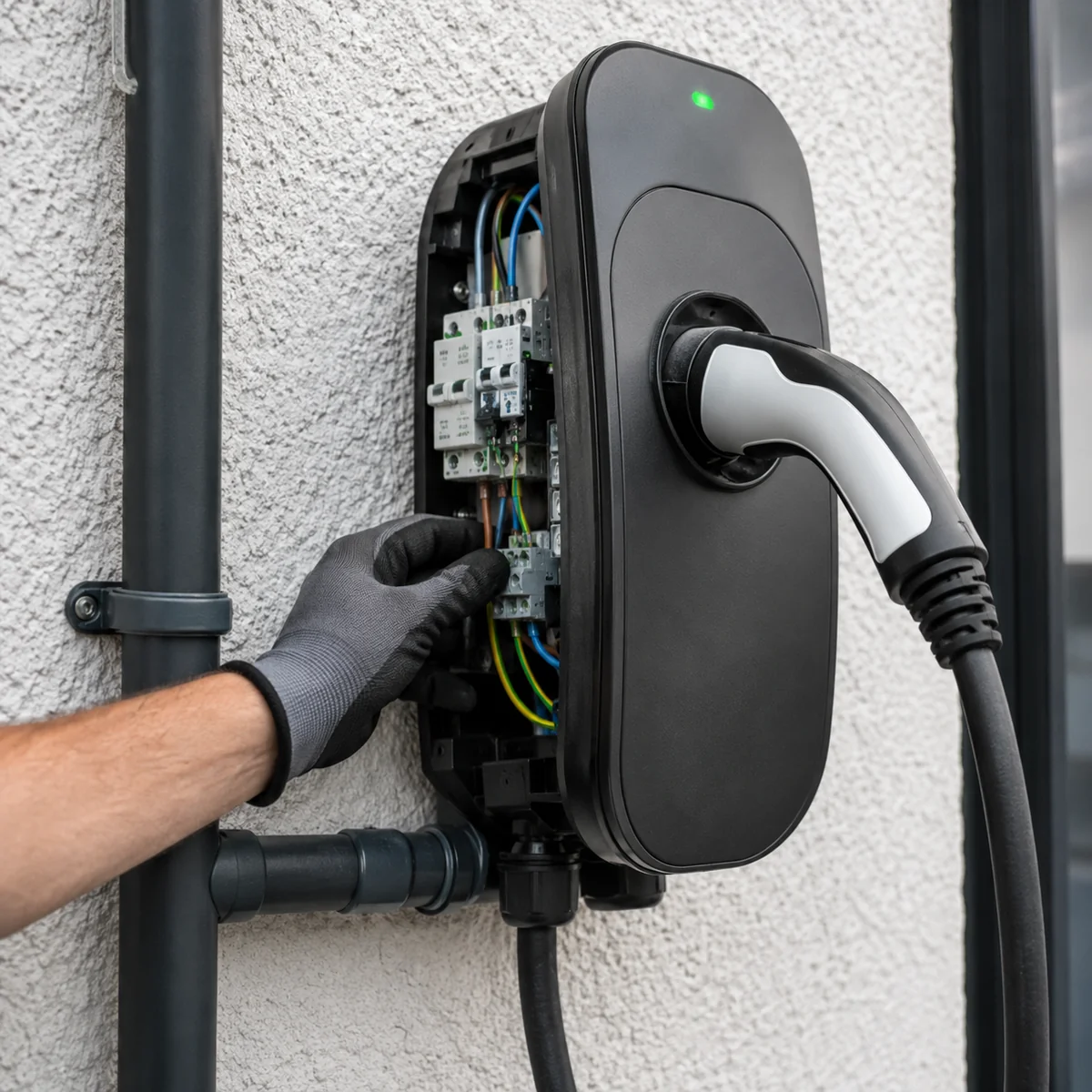
A typical home installation takes 3 to 4 hours for a straightforward job. Here is what happens on the day.
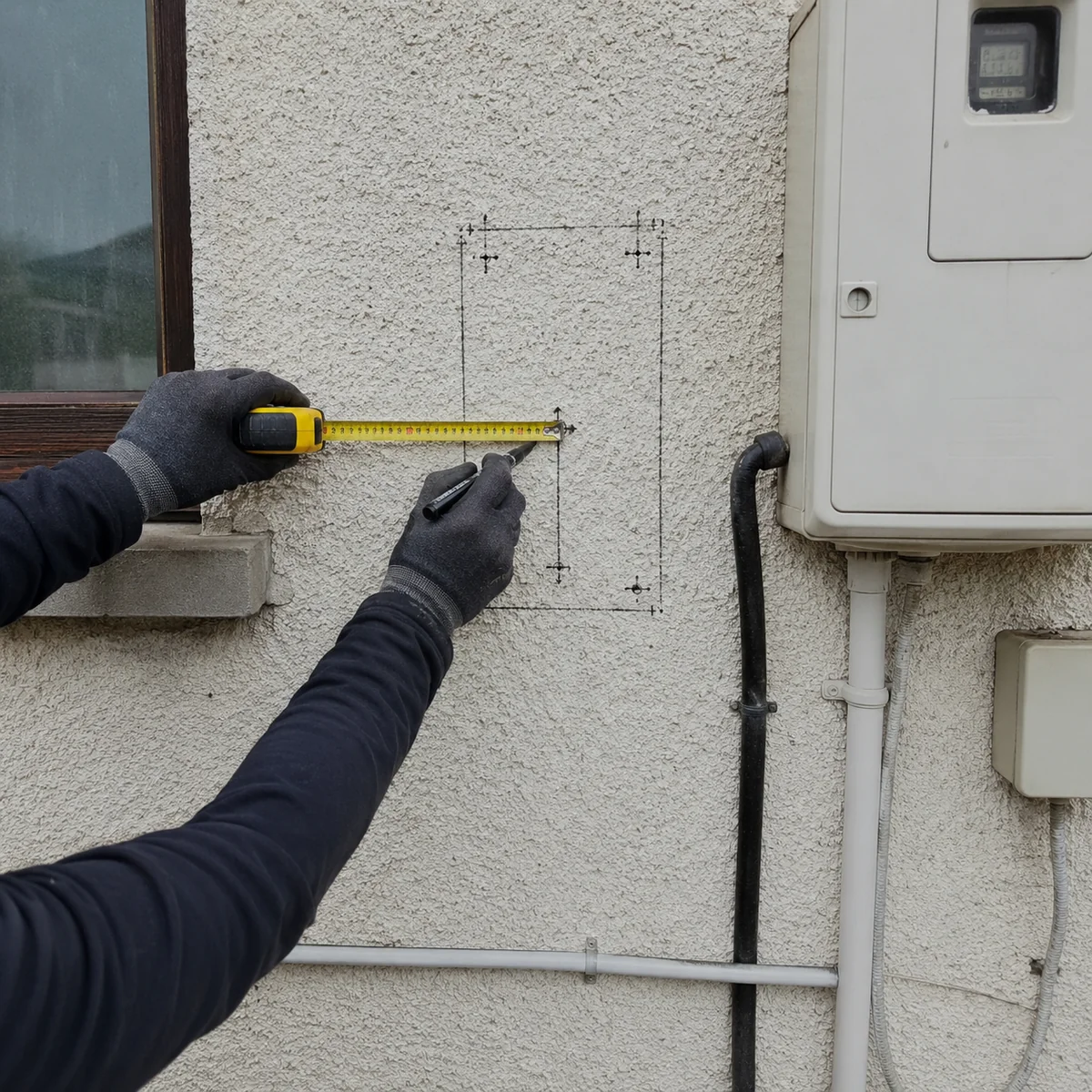
01Survey and quotation
The electrician checks your consumer unit capacity, identifies the best charger location, measures the cable run, and confirms SEAI grant eligibility for your vehicle and property.
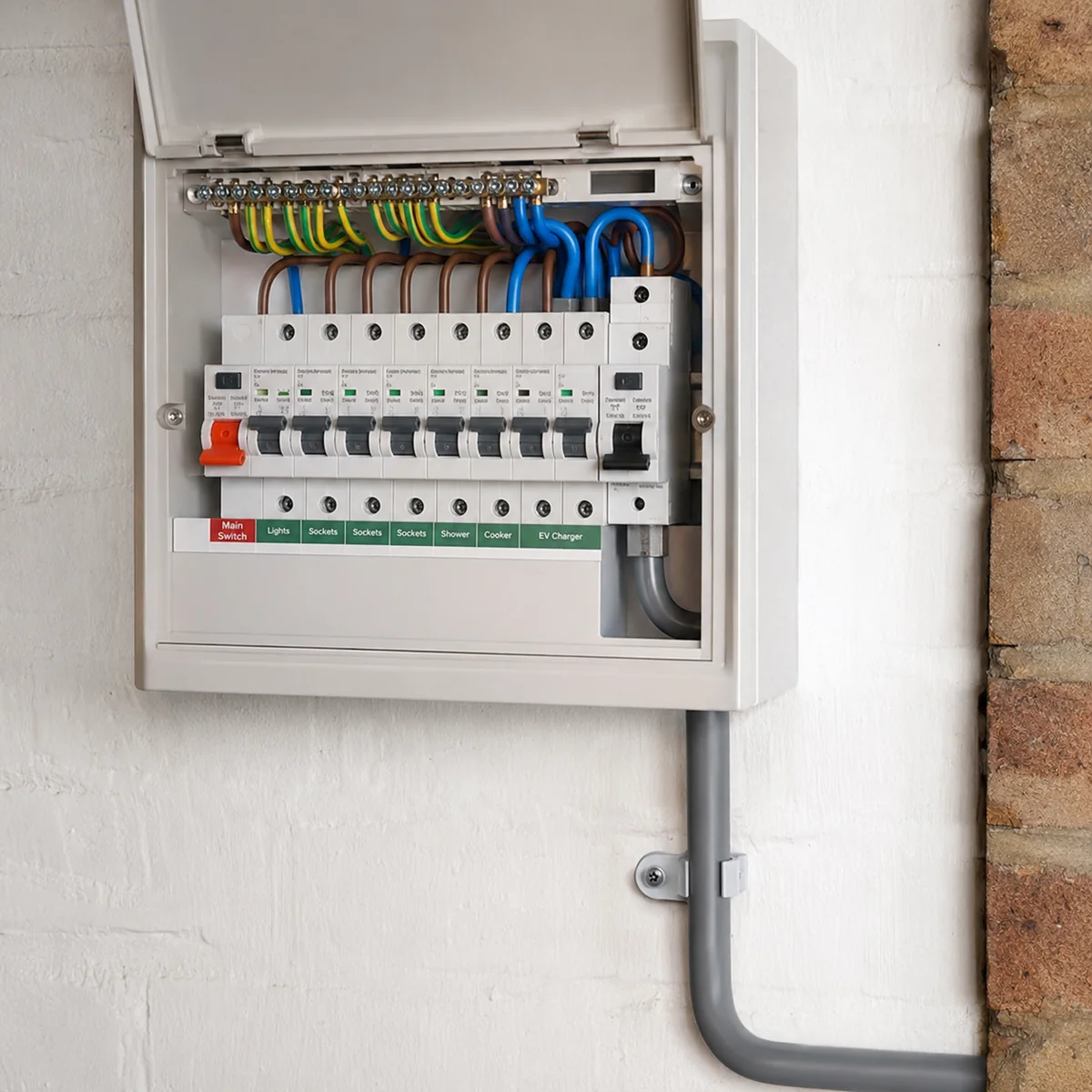
02Dedicated circuit
A new circuit is run from the consumer unit to the charger location. This protects the charger from other household loads and is a requirement for the SEAI grant.
03Charger fitted and commissioned
The 7kW wall unit is mounted, wired, and commissioned. Smart charger models are connected to your home WiFi and paired with the manufacturer app.
04SEAI paperwork and certification
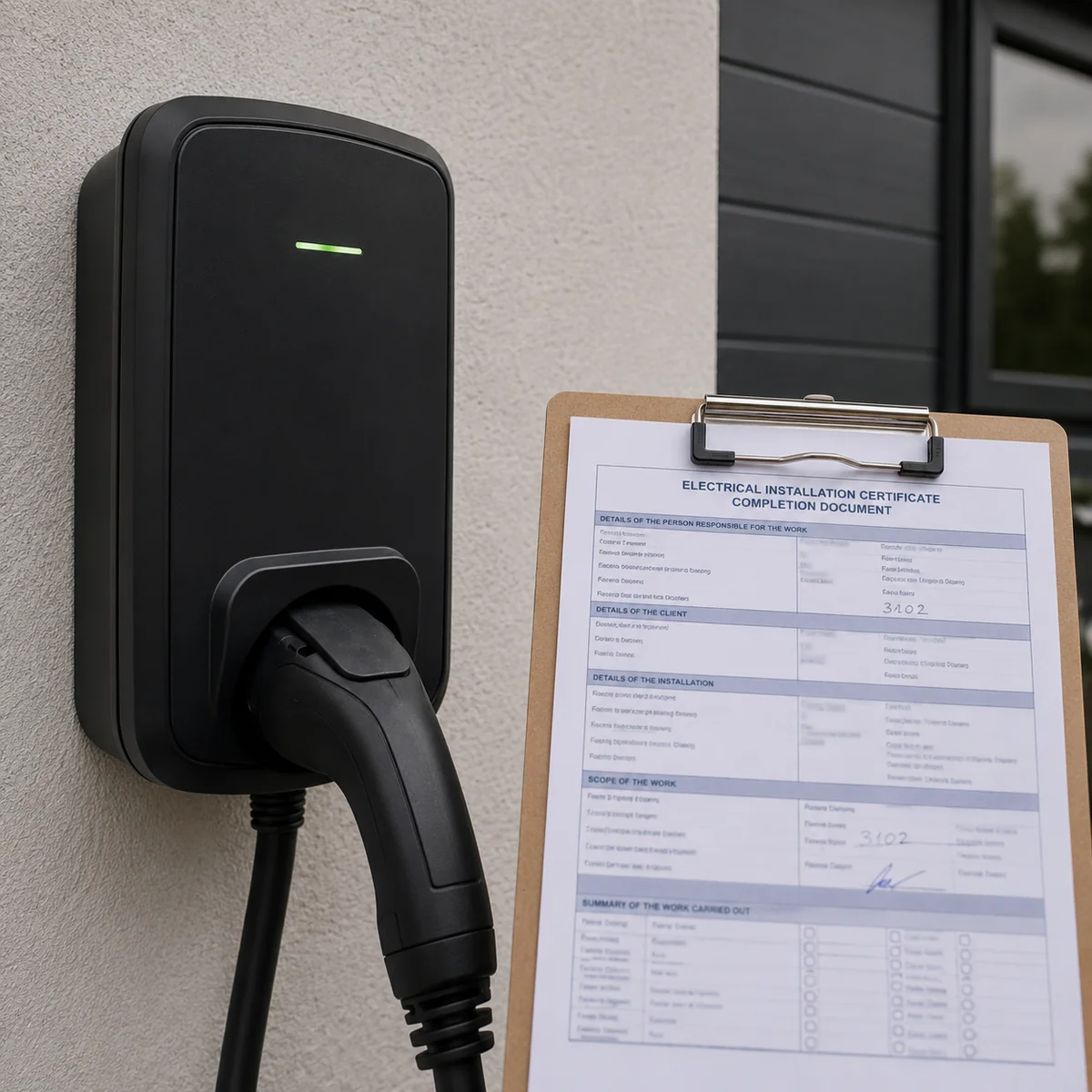
The installer submits the SEAI grant application on your behalf and issues a completion certificate. You receive both documents as proof of the registered installation.
Best Home EV Chargers in Ireland 2026
All four models below are 7kW single-phase units and are eligible for the SEAI home charger grant. Prices are for the unit only, before installation.
Myenergi Zappi
€620–€750
The most popular choice for homes with solar panels. Diverts excess solar generation to charge your car first. Complex install, allow extra labour time.
Ohme Home Pro
€480–€580
Integrates with your electricity tariff to charge at the cheapest off-peak rate automatically. Popular with Energia and Electric Ireland smart tariff customers.
Wallbox Pulsar Plus
€390–€480
Smallest footprint of the mainstream 7kW chargers. Good app. Load balancing available. Suits garages and tight mounting positions.
Andersen A2
€750–€950
Premium choice for a visually tidy exterior install. Accepts a cable socket rather than a tethered cable. Higher unit cost but very clean finish.
Planning Permission for a Home EV Charger
In most cases, no planning permission is needed. Under the Planning and Development Regulations, home EV charger installation is exempted development, provided the unit is wall-mounted and no more than two chargers are installed per dwelling.
Apartments, protected structures, and commercial premises may have different requirements. Your installer will advise if planning applies to your specific property.
Who Can Legally Install an EV Charger in Ireland?
EV charger installation involves connecting a dedicated circuit to your consumer unit, which must be carried out by a RECI-registered electrical contractor. A non-registered installer cannot process the SEAI grant or issue a valid completion certificate.
Before booking, verify the contractor is listed on the Safe Electric register at safeelectric.ie. An unregistered installer puts your SEAI grant, home insurance, and electrical certification at risk.
EV Charger Installation: Common Questions
Can I charge an EV on a standard 13A socket?
Yes, but a standard socket charges at around 2.3kW, adding roughly 10 to 12km of range per hour. A 7kW home charger adds 40 to 50km per hour. For a 60kWh battery, a standard socket takes 26 hours for a full charge vs 8 to 9 hours on a 7kW unit.
How long does EV charger installation take?
A standard installation takes 3 to 4 hours: survey, cable run, charger fitting, commissioning, and SEAI paperwork. More complex jobs with long cable runs or consumer unit work take 5 to 7 hours.
Can I install an EV charger in a rented property?
Yes, but you need written permission from your landlord. The SEAI grant is available to tenants provided the landlord consents in writing and the property meets the eligibility criteria. The charger remains with the property when you leave.
Does an EV charger affect my home insurance?
A registered installation by a RECI-registered electrician will not affect your home insurance. An unregistered installation could invalidate your policy if a claim relates to electrical work. Always use a registered contractor and keep the completion certificate.
Is a 7kW or 22kW charger better for home use?
7kW is the right choice for almost all Irish homes. Most domestic properties have single-phase supply, which limits you to 7kW. A 22kW charger requires three-phase supply and is rarely worth the additional cost for overnight home charging.
Can I use an EV charger during a power outage?
No. All home EV chargers require a live grid supply. Vehicle-to-grid technology exists but is not yet mainstream in Ireland for residential use.
Need a registered EV charger installer?
All 2,000+ RECI-registered contractors, across all 26 counties.