
2026 Irish Prices
Periodic Electrical Inspection in Ireland: Costs, ECIR and What to Expect
Real 2026 costs by county, what the ECIR involves, landlord requirements under SI 137 of 2019, and how to find a RECI-registered inspector.
Find a registered electricianWhat Is a Periodic Inspection and ECIR?
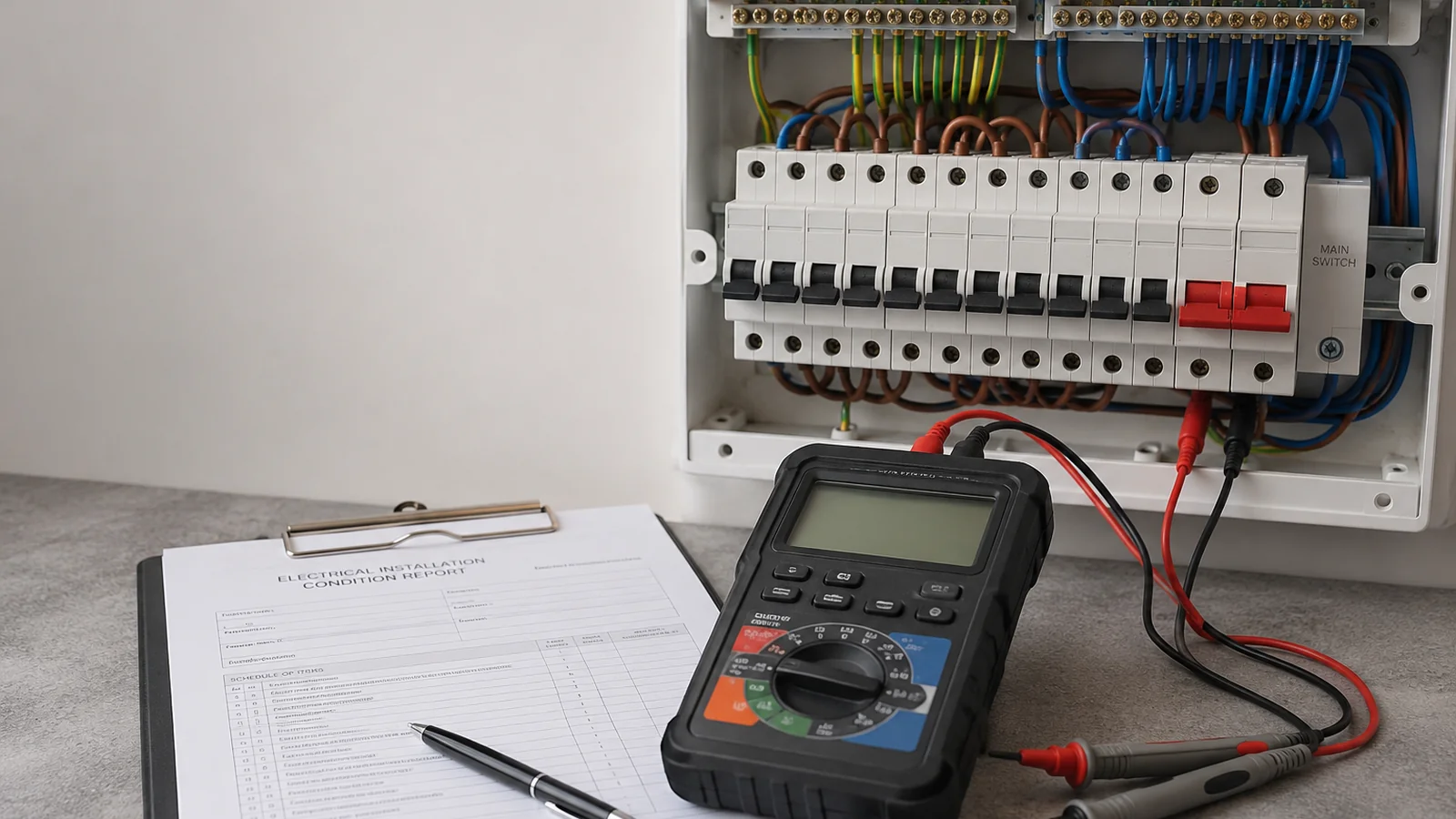
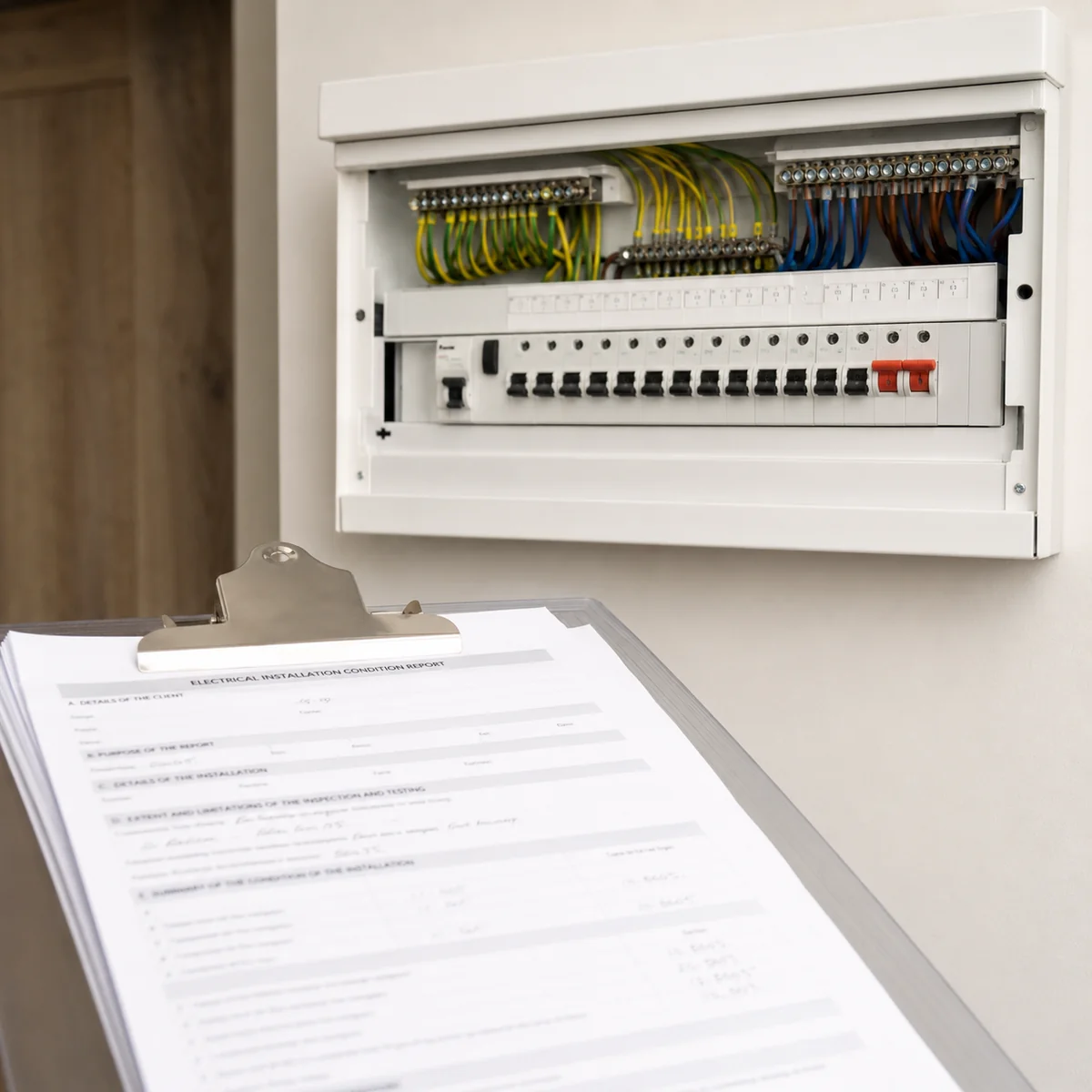
A periodic inspection is a thorough safety assessment of a property's entire electrical installation. At the end of the inspection, the electrician issues an Electrical Condition Inspection Report (ECIR), which grades any defects found and confirms whether the installation is safe for continued use. C1 defects almost always require a full or partial rewire. Consumer unit defects typically require a fuseboard upgrade.
Under SI 137 of 2019, landlords in Ireland are required to have a valid ECIR in place. The inspection must be carried out every five years for rental properties. For owner-occupied homes, the general recommendation is every ten years, or when buying a property with older wiring.
Periodic Inspection Cost in Ireland 2026
Prices below are for a standard 3-bedroom house with a single consumer unit and accessible wiring. Larger properties, older installations, or properties with multiple consumer units will cost more.
If the inspection reveals C1 or C2 defects, remedial work will be required before the ECIR can be issued as satisfactory. Remedial costs vary but a simple fix such as replacing a damaged socket is typically €80–€150 per item.
Need an ECIR for Your Property?
Find a RECI-registered electrician in your county who can carry out the inspection and issue a valid ECIR. Every inspector is verified on the Safe Electric register.
What Affects the Cost of a Periodic Inspection?
The inspection fee is not fixed. Several factors can push the total up or down significantly.
01Property size
More circuits, sockets, and fused connections take longer to test and document. A one-bedroom flat takes 2 to 3 hours; a large five-bedroom house can take 5 to 6 hours, with the cost scaled accordingly.
02Age of installation
Pre-1980 wiring requires more thorough inspection and typically generates more findings. Old rubber-insulated cable, round-pin sockets, or rewirable fuses all take extra time to assess and document accurately.
03Number of consumer units
Properties with multiple consumer units, such as a granny flat or converted garage, require each unit to be tested separately. Expect an additional €60–€120 per additional unit beyond the first.
04Access to wiring
Concealed conduit, underfloor wiring, or wiring behind fitted furniture takes longer to trace and test. If access panels need to be opened or flooring lifted, allow extra labour time.
05Category of findings
A report with many C1 (danger present) or C2 (potentially dangerous) defects takes longer to document correctly. The inspection itself is not the same as remedial work, but a complex report takes more electrician time.
06Location
Dublin and the greater Dublin area typically command a premium of €30–€60 over rural rates due to higher overheads and greater demand. Travel time also factors in for properties in remote rural locations.
What Does a Periodic Inspection Involve?
A standard inspection follows a structured sequence of visual checks and electrical tests. Here is what happens from start to finish.
01Visual inspection
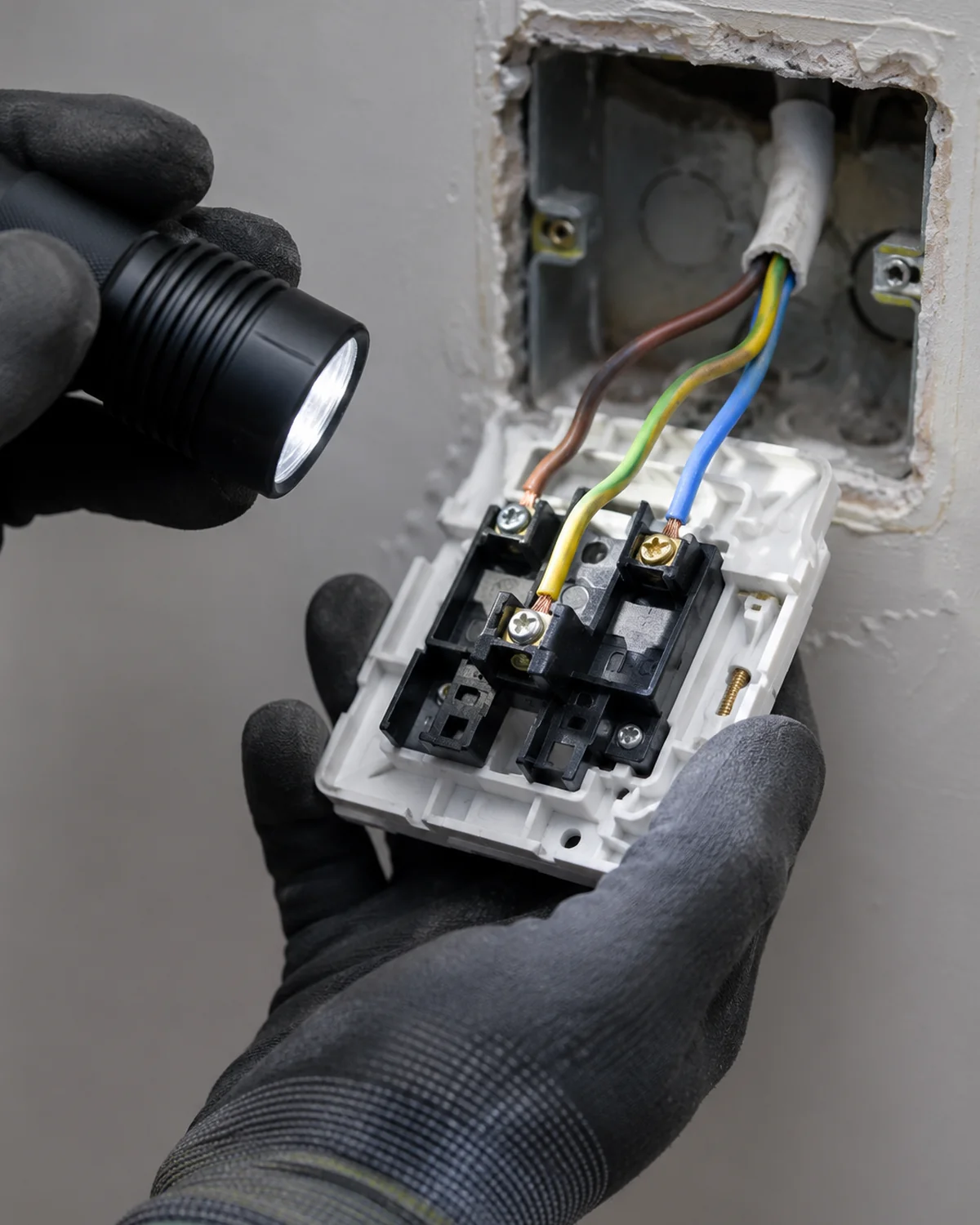
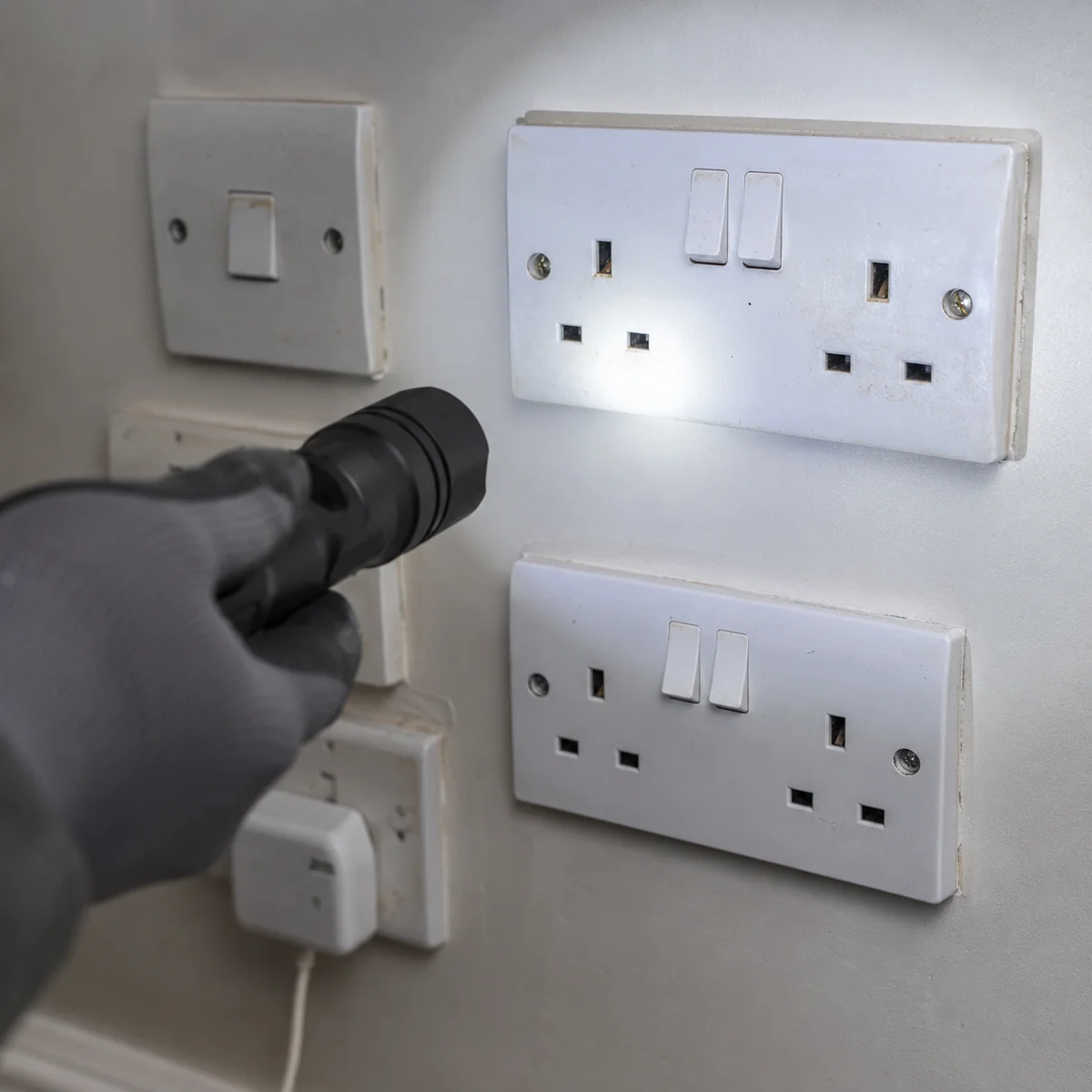
The electrician inspects all visible wiring, sockets, switches, light fittings, and the consumer unit for signs of damage, deterioration, or incorrect installation. This covers every room in the property.
02Dead testing
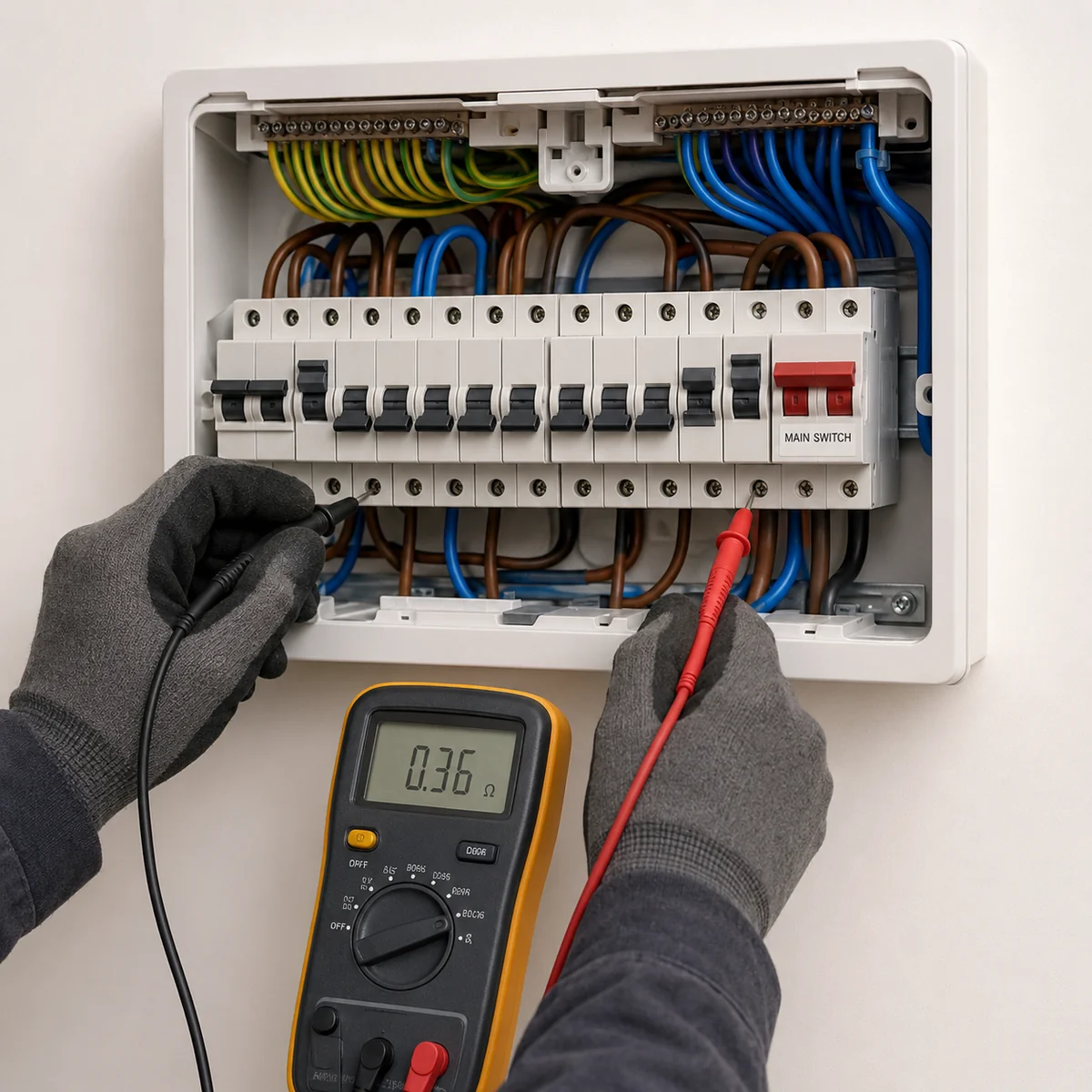
With the power isolated, insulation resistance tests confirm the wiring insulation has not broken down over time. Continuity tests verify that all protective conductors are correctly connected throughout the installation.
03Live testing
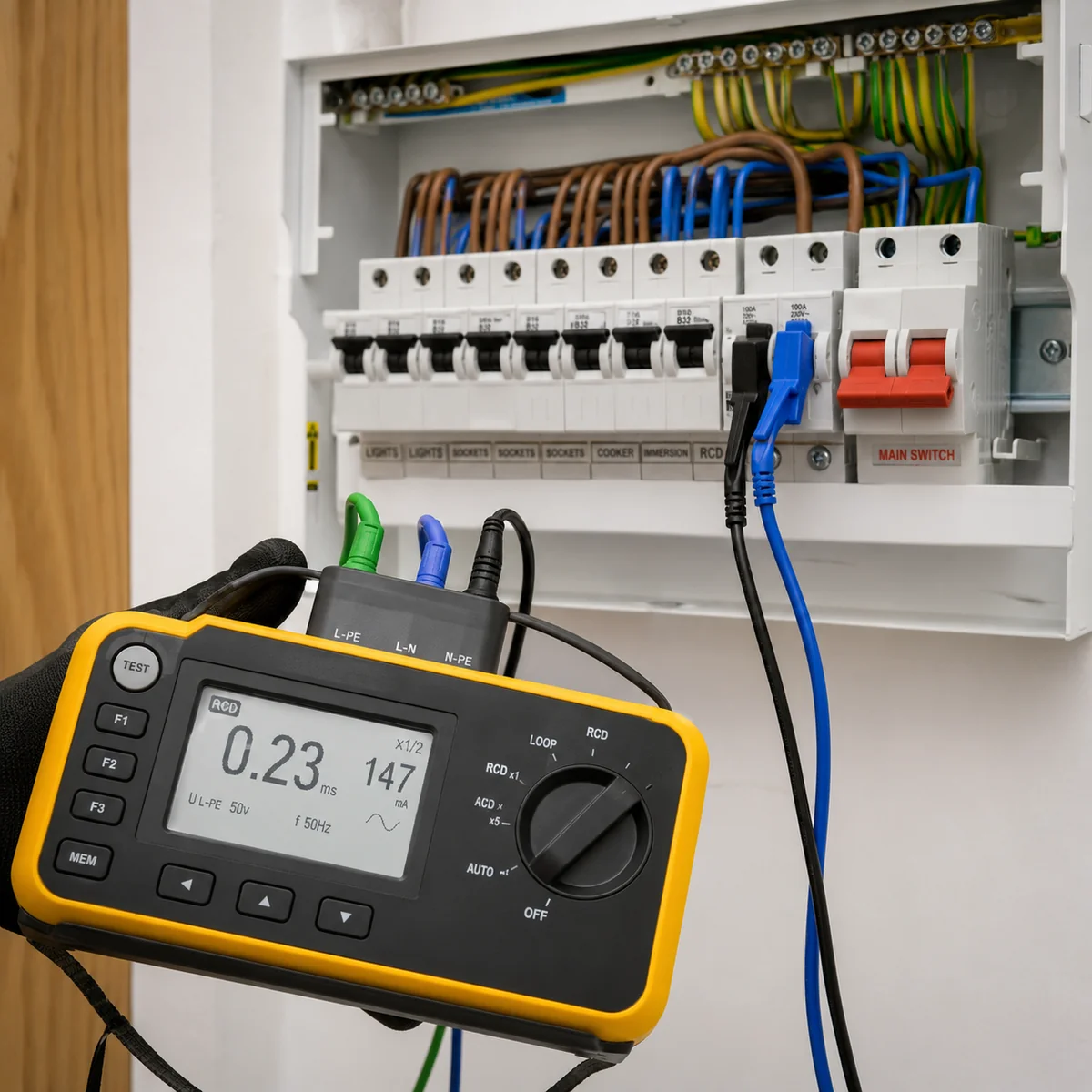
With power restored, RCD trip times are measured to confirm they operate within the required time limits, and earth fault loop impedance is tested on each circuit to verify fault protection.
04Consumer unit inspection
All MCBs, RCBOs and RCDs are checked for correct rating, condition, and labelling. The incoming supply termination and earthing arrangements are also inspected at this stage.
05ECIR issued
The completed report lists every test result and any defects graded as C1 (danger, immediate action required), C2 (potentially dangerous, urgent remedial action), or C3 (improvement recommended). A satisfactory ECIR is issued once any C1 or C2 items are resolved.
C1, C2 and C3: Understanding Your Inspection Findings
The ECIR uses a standard defect coding system. Knowing what each code means tells you how urgently you need to act.
Danger present
Immediate action required
The defect presents a risk of injury. The circuit or equipment involved should be made safe immediately, before the ECIR can be issued.
Potentially dangerous
Urgent remedial work
The defect could become dangerous. Remedial work must be completed promptly. The ECIR will not be satisfactory until C2 items are resolved.
Improvement recommended
No immediate risk
The item does not meet current best practice but poses no immediate danger. Remedial work is advisable but the ECIR can still be issued as satisfactory.
Further investigation
Cannot assess without more access
The electrician cannot verify the condition without destructive investigation or further access. This code flags items that need follow-up but cannot be assessed on the day.
Do Landlords Legally Need an ECIR in Ireland?
Yes. The Housing (Standards for Rented Houses) Regulations 2019, enacted under SI 137 of 2019, require landlords to ensure their rental properties have a valid ECIR in place. The inspection must be repeated every five years, or sooner if the installation is altered.
Local authorities and the Residential Tenancies Board (RTB) can issue improvement notices to non-compliant landlords. Keeping a current ECIR on file is the simplest way to demonstrate compliance.
Landlords in Ireland have specific legal obligations around periodic inspections — see our landlord electrical guide for the full requirements.
Who Can Carry Out a Periodic Inspection in Ireland?
Only a RECI-registered electrical contractor can carry out a periodic inspection and issue a valid ECIR. An inspection carried out by an unregistered electrician has no legal standing and cannot be used to satisfy the landlord requirements under SI 137 of 2019.
Before booking, verify the electrician is on the Safe Electric register at safeelectric.ie. The register is publicly searchable and free to check.
Periodic Inspection: Common Questions
What is a C1, C2 and C3 finding on an ECIR?
C1 means danger is present and the defect requires immediate action before the installation is used. C2 means the defect is potentially dangerous and urgent remedial work is needed before the ECIR can be issued as satisfactory. C3 is an improvement recommendation with no immediate danger — the ECIR can still be satisfactory with C3 items outstanding.
Is a periodic inspection the same as an ECIR?
The periodic inspection is the process — the physical visit, testing, and assessment. The ECIR is the written report produced at the end of that process. You need both: the inspection to identify the condition of the installation and the ECIR as the formal document for your records or to satisfy landlord regulations.
Do landlords legally need an ECIR in Ireland?
Yes. Under SI 137 of 2019 (Housing Standards for Rented Houses Regulations), all rental properties in Ireland must have a valid ECIR in place. The inspection must be repeated every five years. Landlords who cannot produce a current ECIR are in breach of the regulations and risk RTB improvement notices.
Can the same electrician do the inspection and the remedial work?
Yes, and this is common practice. There is no requirement in Ireland for the inspector and the remedial electrician to be different people, unlike in some other countries. Using the same registered contractor often speeds up the process, as they already know the installation from the inspection.
What happens if my property fails an ECIR?
A property does not technically "fail" an ECIR in the way an NCT works. Instead, the report lists C1 and C2 defects that must be rectified before a satisfactory ECIR can be issued. Once the remedial work is done, the electrician re-inspects the affected items and issues the satisfactory ECIR. There is no fee for the re-inspection of specific items if the same contractor does the remedial work, but practices vary.
How long is an ECIR valid for?
For rental properties, an ECIR is valid for five years under SI 137 of 2019. For owner-occupied homes, there is no statutory expiry date, but the general recommendation from RECI and Safe Electric is to repeat the inspection every ten years. If significant work has been carried out on the installation in the interim, a new inspection is advisable regardless of when the last one was done.
Book a periodic inspection today
Find a RECI-registered electrician in your county who can inspect your installation and issue a valid ECIR. All inspectors are verified on the Safe Electric register.