
Irish Guide 2026
What Electrical Work Does a Heat Pump Need in Ireland?
Dedicated circuits, consumer unit requirements, SEAI grant conditions, and who is qualified to do the work.
Find a registered electricianWhy an Air-Source Heat Pump Needs Dedicated Electrical Work
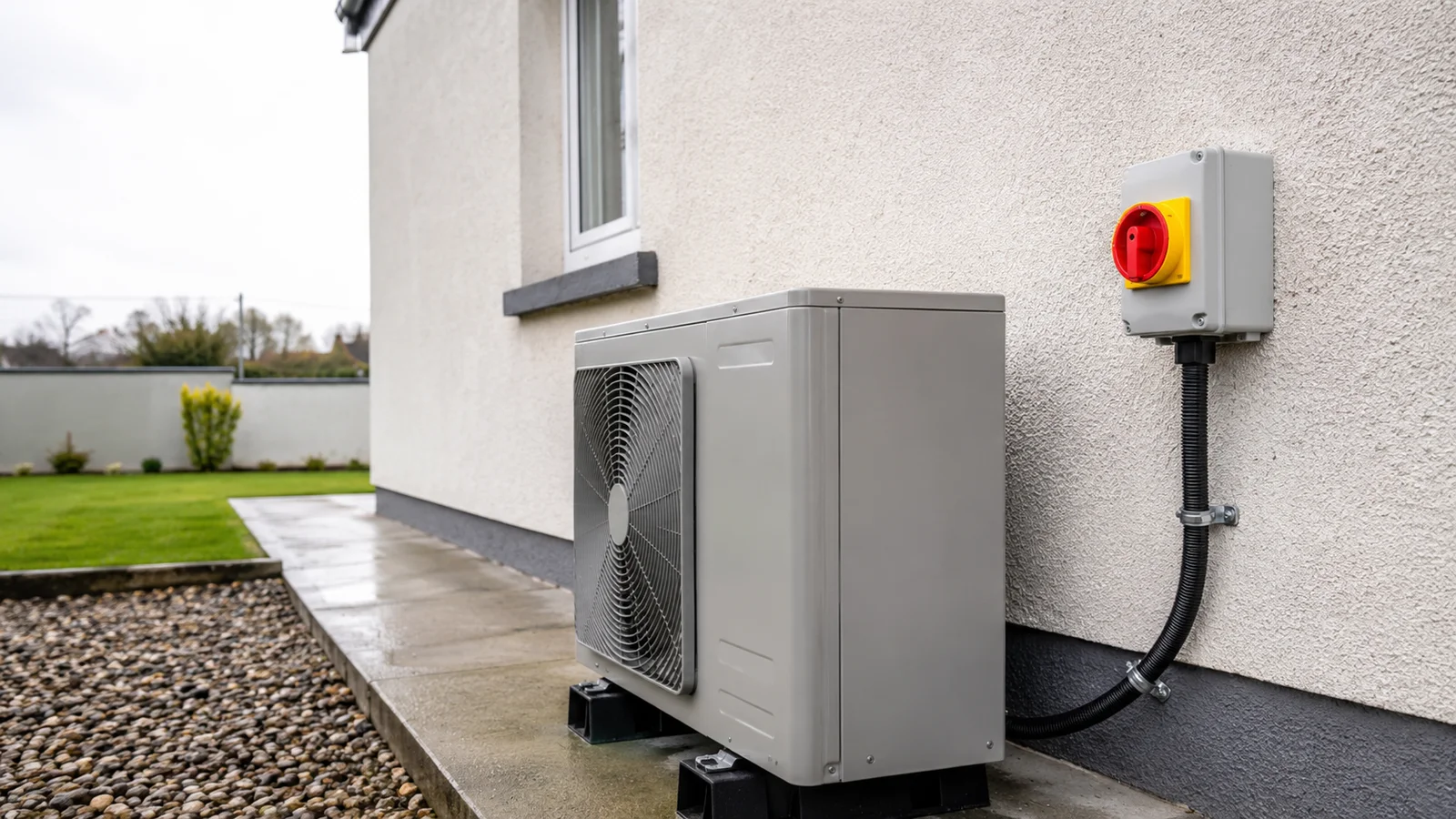
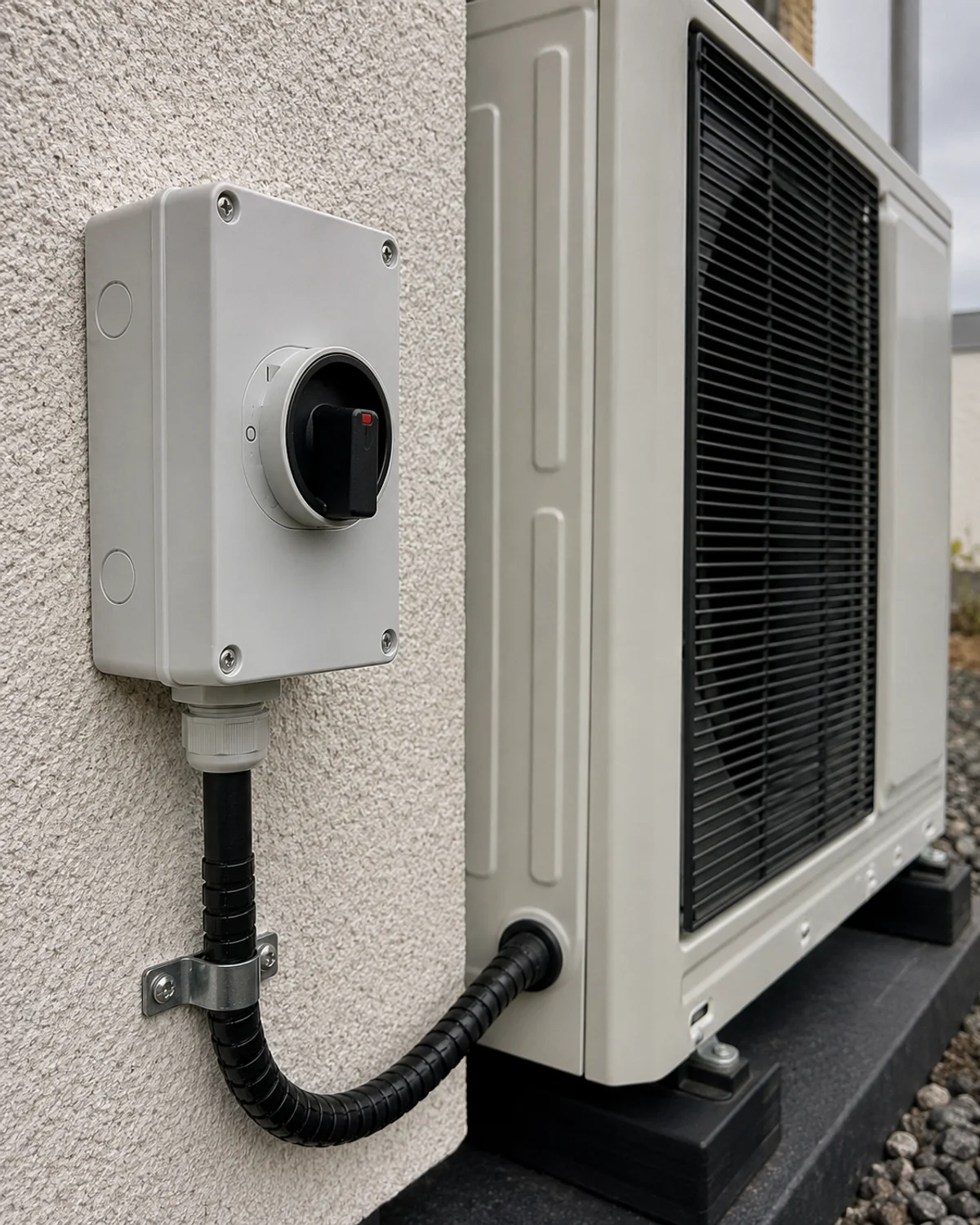
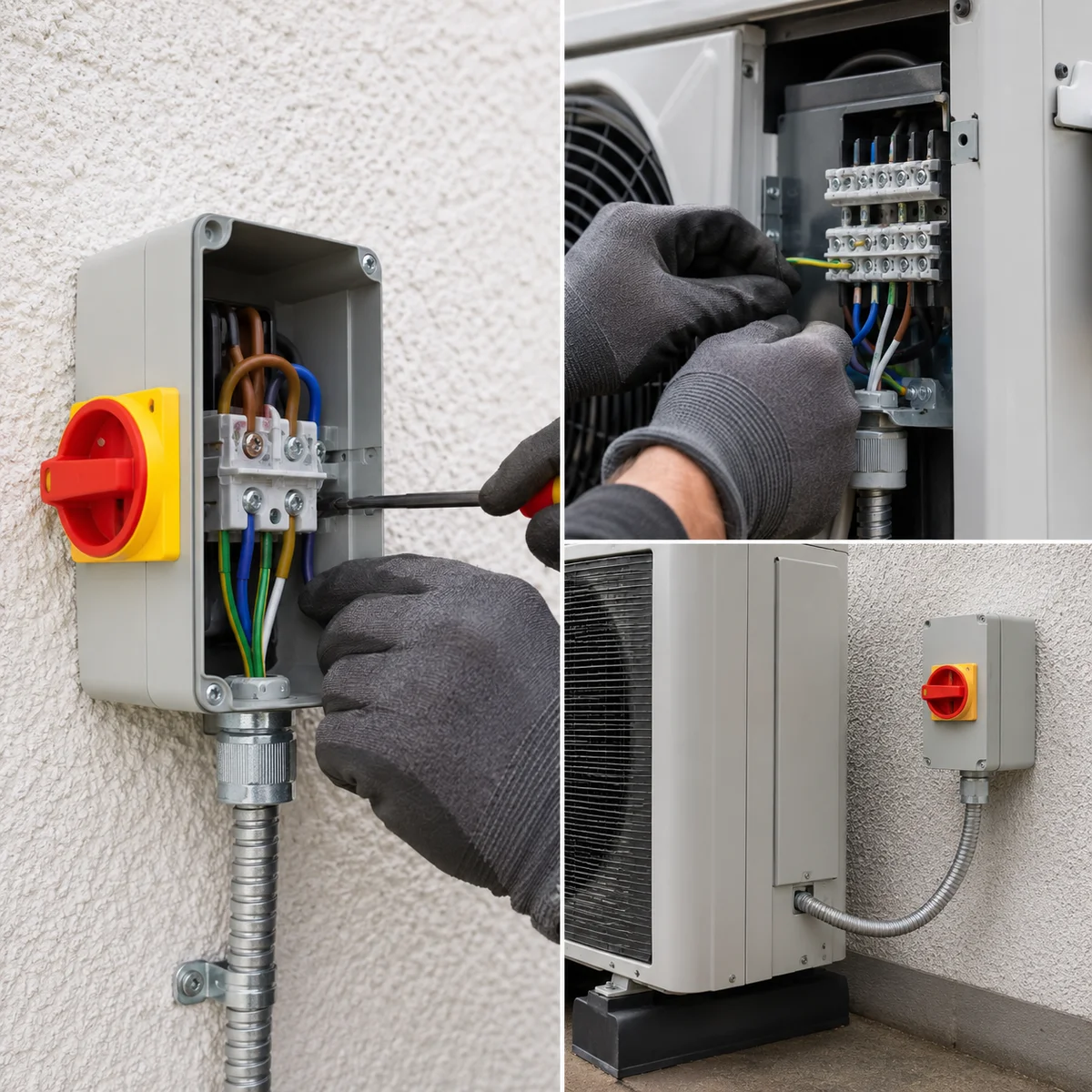
Installing an air-source heat pump (ASHP) in an Irish home is not simply a case of plugging in a new appliance. The system draws significant power continuously, and Irish electrical regulations require a dedicated circuit from your consumer unit to both the outdoor unit and the indoor buffer tank or heat interface unit. In most cases this also means a weatherproof isolator switch adjacent to the outdoor unit, correct RCD protection suited to the inverter-drive technology in modern units, and a full earthing and bonding check on the existing installation.
The SEAI Heat Pump System grant (up to €6,500 for an air-source heat pump) requires that all electrical work complies with IS 10101, the Irish Wiring Rules, and is carried out by a RECI-registered electrician. If your consumer unit is full, outdated, or lacking adequate protection, it must be upgraded before the grant conditions can be met. Understanding the full scope of electrical work needed before you get quotes will help you avoid unexpected costs mid-project.
What Electrical Work Is Required for a Heat Pump Installation?
The electrical scope for an ASHP installation typically covers four areas: the dedicated circuit from the consumer unit, the isolator switch at the outdoor unit, RCD protection appropriate to the heat pump's drive technology, and a check of the existing earthing and bonding. Each is mandatory under IS 10101 and cannot be skipped to reduce costs.
Most modern heat pumps use inverter-drive technology, which generates DC leakage currents not detected by the standard Type AC RCDs fitted in older Irish consumer units. The manufacturer's installation manual will specify whether a Type A or Type B RCD is required. Type B RCDs cost significantly more than Type A, so it is important to confirm the requirement before finalising your quote. Your RECI-registered electrician will check the manufacturer spec and confirm what protection is needed for the specific model being installed.
The heat pump unit itself and the hydronic heating system (pipework, radiators or underfloor heating) are installed by a SEAI-registered heat pump installer — typically a registered plumber or gas installer. The electrical connection is a separate trade and must be carried out by a RECI-registered electrical contractor. Both roles are required to satisfy the SEAI grant conditions.
Getting Quotes for Heat Pump Electrical Work?
Find a RECI-registered electrician in your county. Every contractor listed is verified on the Safe Electric register and can issue the IS 10101 certificate required by SEAI.
What Affects the Cost of Heat Pump Electrical Work?
Electrical costs for a heat pump installation can range from under €500 to over €3,000 depending on the condition of your existing installation and what the heat pump model requires. These are the main factors that move the price.
01Consumer unit capacity
If your consumer unit has a spare way available and is already a modern unit with RCD protection, the electrical work is straightforward. If all ways are used or the unit is an old rewirable fuseboard, it must be upgraded before the dedicated heat pump circuit can be added. A full consumer unit upgrade adds €800 to €1,500 to the total.
02RCD type required
Type A RCDs are standard and relatively inexpensive. Some inverter-drive heat pumps require a Type B RCD, which can cost €200 to €400 for the device alone. Always confirm the manufacturer specification with your electrician before accepting a quote, as this is a frequent source of unexpected cost.
03Cable run length
The dedicated circuit runs from the consumer unit, typically located in a hall cupboard or utility room, out through the wall to the outdoor unit. A short run in a modern home is straightforward. A long run through a concrete floor or across a detached garage significantly increases labour and material cost.
04Earthing and bonding condition
IS 10101 requires a full earthing and bonding check as part of the installation. If the property has outdated earthing arrangements, such as a TN-C-S system requiring supplementary bonding, remedial work may be required before sign-off. In older Irish homes this is more common than in newer builds.
05Indoor unit location
The buffer tank or heat interface unit is typically installed in a utility room or hot press. If the indoor unit is in a location that requires a separate spur or additional wiring rather than a straightforward connection from the main circuit, this adds time and cost.
06Regional labour rates
Dublin and the greater Dublin area carry the highest day rates, typically €65 to €90 per hour for a qualified electrician. In rural counties such as Mayo, Donegal, or Roscommon, day rates are lower and the total electrical cost for the same scope of work is generally €150 to €300 less.
SEAI Heat Pump Grant: What the Electrical Conditions Require
The SEAI Heat Pump System grant covers air-source, ground-source, and water-source heat pumps. For an air-source system the grant is up to €6,500. To qualify, the electrical installation must satisfy specific conditions that go beyond simply connecting the unit. See the SEAI grants guide for the full eligibility rules, the correct application sequence, and the mistakes that most often result in a rejected claim.
01RECI-registered electrician required
All electrical work connected with the heat pump installation must be carried out by a contractor who is registered with RECI (Register of Electrical Contractors of Ireland) and holds a current Safe Electric registration. The SEAI will not accept certification from an unregistered person. Your electrician will issue a completion certificate confirming the work complies with IS 10101.
02Pre- and post-installation BER survey
The SEAI requires a Building Energy Rating (BER) survey before and after the installation. The post-installation BER must demonstrate an improvement in the home's energy rating. Your SEAI-registered assessor carries out both surveys. This is separate from the electrical work but the electrical installation must be completed before the post-installation survey is done.
03IS 10101 compliance on the full circuit
The dedicated circuit, isolator, RCD protection, and all associated wiring must comply with the current edition of IS 10101. The type of RCD must match the manufacturer specification for the specific heat pump model. Any remedial earthing or bonding work flagged during the check must be completed as part of the installation.
04Grant must be applied for before work starts
Under the SEAI Better Energy Homes scheme, the grant must be applied for and approved before any work begins on site. Starting the installation before receiving SEAI approval will disqualify the application. Your SEAI-registered heat pump installer will typically manage the grant application as part of their service, but confirm this before signing a contract.
Do I Need a Consumer Unit Upgrade for a Heat Pump?
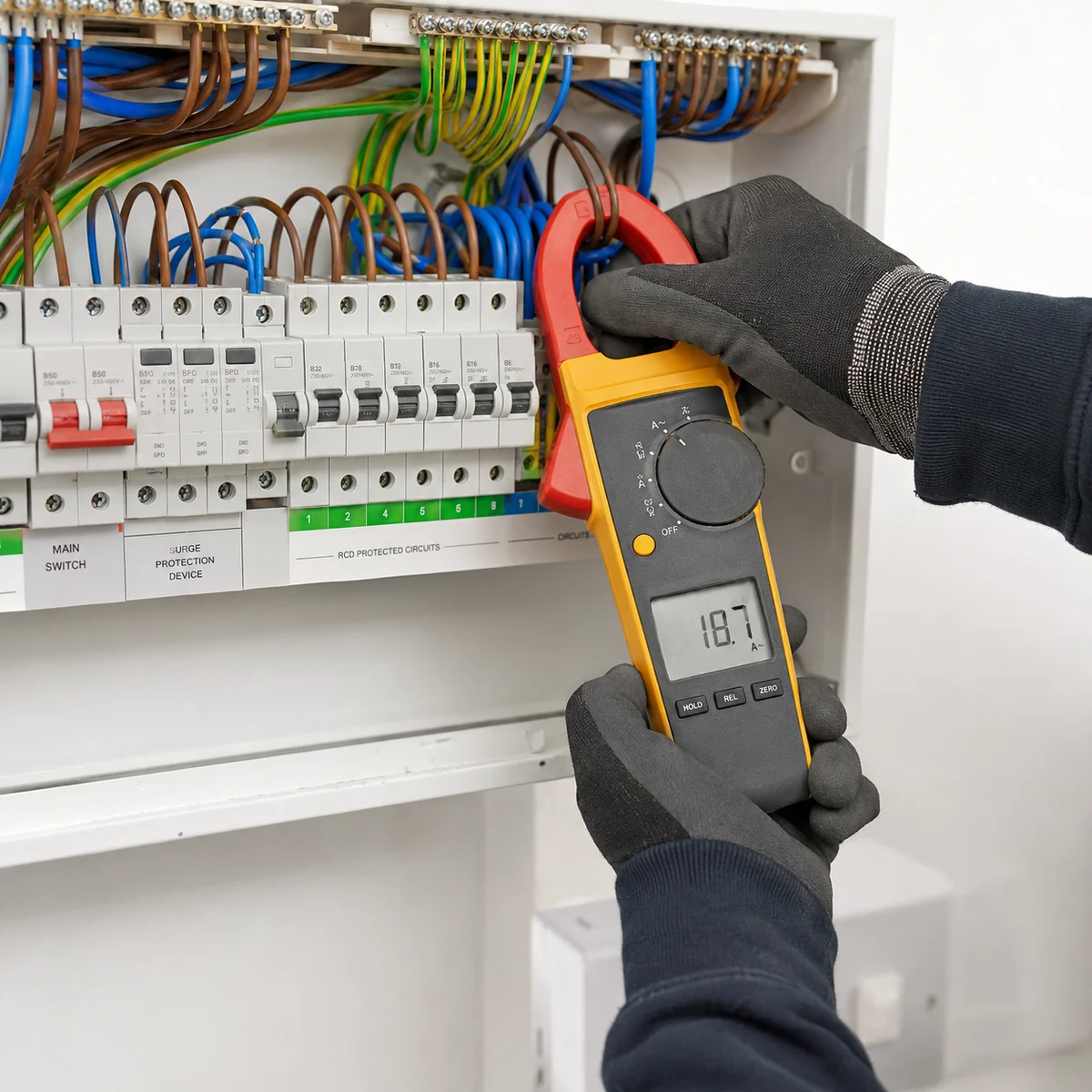
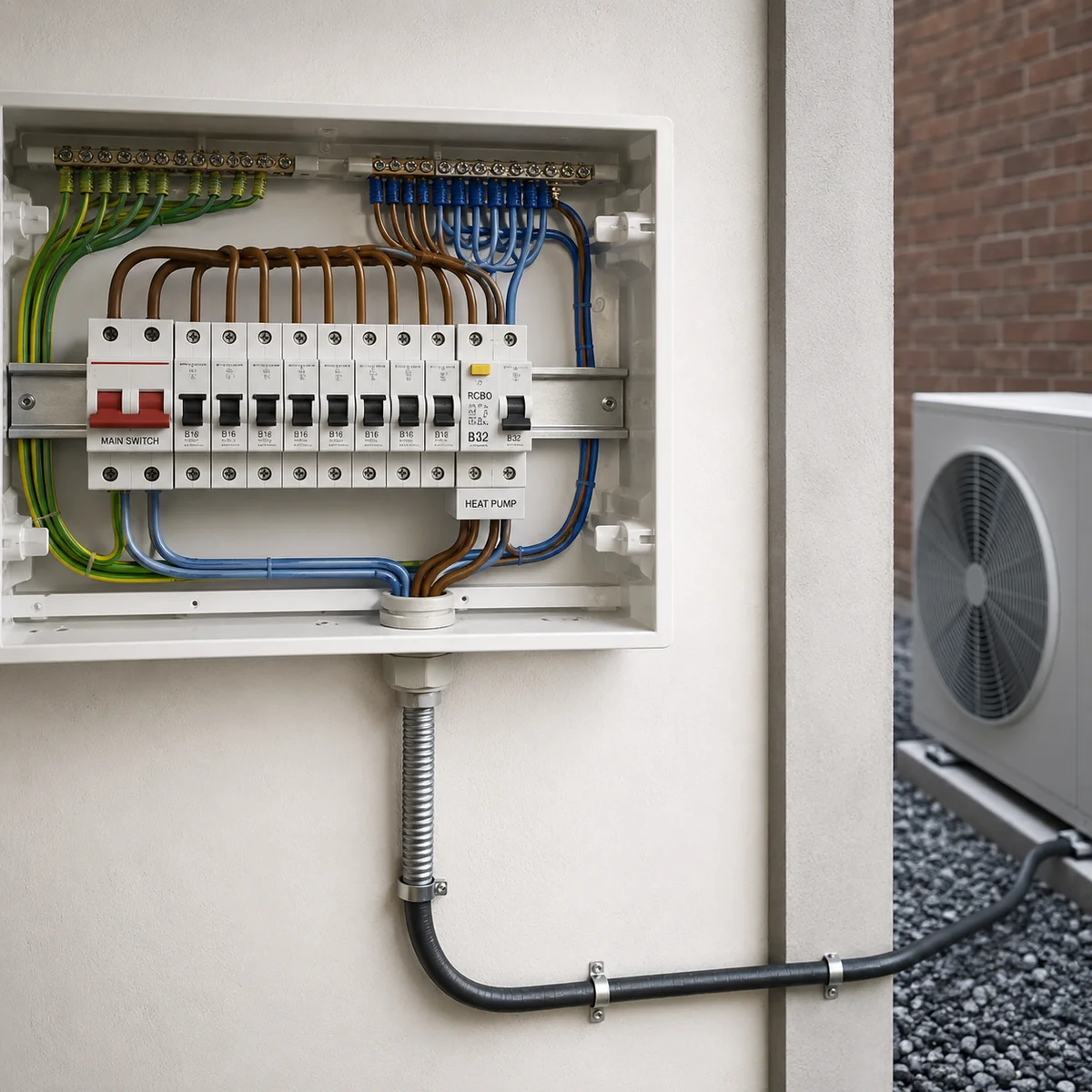
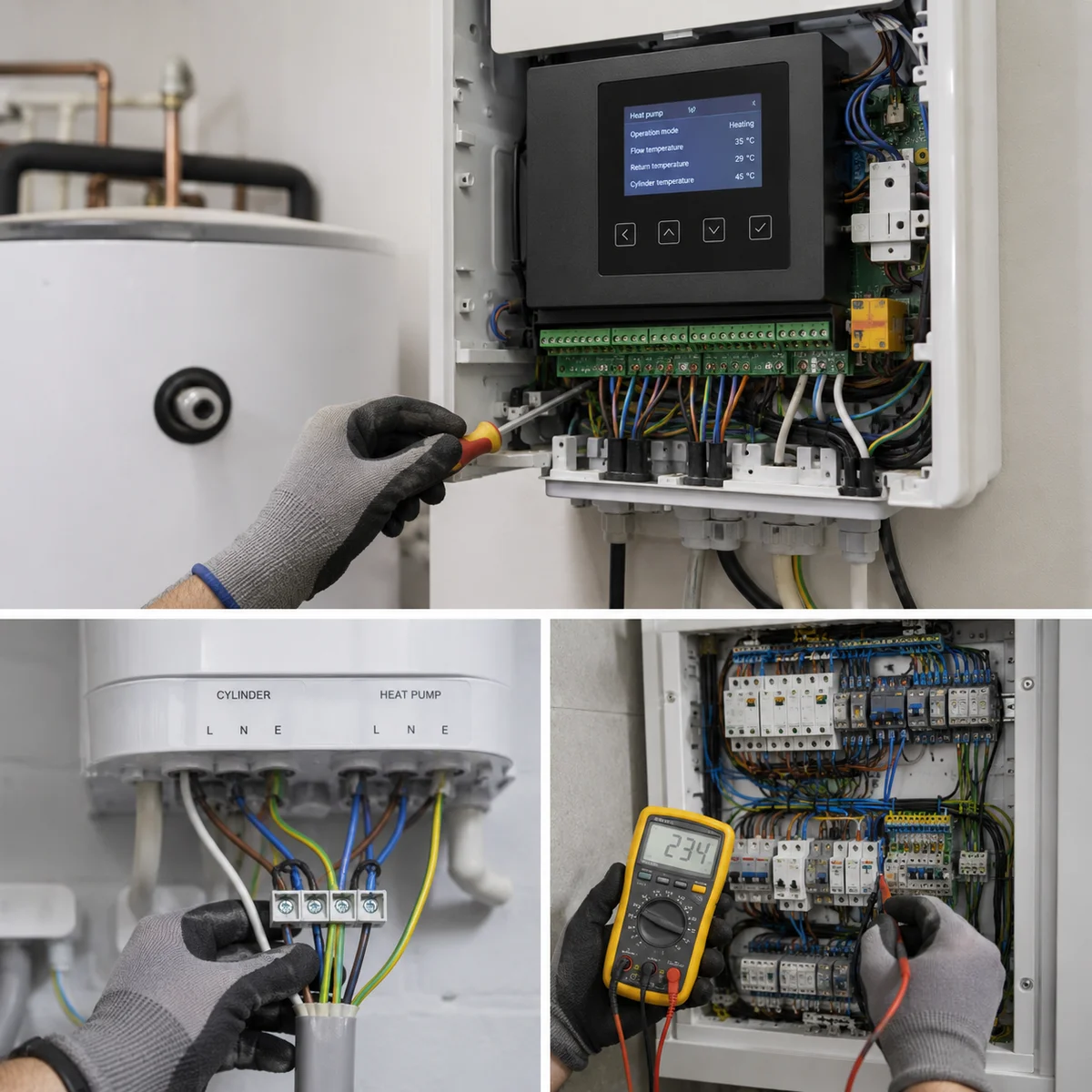
Not always, but it is more common than homeowners expect. A dedicated 32A or 40A circuit requires a spare way in your consumer unit. Modern consumer units installed in the last 15 years often have one or two spare ways; older units, particularly ceramic fuse boards with rewireable fuses, do not have spare capacity and must be fully replaced.
Even where a spare way exists, check that the existing unit provides the correct type of RCD protection for the circuit. If the unit has only Type AC RCDs and your heat pump requires a Type A or Type B device, either the whole unit or the relevant RCD module must be upgraded. Your RECI electrician will assess this at survey stage before any work begins.
The Completion Certificate and What It Covers
On completion of the electrical work, your RECI-registered electrician issues a completion certificate confirming the installation complies with IS 10101. This certificate is a condition of the SEAI grant payment and must be submitted as part of your grant claim. Keep the original with your property documents alongside the BER certificates.
The certificate covers the dedicated circuit, isolator, RCD protection, and earthing and bonding work. It does not cover the heat pump unit itself or the hydronic system: those are covered under the SEAI-registered installer's own documentation. You should receive separate documentation from both trades before submitting your grant claim to the SEAI.
Heat Pump Electrical Work: Common Questions
Can any electrician do the electrical work for a heat pump?
No. To satisfy the SEAI grant conditions, the electrical installation must be carried out by a RECI-registered electrical contractor with a current Safe Electric registration. An unregistered person cannot issue a valid IS 10101 completion certificate, and without that certificate the grant claim cannot be processed. You can verify any electrician's registration at safeelectric.ie before engaging them.
What size circuit does a heat pump need?
Most residential air-source heat pumps require a dedicated 32A or 40A circuit, depending on the model and its rated kW output. The manufacturer's installation manual will specify the exact circuit rating required. Do not assume: undersizing the circuit breaker can cause nuisance tripping or, in the worst case, cable overheating. Your electrician should confirm the circuit size directly from the manufacturer specification before installing.
What is a Type B RCD and do I need one?
Type B RCDs detect both AC and DC residual currents, including the smooth DC fault currents produced by some inverter-drive heat pumps. Standard Type A RCDs detect AC and pulsating DC but not smooth DC. If your heat pump's installation manual specifies a Type B RCD, fitting a Type A is non-compliant and voids the manufacturer warranty. Type B devices are more expensive (€200 to €400 for the device) but are increasingly specified by manufacturers of modern inverter units. Your electrician will confirm the requirement from the datasheet.
How long does the electrical work take for a heat pump install?
The electrical work for a straightforward heat pump installation, where the consumer unit already has a spare way and no upgrade is needed, typically takes half a day to a full day on site. If a consumer unit upgrade is also required, allow a full day. The electrician coordinates with the heat pump installer so that the electrical connection is made once the outdoor and indoor units are in position. Testing and certification is carried out on the same visit.
Does the SEAI grant cover the cost of the electrical work?
The SEAI Heat Pump System grant is a single payment that covers the heat pump installation project as a whole. It does not separately itemise the electrical work. The grant amount (up to €6,500 for an air-source heat pump) is paid after the installation is complete and all required documentation, including the IS 10101 certificate, has been submitted. Whether the grant fully covers the electrical element depends on the total project cost. In most cases the grant offsets a significant portion of the total but does not cover everything.
Related Guides
Home energy upgrade guide
SEAI grants for Irish homeowners
Consumer unit upgrade
Find a RECI-registered electrician for your heat pump
Only a registered electrical contractor can carry out the dedicated circuit work and issue the IS 10101 certificate required by SEAI. Find a qualified electrician in your county today.