
2026 Irish Prices
What Does a Fuseboard Upgrade Cost in Ireland?
Real 2026 price ranges, what the job involves, and what to check before you book a contractor.
Find a registered electricianWhat Is a Fuseboard Upgrade?
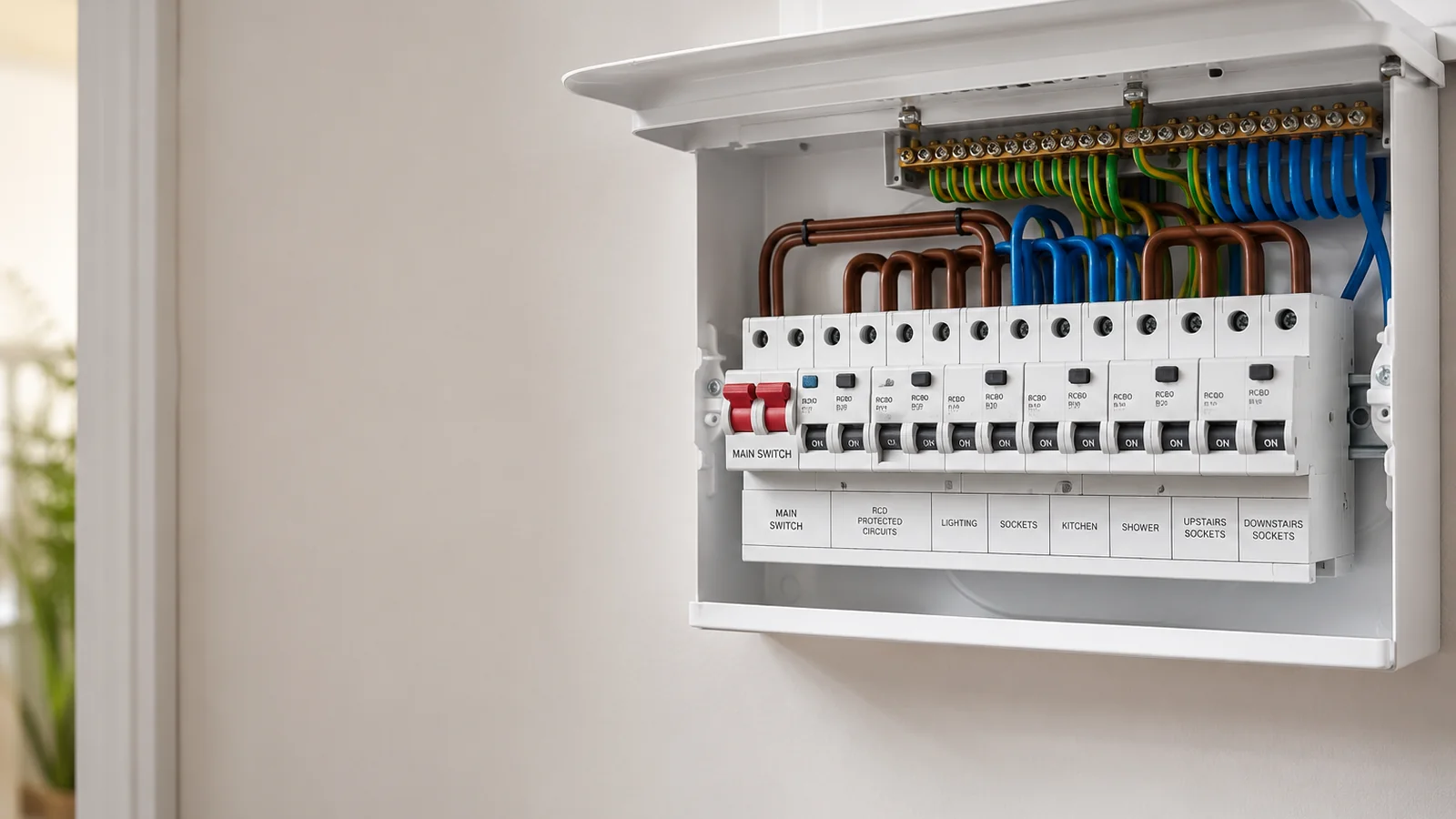
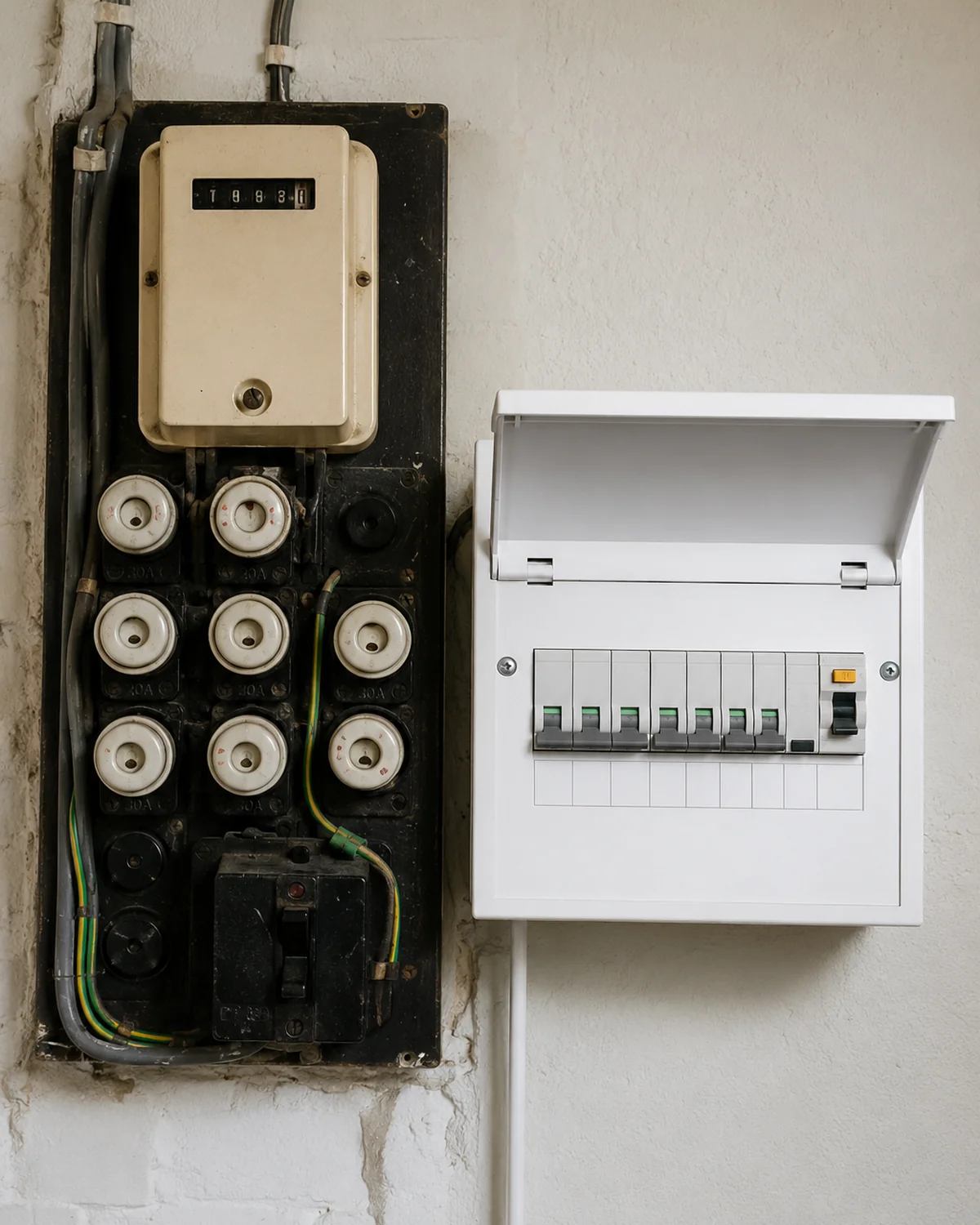
A fuseboard upgrade replaces your old fuse box with a modern consumer unit fitted with MCBs (miniature circuit breakers) and RCDs (residual current devices). RCDs trip in milliseconds when they detect a fault current, dramatically reducing the risk of electrocution and fire compared with the old rewireable ceramic fuses they replace. The work is carried out by a RECI-registered electrician and typically takes one day.
Older ceramic fuse boxes cannot safely accept additional circuits and are increasingly flagged by home insurers as a condition-of-cover risk. If your property still has a ceramic fuse box with rewireable fuses, an upgrade is not optional: it is a safety and compliance issue that will affect your insurance, your ability to add new circuits, and your ability to sell the property without remediation.
Fuseboard Upgrade Cost Ireland 2026
Prices vary by county, property size, and the age and condition of the existing wiring. The ranges below are for a standard 3-bed semi in average condition, based on 2026 contractor quotes across the country.
Prices include the consumer unit, MCBs, RCDs or RCBOs, and all labour. Add 10 to 15 percent for larger homes (4 or more bedrooms) or properties with older aluminium wiring. If the supply tails need replacing (common in pre-2000 installs), allow an additional €200 to €400.
Ready to Upgrade Your Fuseboard?
Find a RECI-registered electrician in your county. Every contractor listed is verified on the Safe Electric register and can issue an IS 10101 completion certificate for your upgrade.
What Affects the Cost of a Fuseboard Upgrade?
Quotes for the same job can vary by several hundred euro. These are the six factors that move the price most significantly for Irish properties in 2026.
01Number of circuits
More circuits mean more MCBs and more wiring termination work. A standard 3-bed house has 8 to 12 circuits. A larger home with a garage, outdoor sockets, underfloor heating, or EV charger can have 18 or more, each adding to the labour and materials cost.
02Age of existing consumer unit
Pre-2000 consumer units often have deteriorated tails (the cables connecting the ESB meter to the unit). These must be replaced at the same time, adding €200 to €400 to the job. Units from the 1970s and 80s may also have aluminium tails, which require specialist handling.
03RCD vs RCBO protection
A standard upgrade uses shared RCDs: one device protects a group of circuits, so a fault on any one circuit trips the group. Full RCBO protection gives each circuit its own combined breaker and residual current device, so a fault on one circuit affects only that circuit. RCBO boards cost €200 to €500 more but are the better specification.
04Three-phase vs single-phase supply
The vast majority of Irish homes are single-phase. Three-phase supply, more common in rural properties with older ESB connections or properties with large outbuildings, requires a larger and more expensive consumer unit. Always confirm your supply type before getting quotes.
05Location of the existing unit
A consumer unit in a standard utility room or hallway is a straightforward swap. Units in awkward locations such as under stairs, inside a built-in cupboard, or in a damp outhouse add labour time. Some locations may require the unit to be relocated, which adds cable work.
06Additional works required
A RECI-registered electrician must inspect the full installation before certifying the upgrade. Issues commonly flagged at the same visit include missing smoke alarm circuits (required under IS 3218), earthing deficiencies, and corroded bonding connections. Budget for these to be addressed at the same time.
What Does a Fuseboard Upgrade Involve?
A standard consumer unit replacement takes one day from start to certification. Here is what happens on the day.
01Survey and written quote
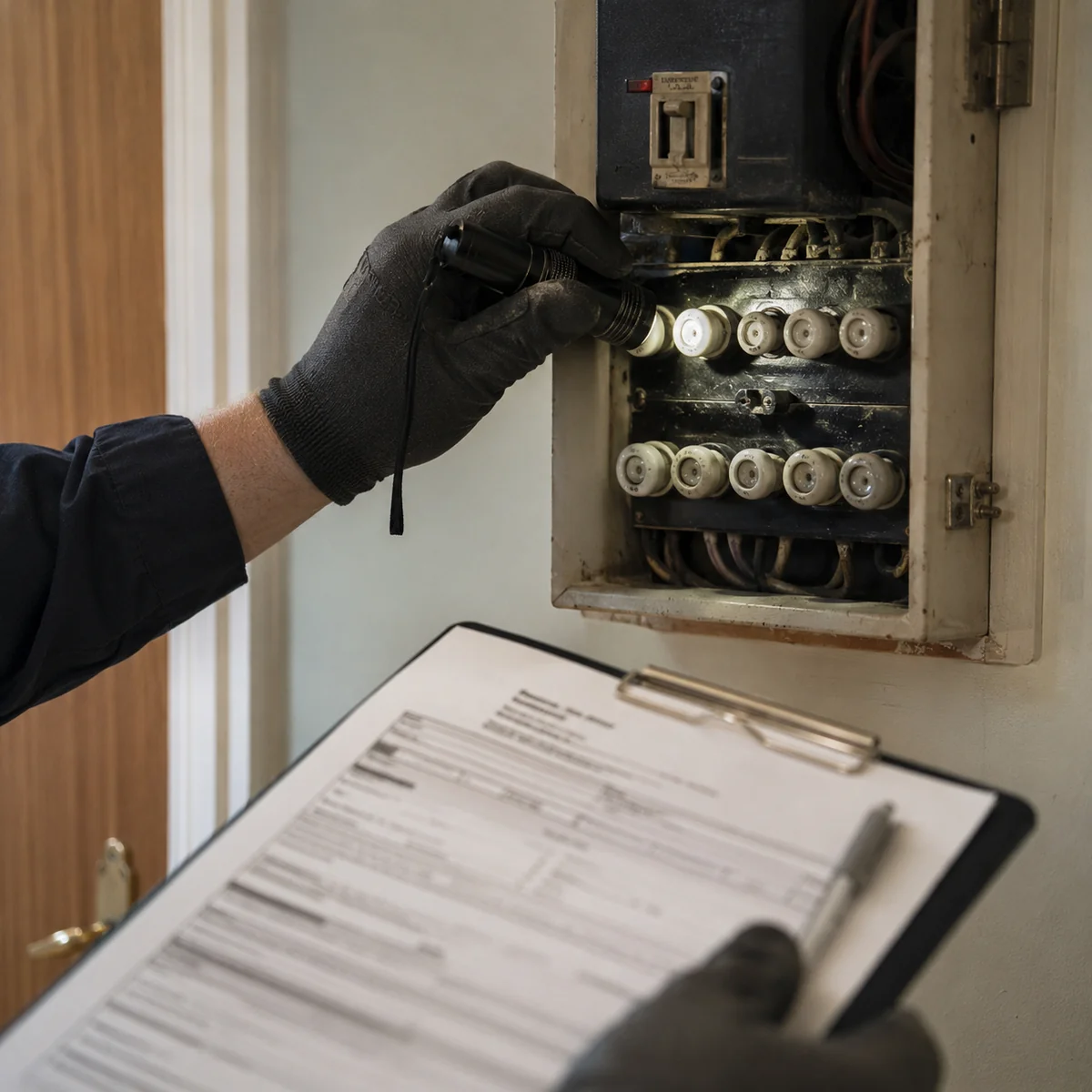
The electrician visits to inspect the existing installation, count circuits, assess the board location, and check the condition of the tails. A written quote is issued before any work begins. This is also when any additional works such as earthing upgrades or smoke alarm circuits are identified and priced.
02ESB Networks disconnection
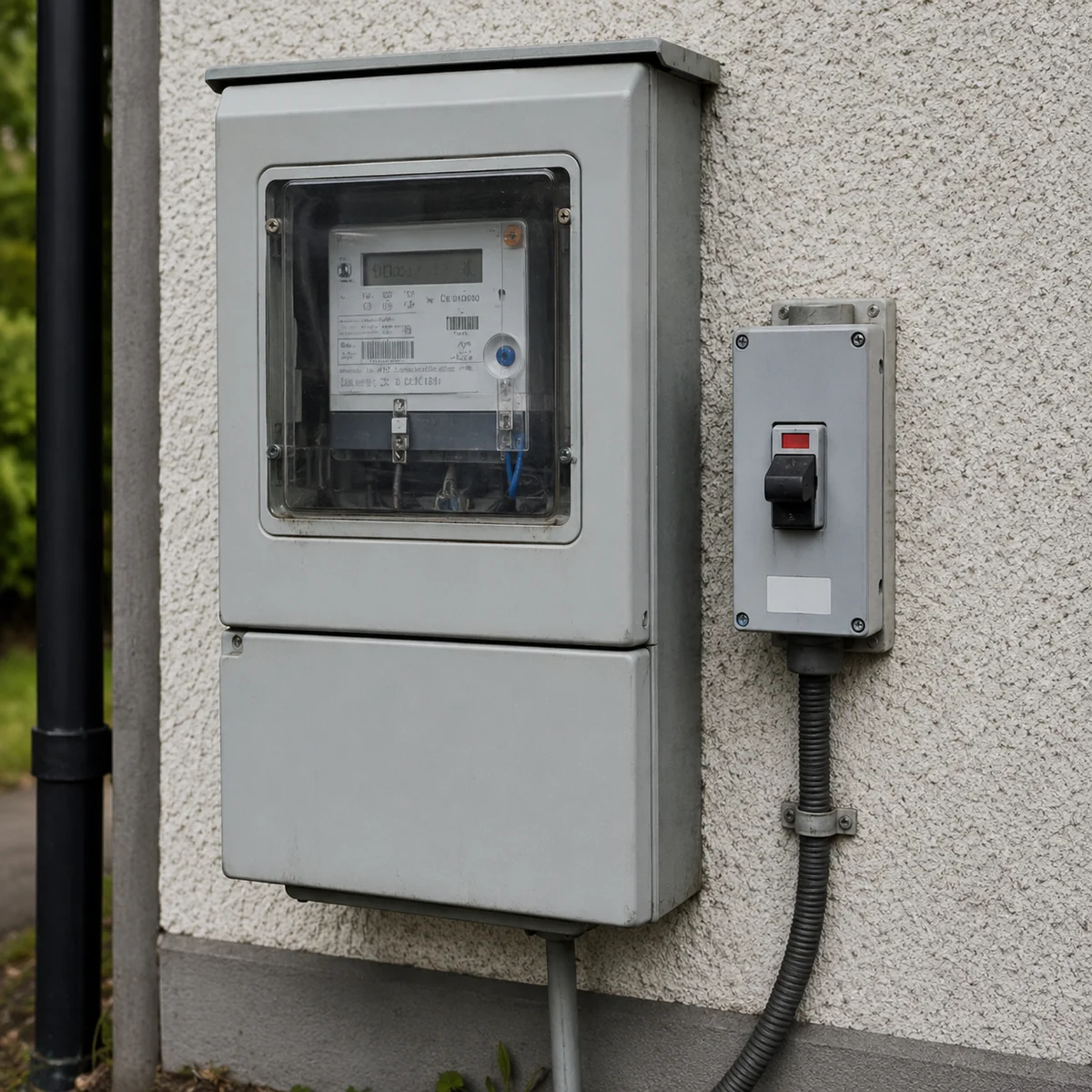
ESB Networks must attend to de-energise the supply before the old consumer unit is removed. This is arranged in advance by the electrician. The property will be without power for a period of 2 to 4 hours while the swap is carried out. ESB Networks then reconnect the supply once the new unit is in place.
03New consumer unit installed
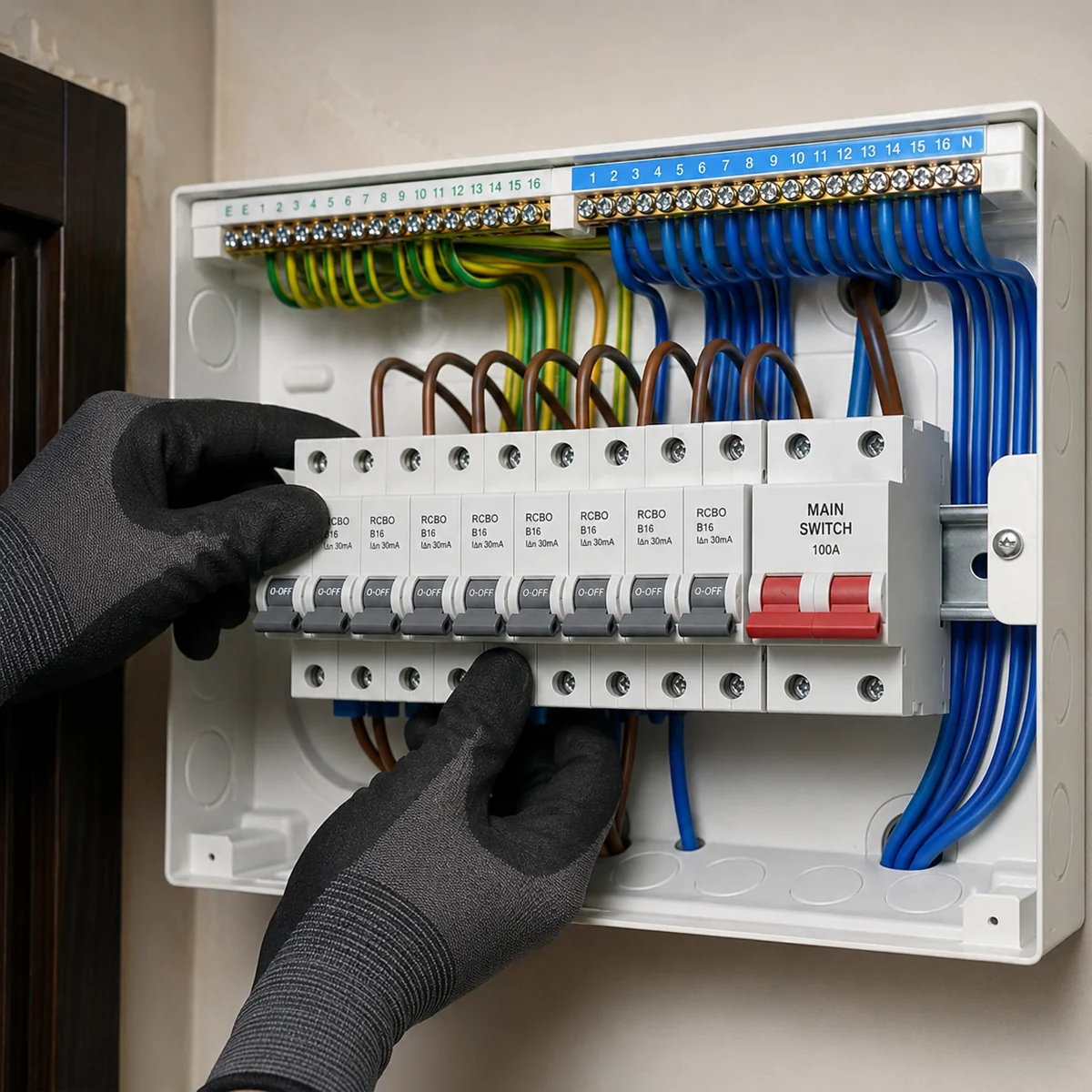
The new consumer unit is fixed in position, all circuits are re-terminated into the correct MCBs or RCBOs, and RCDs are wired and tested. Each circuit is labelled clearly on the board directory. The installation must comply with IS 10101, the current Irish Wiring Rules.
04Testing and certification
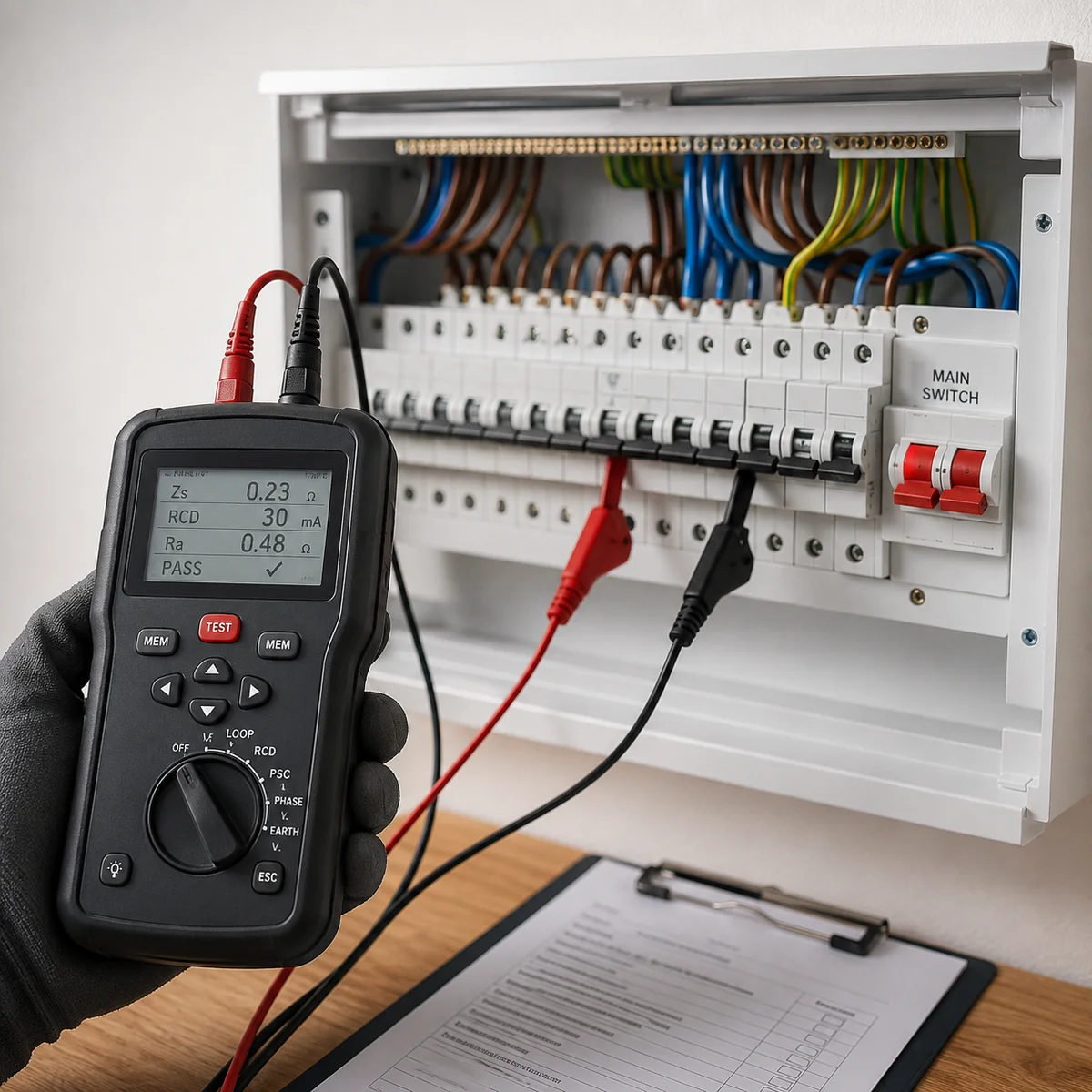
Once the supply is restored, every circuit is tested in full: continuity, insulation resistance, polarity, and RCD trip times are all recorded. A completion certificate is issued confirming the installation meets current Irish standards. This certificate is your proof of compliance for insurers, lenders, and future buyers.
Do You Need a Fuseboard Upgrade?
Not every property needs an immediate upgrade, but there are clear signs that the current consumer unit is no longer adequate. If any of the following apply to your property, get a RECI-registered electrician to inspect and advise.
Your fuse board is older than 25 years
It has ceramic fuses rather than MCBs
There is no RCD protection on any circuit
Circuits trip frequently or fuses blow regularly
You are planning a full rewire or major extension
Your home insurer has flagged the board as a risk
MCB vs RCBO: Which Consumer Unit Is Right for Your Home?
An MCB (miniature circuit breaker) protects against overload and short circuit but does not detect earth fault current. An RCD sits upstream and protects a group of MCBs, cutting power to that group when it detects a fault. The disadvantage is that a single fault trips multiple circuits at once.
An RCBO combines both functions in one device: each circuit gets its own overload, short circuit, and earth fault protection. A fault on one circuit trips only that circuit. RCBO boards cost €200 to €500 more than RCD-protected boards but are the superior specification, particularly for properties with medical equipment, home offices, or freezers on dedicated circuits.
Do You Need an ECIR After a Fuseboard Upgrade?
An ECIR (Electrical Condition Inspection Report) is not the same as the completion certificate issued after a fuseboard upgrade. An ECIR is a periodic inspection of the entire electrical installation, required every 5 years for rental properties under SI 137 of 2019. A fuseboard upgrade completion certificate only certifies the consumer unit work itself.
If your rental property is due an ECIR and you are also upgrading the fuseboard, ask the contractor to carry out both at the same visit. The ECIR may identify additional defects in the wiring that need addressing before the property can be re-certified. Verify your contractor is on the Safe Electric register at safeelectric.ie before booking.
Fuseboard Upgrade: Common Questions
How long does a fuseboard upgrade take?
A standard consumer unit replacement takes one day. The electrician typically arrives in the morning, the ESB Networks engineer disconnects the supply for the swap (usually 2 to 4 hours), and the new board is installed, tested, and certified before close of business. Larger properties with more circuits, or where additional works such as earthing upgrades are needed, may require a second day.
Will my power be off during the work?
Yes, the supply must be de-energised by ESB Networks before the old consumer unit is removed. The outage typically lasts 2 to 4 hours while the new unit is fitted and wired. Your electrician arranges the ESB Networks disconnection and reconnection in advance. Plan to move food from the freezer or make alternative arrangements for any critical equipment during that window.
Do I need an ECIR after a fuseboard upgrade?
The upgrade completion certificate and an ECIR are different documents. The completion certificate certifies the consumer unit work only. An ECIR is a full periodic inspection of the entire electrical installation. If your property is a rental and is due an ECIR (required every 5 years under SI 137 of 2019), arrange it at the same visit. For owner-occupied homes, an ECIR is not legally required but is recommended if the wiring has not been inspected in over 10 years.
What is the difference between an MCB and an RCBO?
An MCB (miniature circuit breaker) protects a circuit against overload and short circuit, but it does not detect earth fault current. In a standard RCD board, a separate RCD device covers a group of MCBs and provides the earth fault protection for that group. An RCBO combines both functions in one device, so each circuit has its own individual protection. A fault on one RCBO circuit trips only that circuit, leaving all others live. RCBO boards cost more but give better fault isolation and are the preferred specification for new installations.
Can I upgrade my fuseboard without a full rewire?
Yes, provided the existing wiring is in sound condition. A RECI-registered electrician will inspect the installation before certifying the upgrade. If the wiring is in good condition, the consumer unit can be replaced as a standalone job. If the inspection reveals defects in the wiring, those defects must be addressed before the board can be certified to IS 10101. In some older properties, a fuseboard upgrade and a partial or full rewire are needed together.
Does a new fuseboard add value to my house?
Not directly in terms of market price, but it removes a buyer objection and can prevent an insurance issue that could delay or derail a sale. An older ceramic fuse box is frequently flagged in surveyor reports and by mortgage lenders as a condition requiring remediation before drawdown. Having a modern consumer unit with a valid completion certificate means the electrical installation can be presented as compliant, removing one of the most common conditions placed on mortgage approvals for older Irish properties.
Find a RECI-registered electrician for your upgrade
Only a registered contractor can carry out a consumer unit replacement and issue a valid IS 10101 completion certificate. Find a qualified electrician in your county.