Irish Guide 2026
Smart Home Wiring in Ireland: What to Plan and What It Costs
Smart lighting, structured cabling, or a central network cabinet: what each involves, the Irish wiring rules that apply, and 2026 costs for supply and fit.
Find a registered electricianTwo Categories Every Smart Home Project Covers
Smart home electrical work in Irish homes splits into two distinct categories, and most projects involve at least one of them. The first is smart lighting and power control: replacing standard switches and sockets with smart versions, or installing smart dimmers and scene controllers that can be programmed through an app or voice assistant. The second is structured cabling: running CAT6 Ethernet, HDMI, and speaker cable from a central network cabinet out to every room that needs a hardwired connection. Getting clarity on which category applies to your project before you call an electrician will save time and money at the quoting stage.
Both categories are entirely achievable in existing Irish homes, whether you are in a 1960s semi-detached in Cork or a new-build in a Kildare estate. The main variable is the condition of your existing wiring: older two-wire lighting circuits and the presence or absence of a neutral wire at switch positions will determine how much additional work is needed and therefore how the final cost shakes out. A RECI-registered electrician can assess your circuits before you commit to any smart switch products.
Smart Switches, Dimmers and the Neutral Wire Problem
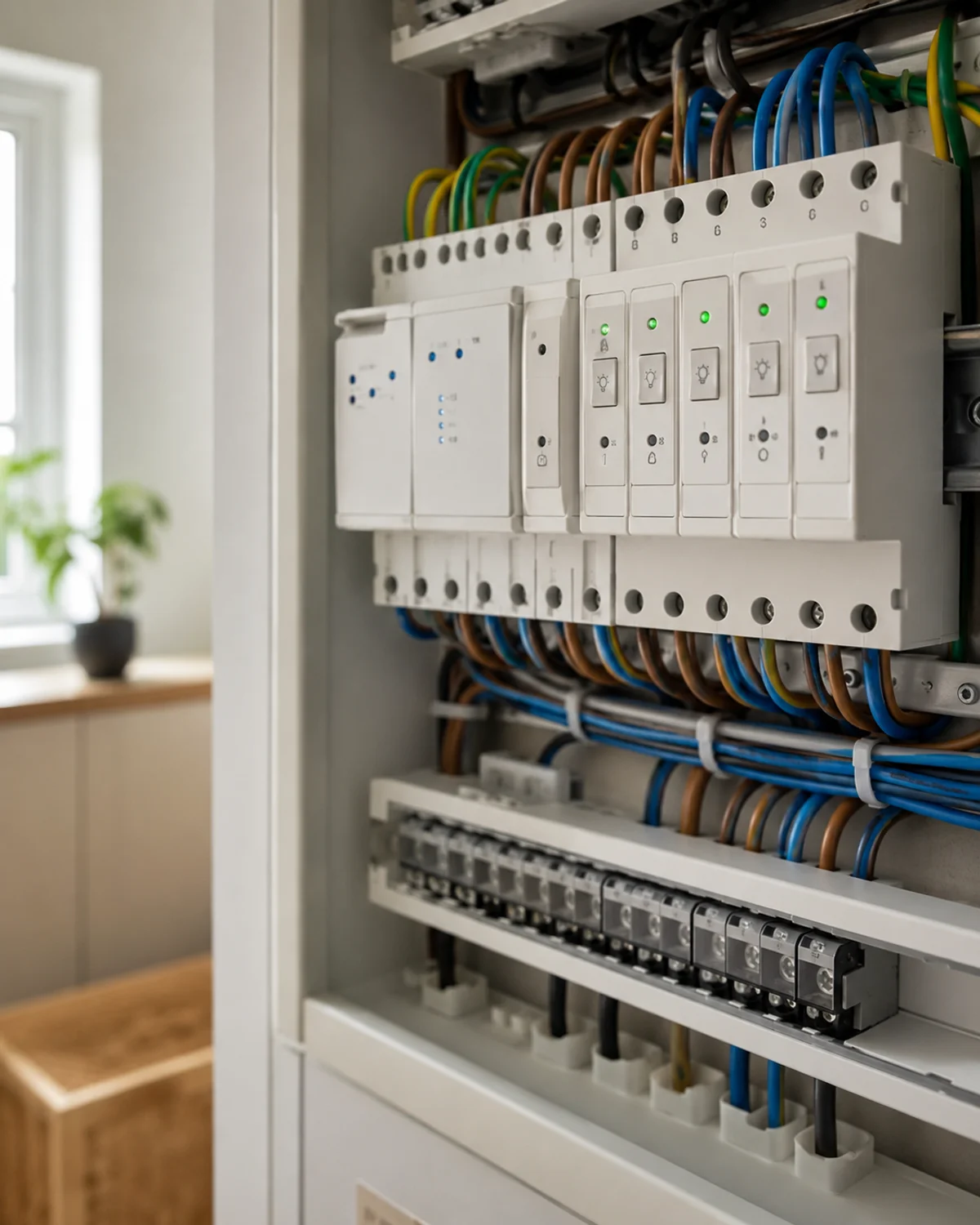
Most smart switches and smart dimmers require a neutral wire at the switch position to power the built-in radio module (Wi-Fi, Zigbee, or Z-Wave) when the switch is in the off state. This is a requirement that was simply not designed into Irish lighting circuits wired before roughly 2000. Pre-2000 Irish homes typically used a two-wire loop-at-switch arrangement, where only a live and a switched live are present at the switch back-box and the neutral wire returns from the light fitting to the consumer unit in the hall cupboard or utility room without passing through the switch at all.
If you discover your circuits are two-wire, you have two realistic options. The first is to have a RECI electrician run neutral wires to each switch position. Depending on the layout of your home and how the lighting circuit is currently run, this can range from a relatively quick job on a ring circuit with accessible voids to a more disruptive piece of work requiring channels to be cut in plasterwork. The second option is to choose smart switches specifically designed to operate without a neutral, often described as no-neutral or single-wire smart switches. These use a tiny trickle current through the light fitting to power themselves. This works well with LED bulbs above approximately 5 watts but can cause flickering or buzzing with certain LED types or very low-wattage fittings, so compatibility must be checked before purchase.
Smart controls on sockets and plug-in circuits, including smart plugs, smart EV charger scheduling, and heat pump scheduling via existing power circuits, are largely plug-and-play. These do not involve fixed wiring and are not notifiable electrical work. You can install a smart plug on an existing socket yourself without needing a RECI contractor. The notifiable distinction becomes relevant only when new fixed wiring is added or existing circuits are modified.
Not Sure if Your Circuits Have a Neutral?
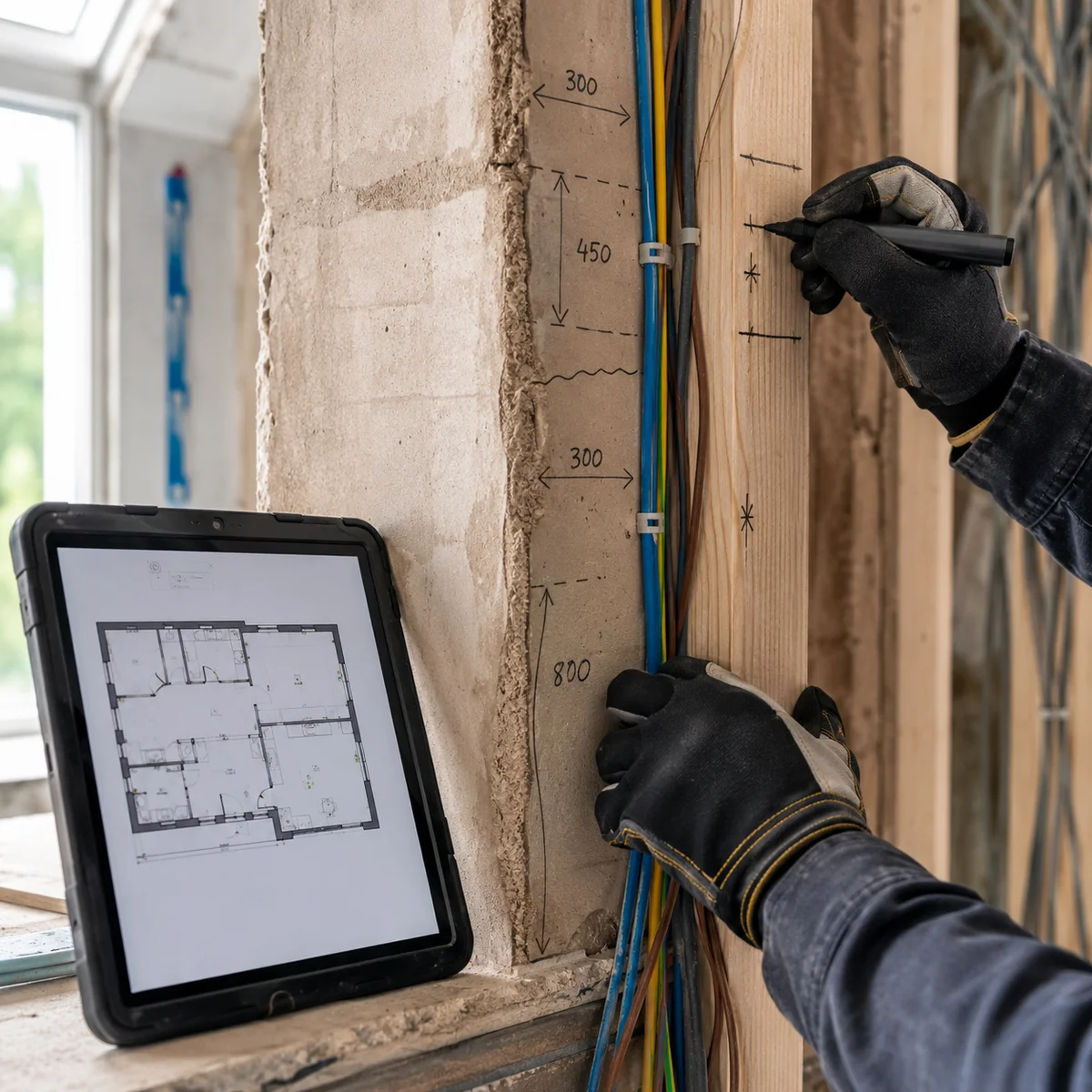
A RECI electrician can check your switch positions and advise before you buy any smart home products.
What Affects the Cost of Smart Home Wiring?
01Neutral wire availability
If neutral wires are already present at switch positions, smart switch installation is straightforward. Running new neutrals adds labour and can require plasterwork depending on the house layout.
02Number of rooms and drops
A 3-bed house with 8 switch positions costs less to retrofit than a 5-bed with 20. For structured cabling, each data drop (wall socket with a CAT6 connection) is a discrete cost; plan generously as adding drops later is expensive.
03Cable routing access
New builds and properties mid-renovation are far cheaper to cable than finished homes. Running cable through insulated ceilings, solid concrete floors, or behind tiled walls adds significant labour time.
04Network cabinet spec
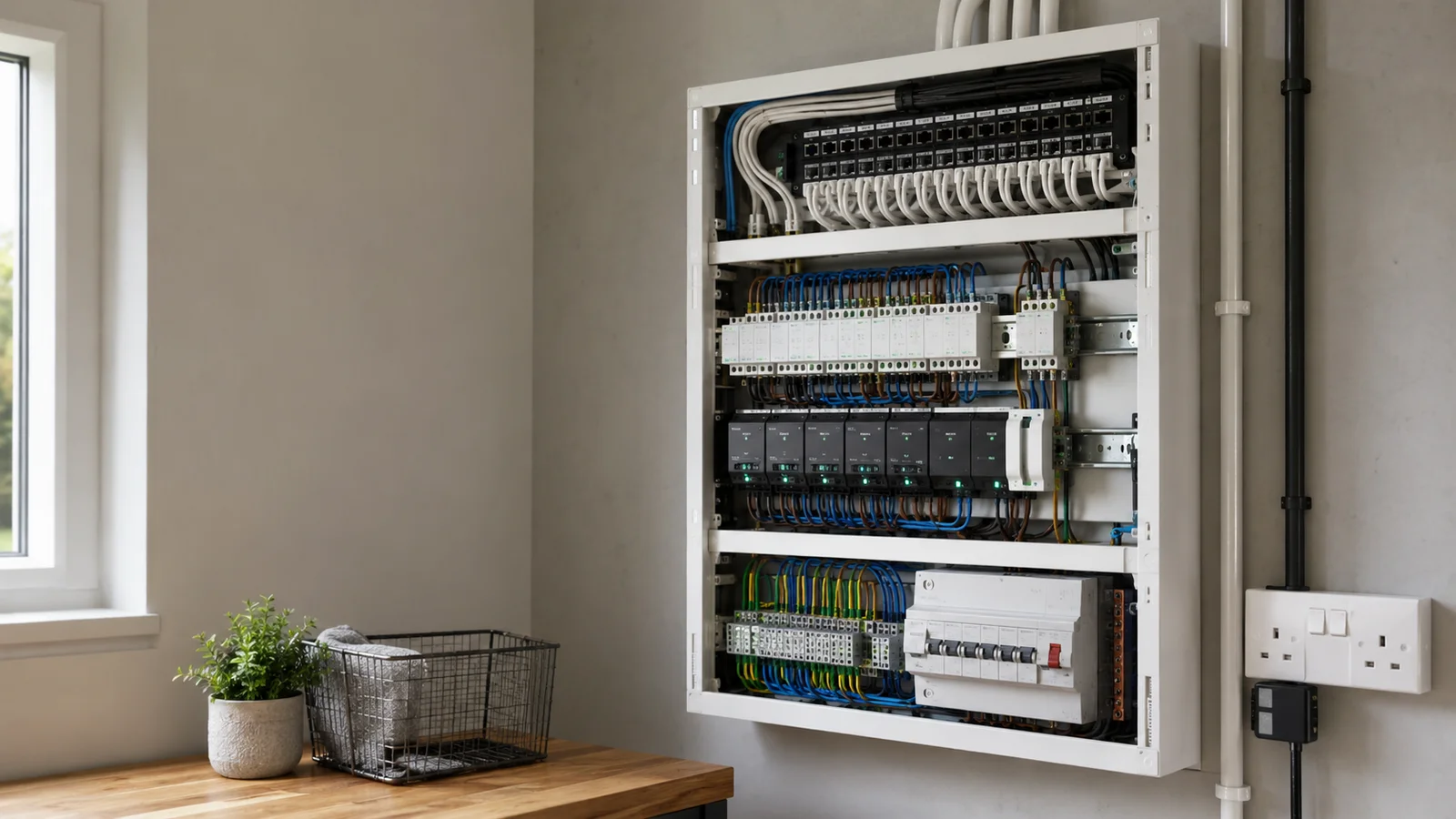
A basic network cabinet in the hot press housing a router, patch panel, and small switch costs €300–€800 supply and fit. Adding a UPS (battery backup) or managed switches increases this. A dedicated power circuit is usually required for the cabinet.
05Location: Dublin vs rural
Dublin day rates for RECI electricians run higher than the national average. Rural west counties (Mayo, Donegal, Roscommon) tend to be lowest. Budget 10–20% above the ranges here for Dublin city projects.
06Smart switch brand and protocol
Zigbee and Z-Wave switches typically cost more per unit than Wi-Fi switches but offer better reliability and range in larger homes. Higher-spec switches with scene control or multi-gang configurations add to product cost on top of labour.
Planning a Structured Cabling Installation
Structured cabling means running individual CAT6 cables from a central network cabinet to each room, terminating at a wall-mounted data socket. The central cabinet, typically a small wall-mounted enclosure installed in a utility room, hot press, or home office, houses the broadband router, a patch panel, and an Ethernet switch. Every device in the house that benefits from a wired connection (smart TV, games console, desktop computer, NAS drive, IP camera) can then have a permanent Gigabit connection rather than relying on Wi-Fi.
Structured data cabling is low-voltage work and is generally not notifiable electrical work in Ireland. However, a RECI electrician is required if a new power circuit must be run to the cabinet location, or if any of the ancillary works (such as adding sockets in the cabinet area or running cable through fire-rated partitions) triggers the notifiable works thresholds under IS 10101. For most installations in existing homes, the electrical element is the power circuit to the cabinet; the cable runs themselves are data cabling and sit outside the notifiable works framework.
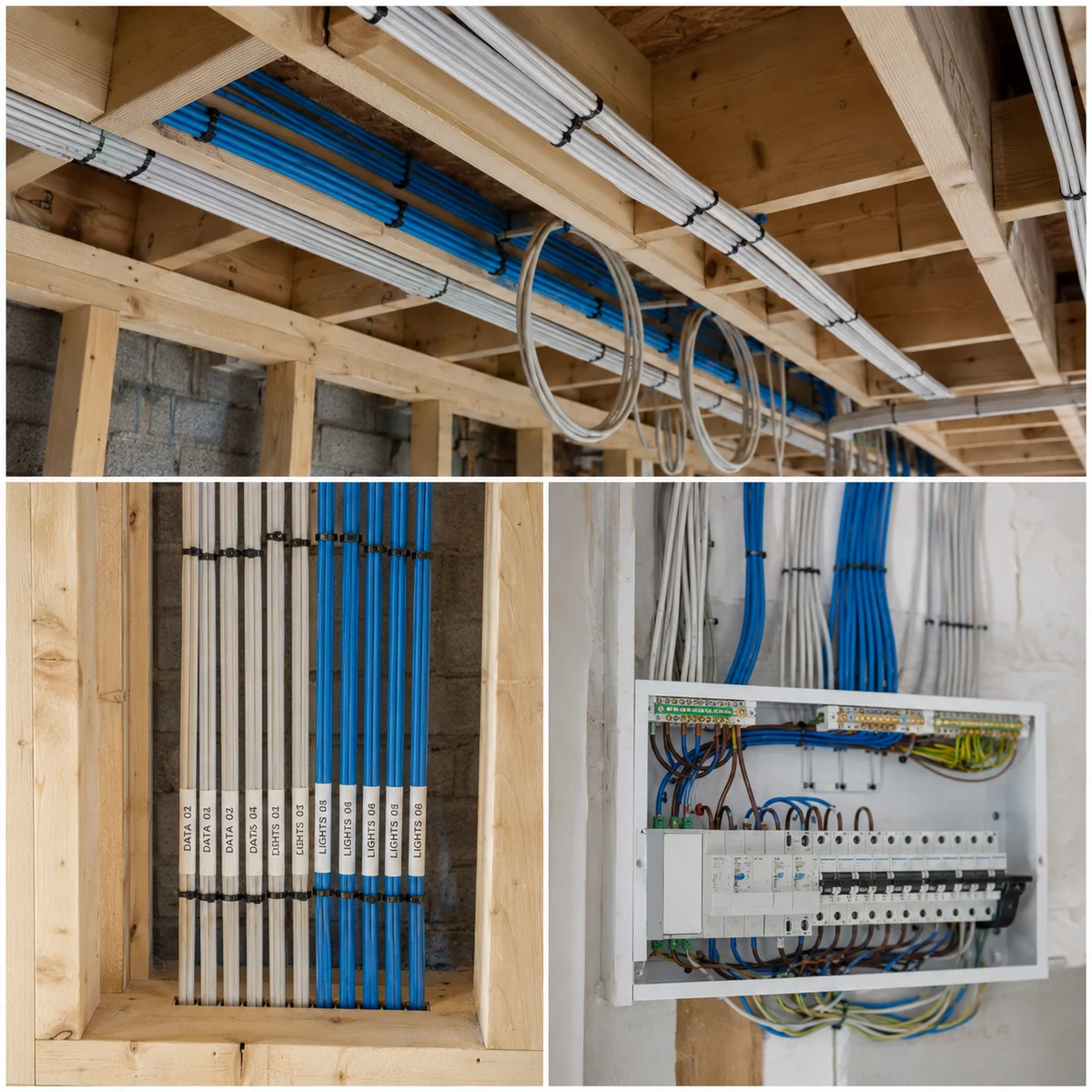
What to Include in a Network Cabinet
- Wall-mount enclosure (6U–12U typically adequate for a 4-bed home)
- Patch panel (24-port CAT6 patch panel covers most home installations)
- Gigabit Ethernet switch (managed switch preferred for VLAN capability)
- Dedicated power socket or small PDU (power distribution unit)
- Space for broadband router or modem
- Optional: UPS (uninterruptible power supply) for router uptime
2026 Cost Ranges: Supply and Fit
- Smart lighting retrofit, 10 rooms (neutral present): €600–€1,200
- Smart lighting retrofit, 10 rooms (neutral needed): €1,200–€1,800
- Structured cabling, 4-bed (6–10 drops): €800–€2,500
- Central network cabinet build-out: €300–€800
- New power circuit to cabinet location: €200–€400 additional
How to Phase a Smart Home Project Sensibly
The single most important advice for any smart home project in an existing Irish home is to do the infrastructure first. Structured cabling is far cheaper to install during a renovation, extension, or rewire than it is to retrofit into a finished home. If you have any planned building work in the next year or two, include cabling runs in that scope even if you do not intend to build out the smart home capability immediately. The marginal cost of pulling cable at the same time as other work is a fraction of the cost of going back in afterwards.
For smart lighting, the sensible phasing is to start with high-use rooms (kitchen, living room, main bedroom) and assess neutral availability before committing to a brand or protocol. If neutrals are missing in those rooms, decide whether to run new neutrals or choose a no-neutral switch product, then apply the same choice consistently throughout the house. Mixing neutral-required and no-neutral switches across a single installation can cause compatibility problems when adding home automation hubs or voice control later.
Smart EV charger integration and heat pump scheduling via smart controls deserve a mention here. If you are planning an EV charger installation (which is notifiable work requiring a RECI contractor regardless of the smart features), specify a smart charger from the outset. SEAI's home charger grant covers a significant portion of the hardware cost, and scheduling the charge to overnight off-peak tariffs can meaningfully reduce running costs. Heat pump scheduling through smart thermostats and zone controllers is largely plug-and-play on the controls side, with any new circuit work for heat pump electrical connections being handled as part of the heat pump installation itself.
Smart Home Wiring: Frequently Asked Questions
Do I need a RECI electrician to install smart switches?
It depends on what is involved. If you are simply replacing an existing switch faceplate like-for-like in a position that already has a neutral wire, this is not notifiable work and a competent person can carry it out. However, if the installation requires running a new neutral wire to the switch position, that is new fixed wiring and is notifiable under IS 10101: a RECI-registered electrician is required and a completion certificate must be issued. If you are in any doubt, the safest approach is always to have a RECI electrician assess the existing circuits before you purchase any smart switch products.
Is structured CAT6 cabling notifiable electrical work in Ireland?
Generally not. Low-voltage data cabling, including CAT6 Ethernet, HDMI, and speaker cable, falls outside the notifiable works framework set out in SI 73 of 2000 and IS 10101. The legislation covers mains voltage fixed electrical wiring. A dedicated data cabling contractor or a RECI electrician can carry out the cable runs without triggering a notification requirement. The exception arises if a new mains power circuit is needed to serve the network cabinet or any associated equipment: that new circuit is notifiable work and must be carried out by a RECI contractor.
Will no-neutral smart switches work with all LED bulbs?
Not always, and this is the main practical risk with no-neutral smart switches. These devices draw a small trickle current through the light fitting even when switched off, which powers their internal electronics. Most LED bulbs rated above approximately 5 watts handle this without issue. However, certain LED driver designs, very low-wattage LED fittings, and some dimmable LED bulbs react to the trickle current with flickering, ghosting (a faint glow when off), or buzzing from the fitting. The safest approach is to check the smart switch manufacturer's compatibility list against the specific bulb and fitting you intend to use, and test one switch position before committing to a whole-house installation.
Where is the best location for a home network cabinet?
The utility room or hot press is the most common location in Irish homes and works well for most installations. The key requirements are: proximity to where the broadband line enters the house (to minimise the router cable run), adequate ventilation (network equipment generates heat), an accessible power socket or nearby circuit for a dedicated socket, and central enough positioning that cable runs to all rooms are roughly similar in length. Avoid the attic if possible: attic temperatures in Irish summers can stress networking equipment, and routing cable back down through insulated joists adds cost and complexity.
Can I integrate smart home controls with an EV charger or heat pump?
Yes, and this is increasingly standard on new EV charger and heat pump installations in Ireland. Most home EV chargers sold in Ireland now include Wi-Fi or app scheduling as standard features, allowing you to set overnight charge windows that align with lower-cost electricity tariffs such as Economy Night. Heat pump scheduling through smart thermostats and zone controllers (such as those from Honeywell, Hive, or Nest) is largely a controls-level integration and does not require new fixed wiring beyond what the heat pump installation itself involves. If you are specifying these systems from scratch, discuss smart integration capability with your RECI electrician at the quoting stage rather than trying to add it retrospectively.
Find a RECI electrician for your smart home project
Every electrician listed on electriciansinireland.ie is RECI-registered, covers all 26 counties, and can advise on smart lighting, structured cabling, and network cabinet installations.