
Irish Guide 2026
Solar Battery Storage in Ireland: What the Electrical Work Involves
What adding a home battery to your solar PV system involves, what it costs in 2026, and how the SEAI grant applies.
Find a registered electricianHome Battery Storage in Irish Homes
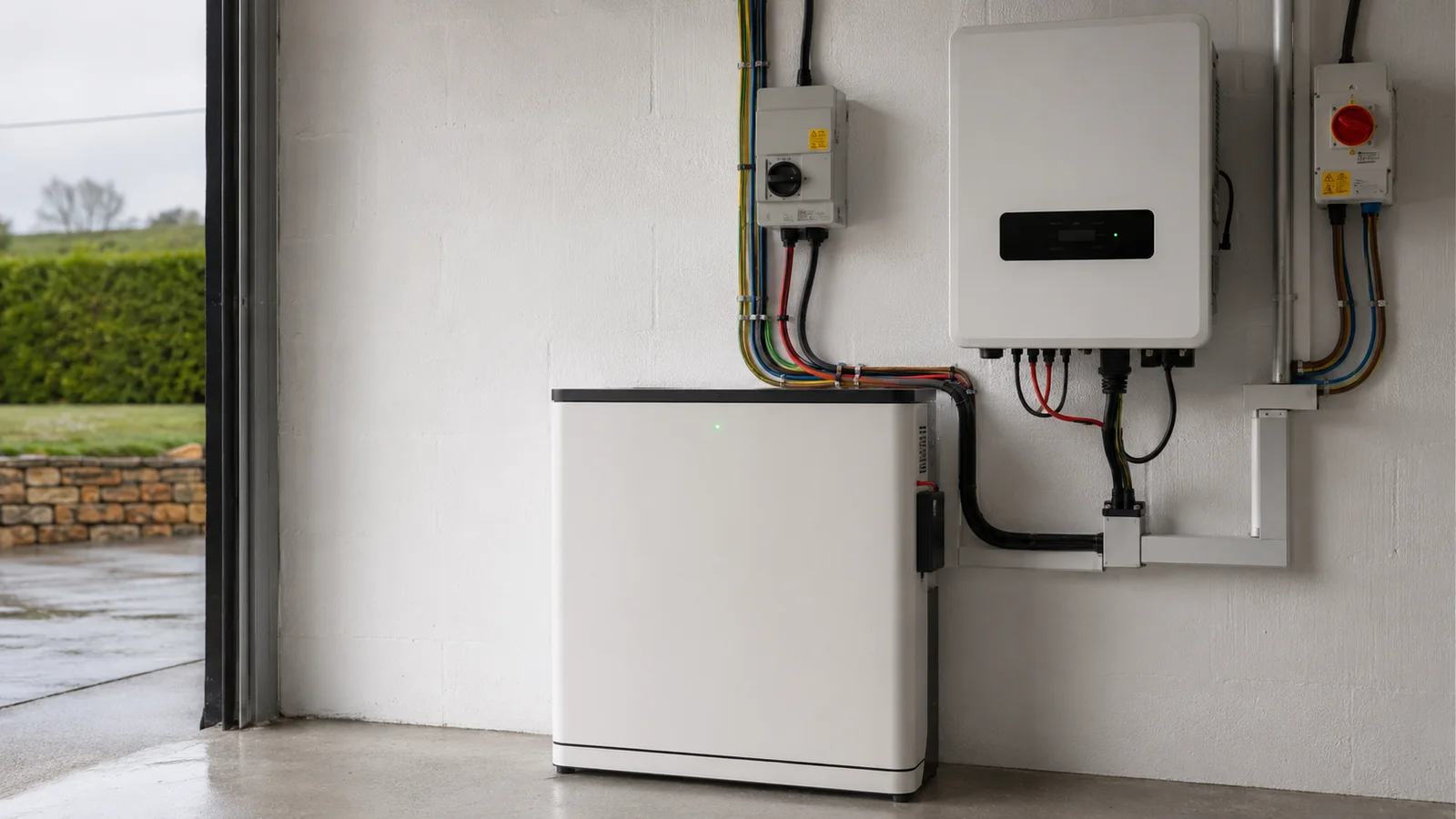
Home battery storage systems have become a popular addition to Irish solar PV installations. Systems from manufacturers such as Huawei LUNA, SolarEdge, and Solis allow households to store the electricity generated by their solar panels during the day and draw on it during the evening when the panels are no longer generating. The result is a significantly higher self-consumption rate, meaning less exported to the grid and less imported from ESB Networks at peak evening tariffs.
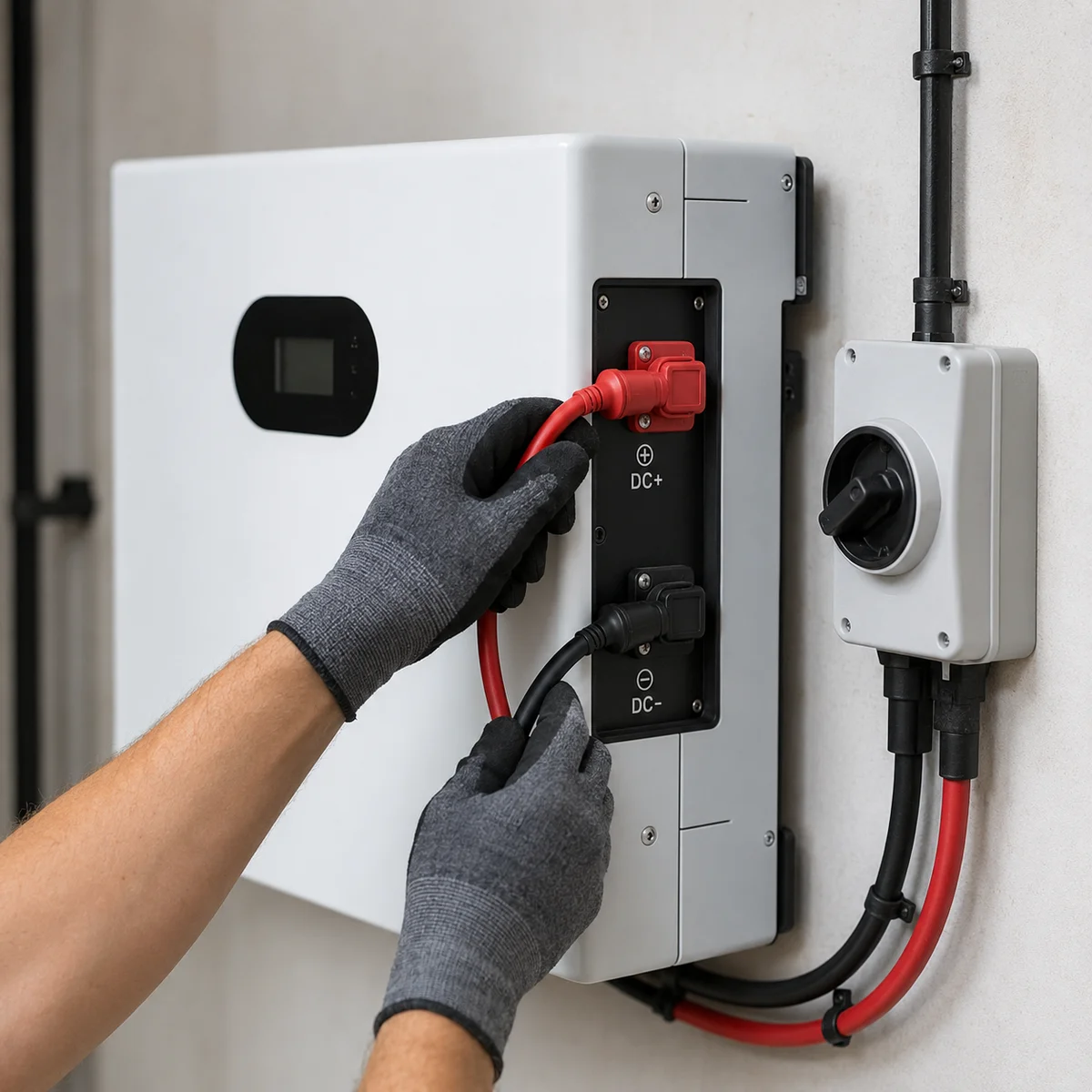
The electrical installation of a battery storage system is more complex than a standard solar PV add-on. It involves connecting a hybrid or battery inverter to the existing solar DC cables, the home AC consumer unit, and the battery pack itself. All of this work must comply with IS 10101, the Irish Wiring Rules, and must be carried out by a SEAI-registered solar PV contractor who is also RECI-registered, or who sub-contracts the electrical connection work to a RECI electrician.
What the Electrical Installation Involves
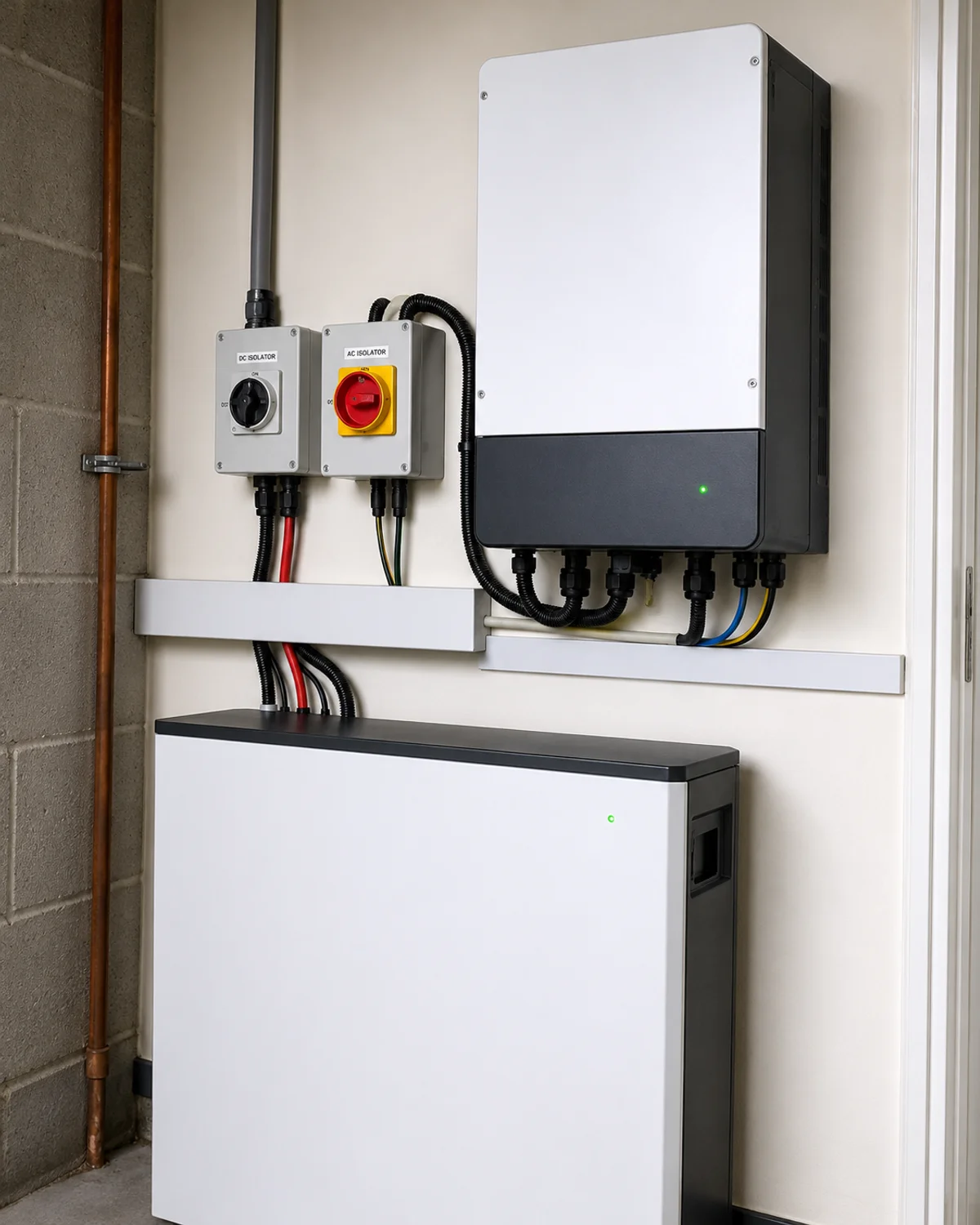
A home battery storage installation centres on the inverter, which is the unit that manages the flow of electricity between the solar panels, the battery, the home circuits, and the grid. If your existing solar system uses a standard string inverter, adding battery storage typically means replacing it with a hybrid inverter capable of handling both the solar DC input and the battery DC connection. Some systems use a separate battery inverter connected in parallel with the existing solar inverter, which allows the original solar equipment to remain in place.
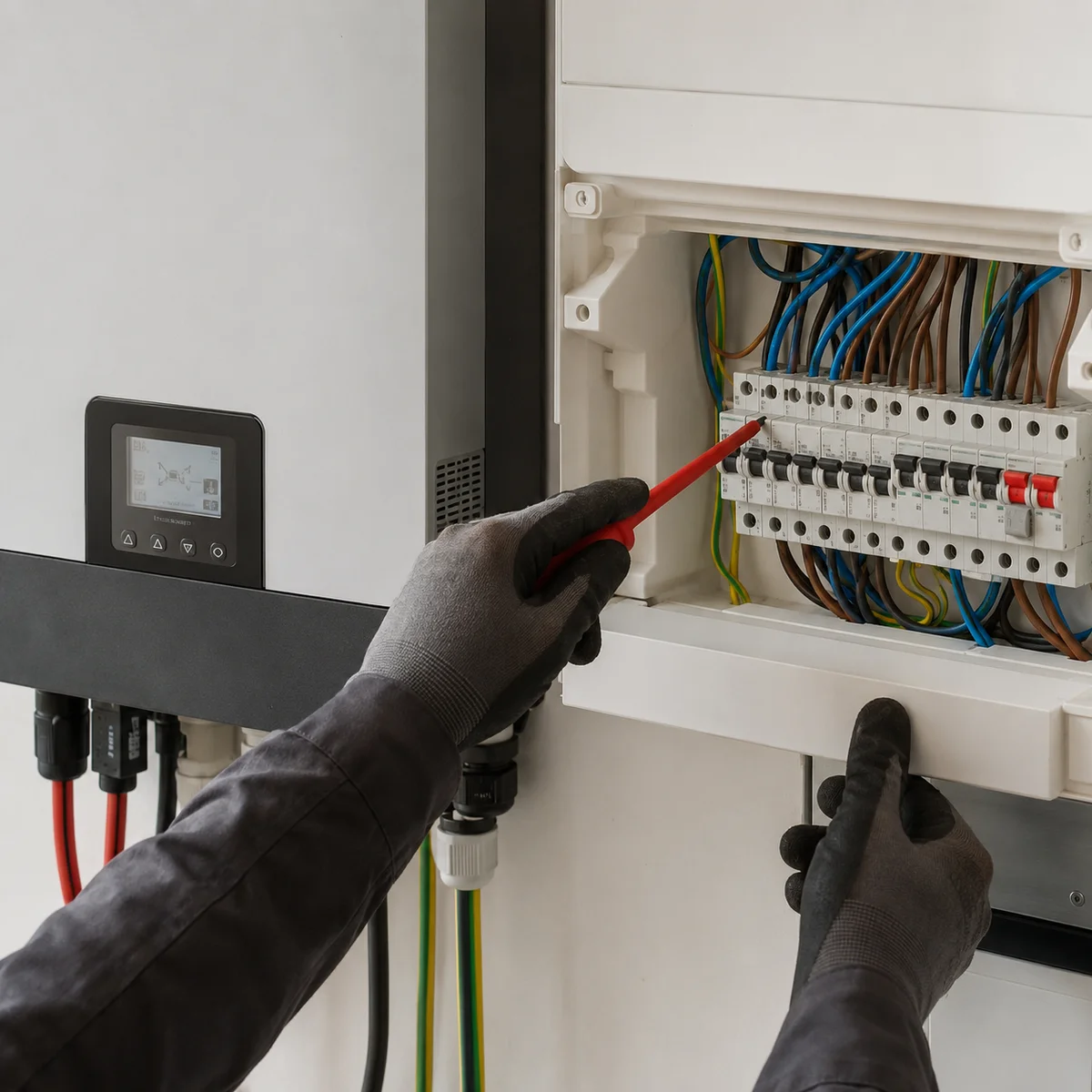
The inverter is wall-mounted, most commonly in a garage, utility room, or under-stair cupboard close to the consumer unit. From there it connects to the solar PV DC cables coming down from the roof, the home AC consumer unit via a dedicated circuit, and the battery pack, which is typically floor-mounted or wall-mounted nearby. The dedicated circuit from the consumer unit requires a correctly rated MCB and, in most installations, its own RCD protection in line with IS 10101.
ESB Networks requires that any solar PV system exporting to the grid is fitted with an export limiting device or connected to a smart meter that can verify the level of export. This requirement applies equally where a battery is added to an existing system. Your installer will confirm whether your current metering arrangement is compliant or whether an upgrade is required before the battery is commissioned.
Ready to Add Battery Storage to Your Solar System?
Find a RECI-registered and SEAI-registered electrician in your county. Every contractor listed is verified on the Safe Electric register.
What Affects the Cost of Battery Storage?
The installed cost of a home battery system varies considerably depending on the following factors.
01Battery capacity
A 5kWh battery suits a smaller household or one looking to cover evening baseload demand. A 10kWh battery gives more buffer for larger households or homes with high evening consumption. Larger capacity means a higher unit cost, though price per kWh tends to fall as capacity increases.
02Hybrid vs battery-only inverter
If your existing solar system uses a standard inverter, adding a hybrid inverter replacement adds to the total cost but results in a cleaner, more integrated installation. A separate battery inverter (AC-coupled) avoids replacing working solar equipment but adds another unit to the installation and slightly reduces system efficiency.
03Consumer unit condition
Older consumer units, particularly those with rewirable fuses rather than MCBs, may not be suitable for the new dedicated battery circuit without an upgrade. A full consumer unit replacement adds €600 to €1,400 to the project cost. Your electrician will assess the existing board at the survey stage.
04Export limiting requirements
If your existing solar installation does not already have an export limiting device or compliant smart meter, one will need to be added to meet ESB Networks grid export conditions. This is a relatively modest additional cost but must be factored in if your original solar installation predates the requirement.
05Installation complexity
A battery installed in a garage directly beside the existing solar inverter and consumer unit involves short cable runs and straightforward work. A battery installed in a remote utility room, or where the consumer unit is in a difficult location such as a roofspace, takes more time and materials and will cost more.
06Dublin vs national rates
Electrical labour rates in Dublin are typically 15 to 25 percent higher than the national average. The lowest rates are generally found in rural Connacht. Materials and battery equipment prices are broadly consistent nationally, so the regional variation is primarily in the labour element of the installation.
SEAI Grants and Regulatory Compliance
Battery storage is eligible for support under SEAI's Solar PV grant scheme. The grant covers the solar PV and battery package combined, with a maximum of €2,400 available for a domestic installation — see the full SEAI grants guide for current amounts, eligibility, and how to apply before work starts. To qualify, the work must be carried out by a contractor registered on SEAI's Solar PV scheme. The solar PV and battery elements of the installation must both be part of the same application: the grant cannot be claimed retrospectively for a battery added to a previously grant-aided solar system in a new application.
For the electrical connection and consumer unit work specifically, the SEAI-registered solar PV contractor must either hold RECI registration themselves or sub-contract the electrical elements to a RECI-registered electrical contractor. The completion certificate for the electrical installation must be issued by a RECI-registered contractor and must confirm compliance with IS 10101. Without this certificate, SEAI will not pay out the grant.
Beyond the grant, the completed installation must be notified to ESB Networks. Your installer handles the grid notification as part of the commissioning process. For systems exporting electricity, a micro-generation supplier agreement with your electricity supplier is also required if you wish to receive payment for exported units under the Clean Export Guarantee (CEG) tariff, which is administered by the CRU.
SEAI Solar PV grant
Up to €2,400 for a domestic solar PV and battery package. Requires a SEAI-registered solar PV contractor.
RECI registration required
All electrical connection and consumer unit work must be carried out by or certified by a RECI-registered electrical contractor.
IS 10101 compliance
The completed installation must comply with the current edition of IS 10101, the Irish Wiring Rules. A completion certificate is required.
ESB Networks notification
All grid-connected battery systems must be notified to ESB Networks. The installer handles this as part of commissioning.
Battery Storage Systems in Irish Homes
Several battery systems are widely installed in Ireland. The Huawei LUNA series is one of the most commonly specified, offering modular 5kWh capacity blocks that can be stacked to increase total storage. The SolarEdge Energy Bank integrates tightly with the SolarEdge inverter platform and is a popular choice on new SolarEdge solar PV installations. Solis systems offer a competitive price point and are used by a number of Irish solar installers as their standard battery option. GivEnergy, Fox ESS, and BYD units are also installed, particularly by independent electricians who favour open-platform systems compatible with a wider range of inverter brands.
In Irish domestic installations the battery pack is most commonly placed in a garage, utility room, or under-stair space adjacent to or close to the consumer unit. This keeps cable runs short and allows easy access to the inverter display and settings. Battery units typically require a minimum clearance around them for ventilation and heat dissipation, and your installer will confirm the siting requirements for the specific system being installed.
Most modern battery systems include a monitoring app that shows live and historical data on solar generation, battery charge state, home consumption, and grid import and export. This monitoring capability is increasingly expected by homeowners and is a useful tool for understanding how the system is performing relative to the projected savings used to justify the investment.
Solar Battery Storage: Common Questions
Can I add a battery to my existing solar panels without replacing the inverter?
Yes, in many cases. An AC-coupled battery system uses a separate battery inverter connected on the AC side of your existing solar inverter. This means your existing solar equipment remains in place and continues to operate, and the battery inverter manages charging from both the solar output and the grid. AC coupling is slightly less efficient than a DC-coupled hybrid inverter system because of the extra conversion step, but it is a common and practical approach for retrofitting battery storage to a system that is already performing well.
Is battery storage eligible for the SEAI grant?
Yes. Under SEAI's Solar PV scheme, battery storage is eligible as part of the solar PV and battery package, with a maximum combined grant of €2,400 for a domestic installation. The grant is not available for battery-only installations added to a previously grant-aided solar system in a separate application. All work must be carried out by a SEAI-registered solar PV contractor, and the electrical installation must be certified by a RECI-registered electrician. Application is made through the SEAI Better Energy Homes portal before work commences.
Does my consumer unit need to be upgraded for a battery system?
Not in every case, but it is common. A dedicated circuit must be run from the consumer unit to the battery inverter, which requires a spare MCB slot and appropriate RCD protection. Older consumer units with rewirable fuses rather than MCBs will need to be replaced. Even some modern boards may not have sufficient capacity or the correct RCD arrangement to meet IS 10101 requirements for the new circuit. Your electrician will assess the existing board at the survey stage and confirm whether an upgrade is needed before installation day.
What capacity battery do I need for an Irish home?
A 5kWh battery is sufficient for a typical two or three bedroom house looking to cover evening baseload consumption after solar generation drops off. A 10kWh battery gives more flexibility, can cover a higher evening load, and provides more reserve on days with limited solar generation in winter. Households with an electric vehicle, a heat pump, or high general consumption will benefit more from a larger capacity. Your installer will model your consumption pattern against your solar generation data to recommend the right size.
Do I need to notify ESB Networks when I add a battery?
Yes. Battery storage systems connected to the grid must be notified to ESB Networks. This applies whether you are adding a battery to an existing solar installation or installing solar and battery together for the first time. The notification is handled by your installer as part of the commissioning process. ESB Networks may also require an export limiting device to ensure that grid export does not exceed the permitted level for your connection. Failure to notify can result in the system being disconnected or your micro-generation supplier agreement being voided.
Find a RECI-registered electrician for solar battery work
Only a RECI-registered electrical contractor can certify the consumer unit and electrical connection work for a battery storage installation. Find a qualified electrician in your county today.