
Irish Guide 2026
What Electrical Work Is Involved in an Irish Home Energy Upgrade?
SEAI grants cover the hardware, but every deep retrofit depends on a RECI-registered electrician coordinating the work from the start.
Find a registered electricianThe Electrical Scope of a Whole-Home Retrofit
A whole-home energy upgrade under the SEAI Better Energy Homes or One Stop Shop scheme is a coordinated, multi-trade project. Insulation contractors, heat pump installers, and solar PV teams all move through the house in sequence, and the electrical work underpins almost every element. Without an upgraded electrical installation, many of the new systems simply cannot be connected safely or legally.
The RECI-registered electrician is the trade most homeowners brief last, but should be briefed first. Consumer unit location, cable routes through walls and floors, and the capacity of the existing installation all influence what is possible, at what cost, and in what order other trades can proceed. Getting the electrical assessment done early avoids expensive disruption later.
Electrical Elements Typically Required in a Retrofit
The specific electrical scope depends on the age and condition of the existing installation, but the following elements come up in the majority of whole-home energy upgrades on Irish semi-detached and terraced homes built before 2000.
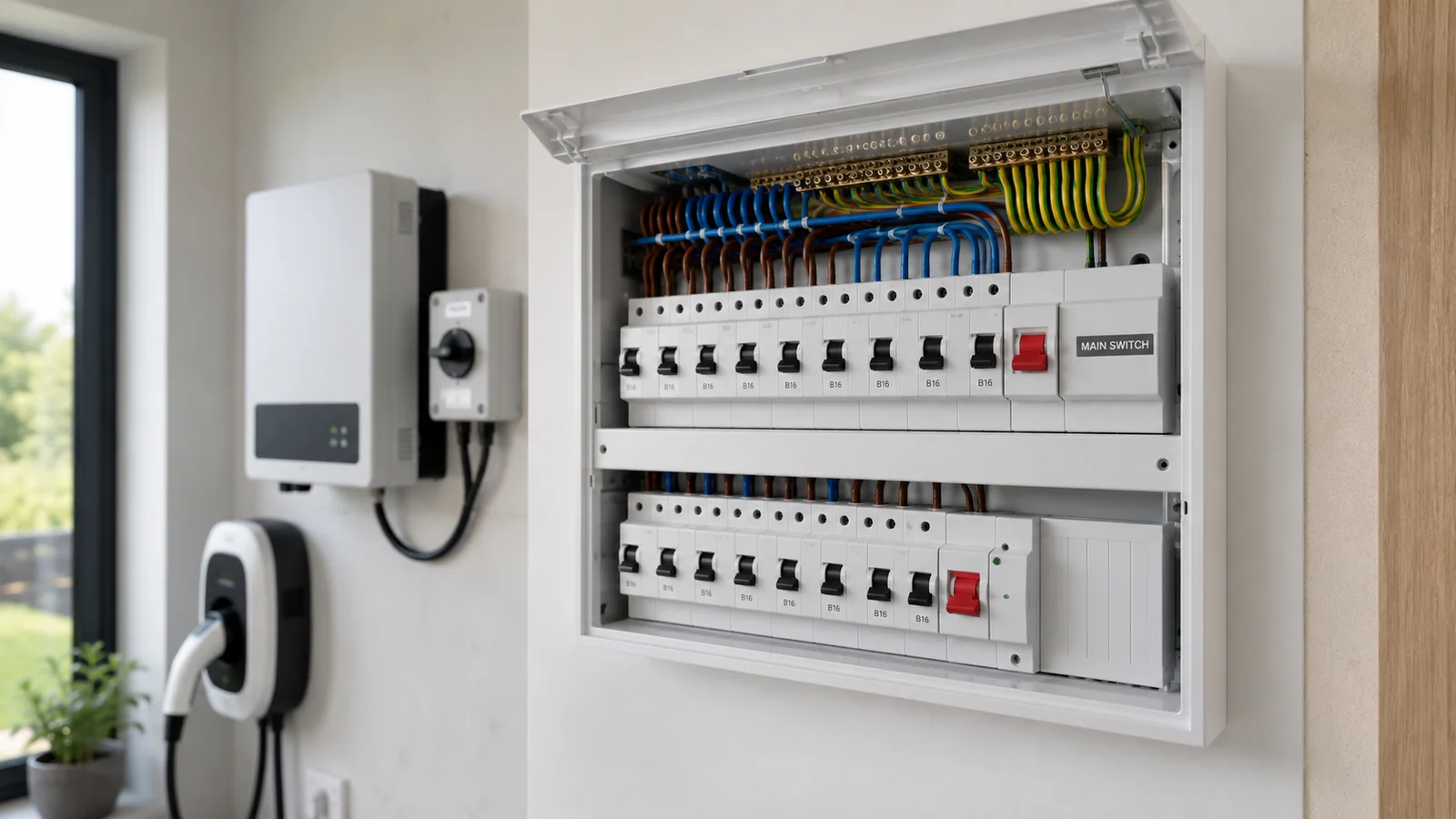
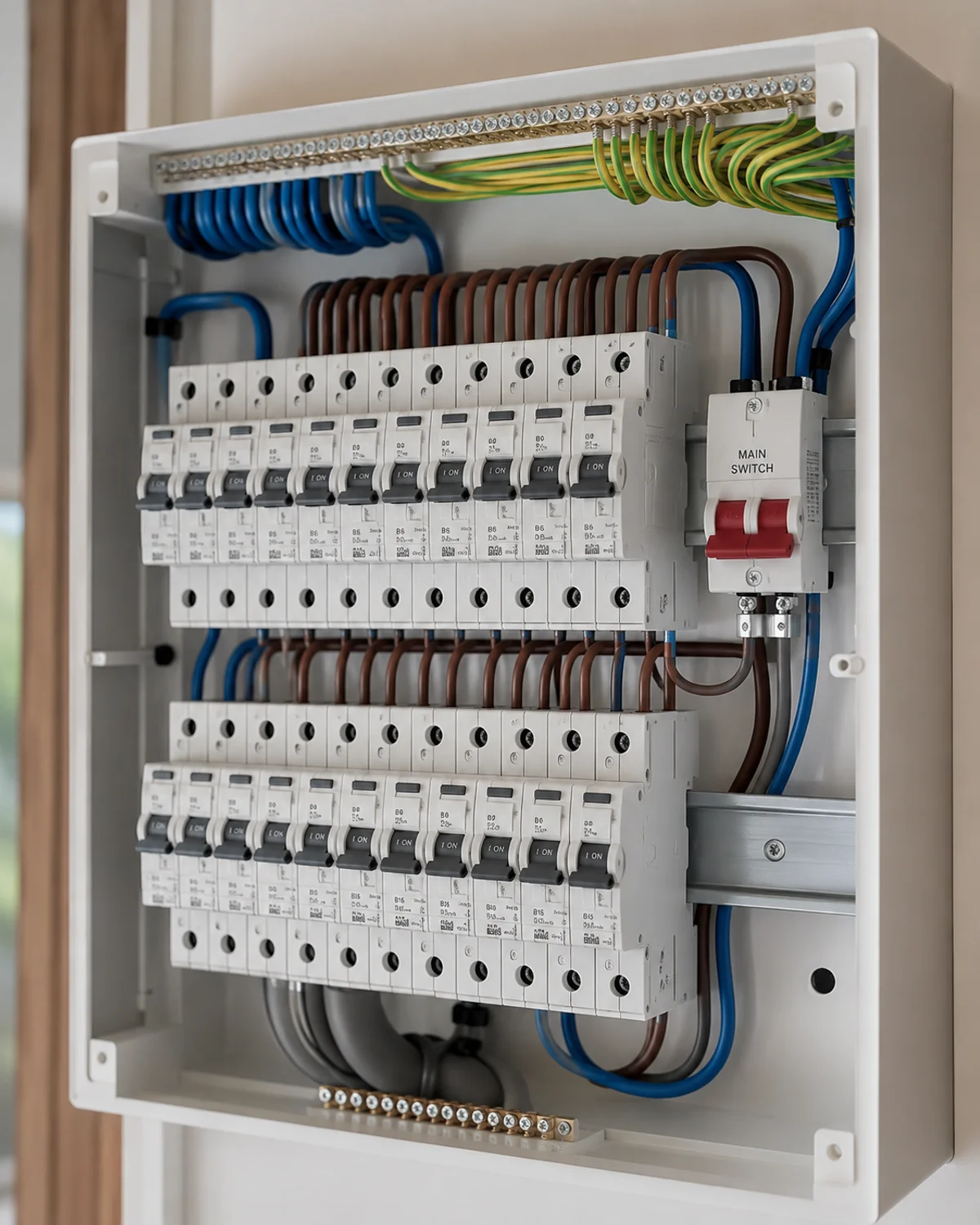
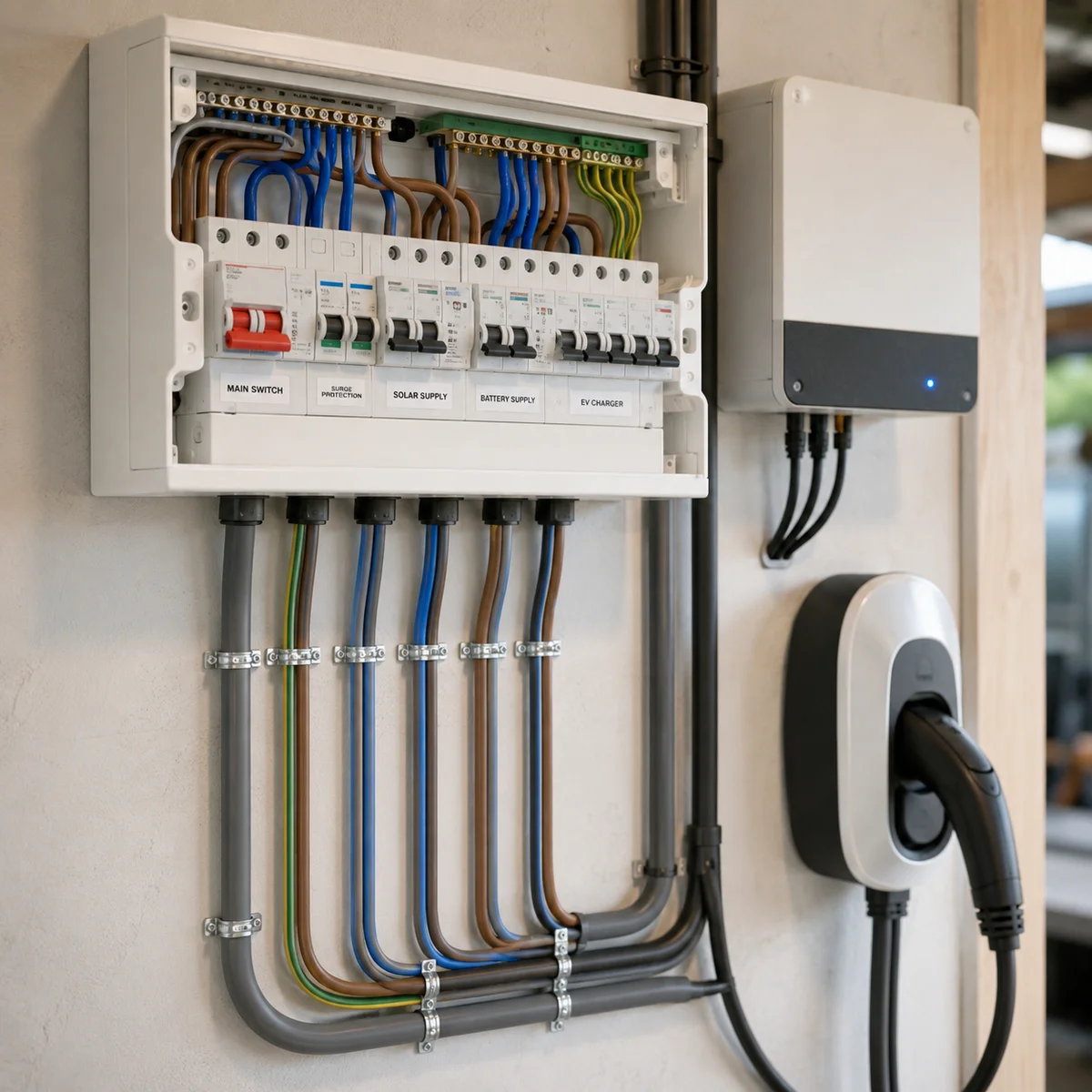
Consumer unit replacement is the most common requirement. Old rewirable fuse boards or early MCB boards do not have the earthing arrangements, RCD protection, or spare capacity to safely feed a heat pump, solar PV inverter, and EV charger simultaneously. Under IS 10101 and SEAI's own technical standards, an existing fuse board must be replaced before any of those systems can be connected. The new consumer unit typically lives in the hall cupboard or utility room, as is standard in Irish homes, and is earthed to current CRU and Safe Electric standards.
Beyond the consumer unit, a heat pump needs its own dedicated radial circuit, sized to the rated current of the unit. Solar PV requires a connection from the inverter back to the consumer unit and a bi-directional export meter installed by ESB Networks, which your electrician coordinates on your behalf. Smoke and CO alarm upgrades are required to meet current Building Regulations for any notifiable building work, which a major retrofit typically triggers. Older properties that cannot safely carry the new combined load may also require a partial or full rewire before upgrade systems can be connected.
Brief Your Electrician Before Other Trades Start
Cable routes and consumer unit position affect insulation, plumbing, and heat pump placement. Get the electrical survey done first.
What Drives the Electrical Budget on a Retrofit
01Consumer unit upgrade
Replacing an old fuse board with a modern dual-RCD or RCBO consumer unit. Budget: €600 to €1,400 depending on board size and remedial rewiring needed.
02Heat pump circuit
Dedicated radial circuit from consumer unit to outdoor unit location, plus internal wiring for cylinder and controls. Budget: €400 to €900.
03Solar PV connection
Inverter wiring, AC isolator, consumer unit connection, and coordination of ESB Networks export meter application. Budget: €300 to €600.
04EV charger circuit
Dedicated 32A circuit from consumer unit to garage or driveway. Even if you are not installing a charger now, running conduit at this stage costs a fraction of later access. Budget: €300 to €600.
05Alarm upgrades
Mains-wired, interlinked smoke and CO alarms required under Building Regulations for notifiable work. Typically included within the overall electrical quote for a retrofit.
06Partial or full rewire
Pre-1970s wiring with rubber insulation or older wiring incapable of carrying new loads safely must be replaced before systems can be connected. This is assessed during the initial survey.
Total electrical budget for a full upgrade on a typical 3-bed Irish semi: €1,500 to €3,500 before grants. Dublin rates are typically 15 to 20 per cent higher than the national average. Rural west (Mayo, Donegal, Roscommon) rates tend to be lowest.
SEAI Grants Available for Electrical Upgrade Work in 2026
SEAI does not offer a standalone grant for consumer unit replacement or general rewiring, but the electrical work that forms part of a qualifying system installation is covered within each system grant. All electrical work must be carried out by a RECI-registered electrician and RECI completion certificates must be issued for each element to validate the grant claim.
Grant amounts are subject to change. Always check current figures directly on the SEAI website (seai.ie) before committing to a budget. Your RECI electrician can advise on which elements of their work qualify under each scheme.
RECI Registration, Certification, and Trade Coordination
All electrical work that forms part of an SEAI grant application must be carried out by a contractor registered with RECI (Register of Electrical Contractors of Ireland) and supervised by a Safe Electric-registered electrician. This is a hard requirement, not a recommendation. SEAI will not process grant payment without the RECI completion certificates for electrical work.
You can verify any contractor's RECI registration instantly at safeelectric.ie. Enter the company name or registration number and the register will confirm whether they are currently authorised to carry out and certify domestic electrical work in Ireland. Always check before engaging any electrician for grant-qualifying work.
Coordination Checklist
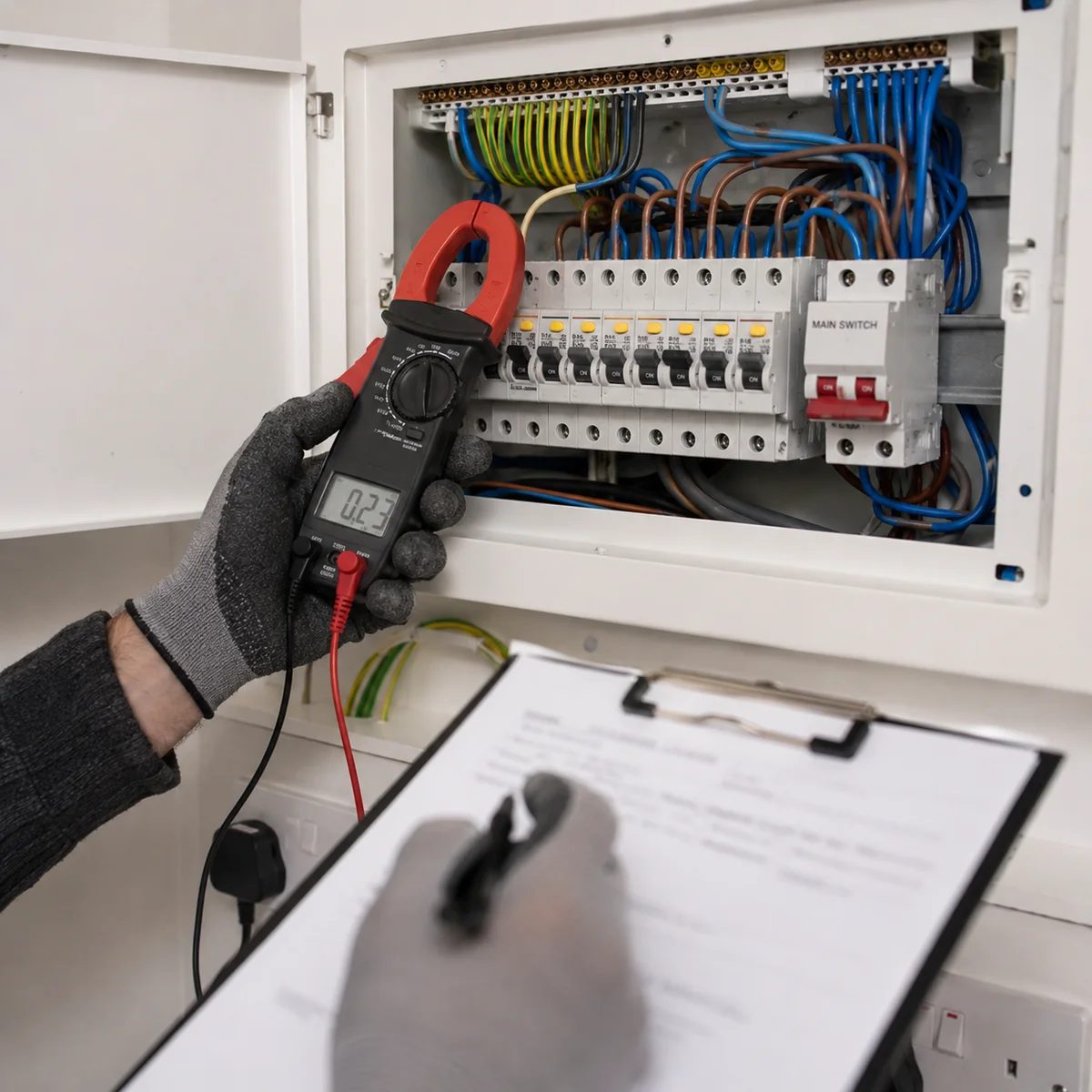
01Book RECI electrical survey before any other trade
02Agree consumer unit location and cable routes
03Confirm earth bonding and RCD protection plan
04Get ESB Networks export meter application started early
05Schedule consumer unit replacement before heat pump install
06Confirm alarm upgrade scope for Building Regulations
07Retain all RECI certificates for SEAI grant submission
Why the Electrician Should Be First, Not Last
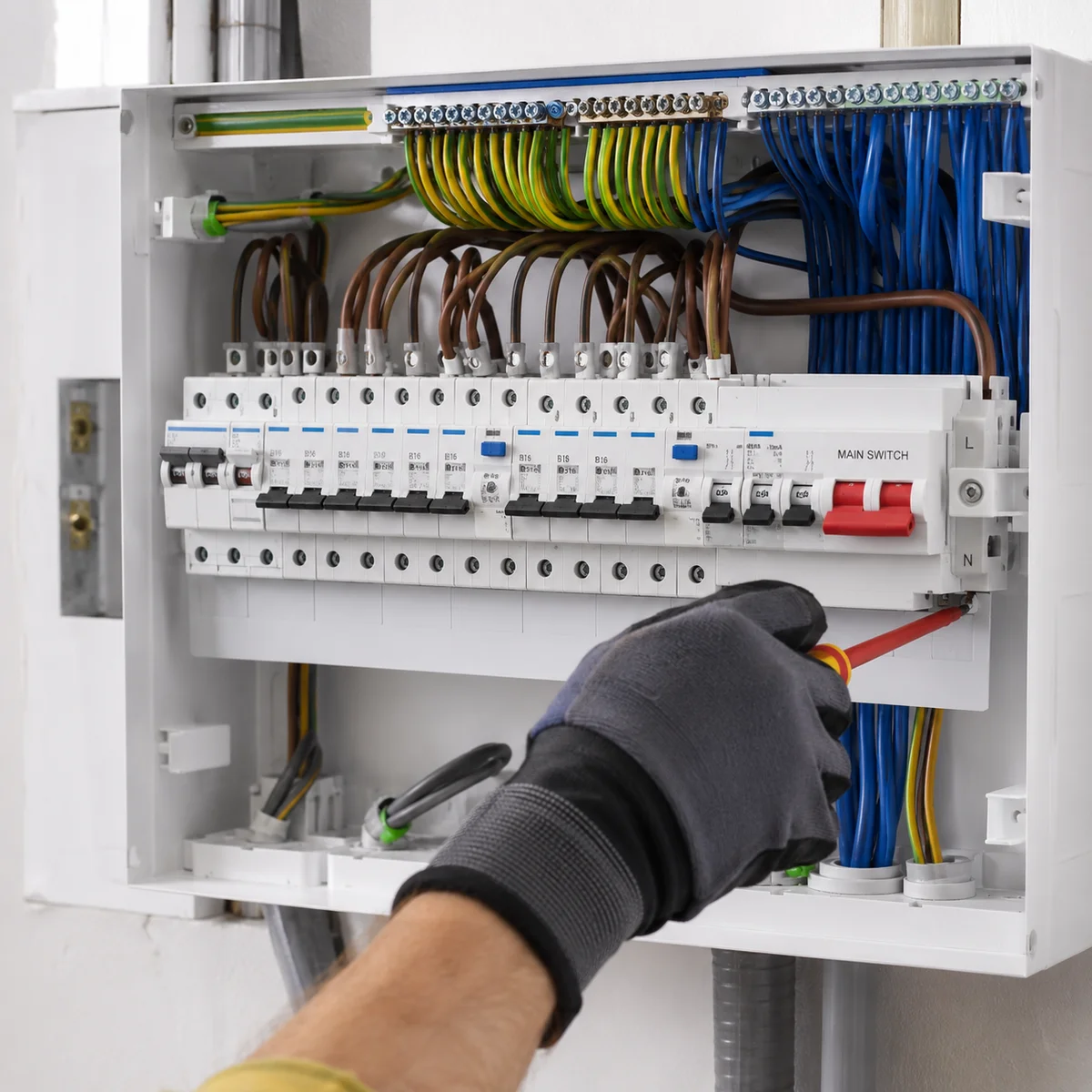
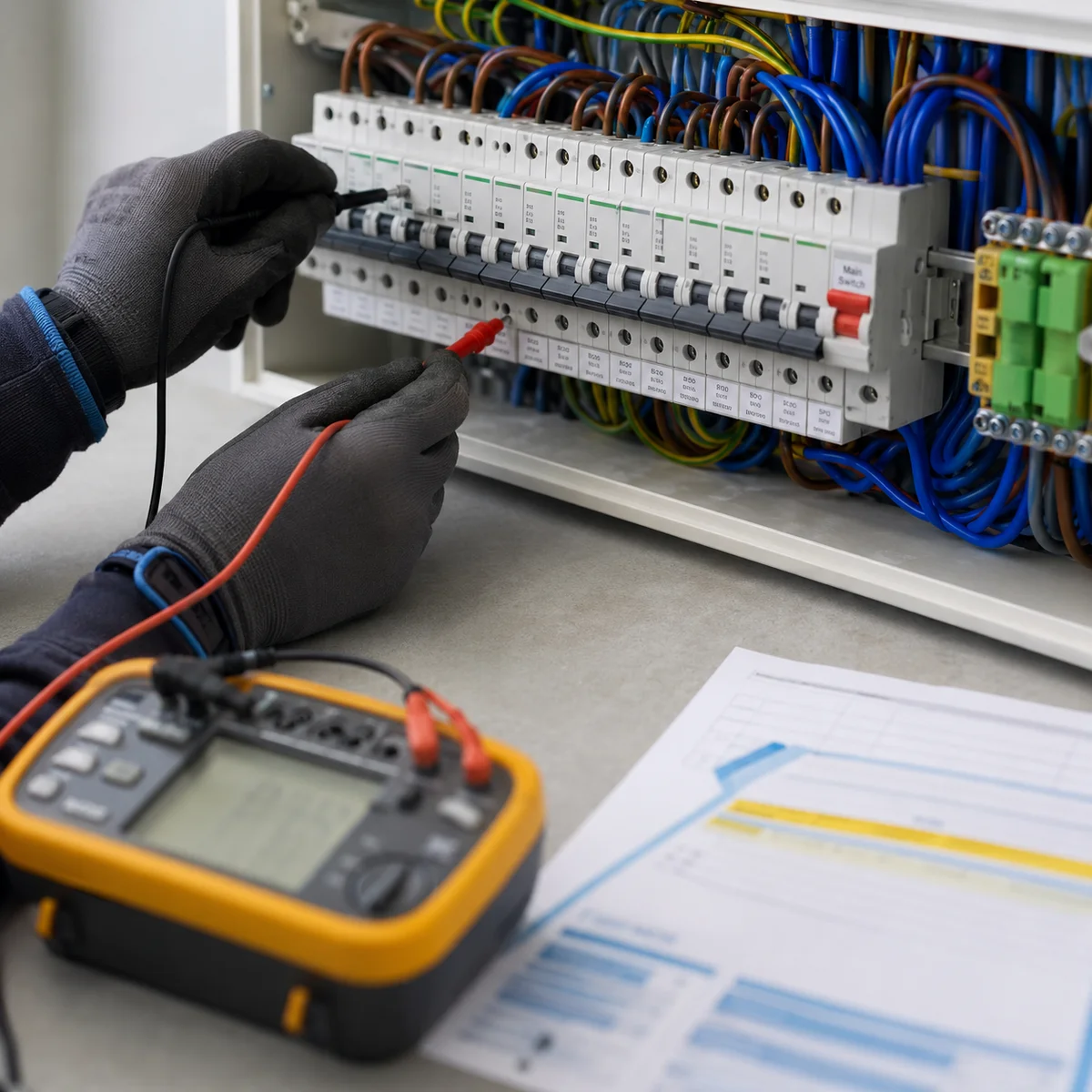
Heat pump installers need to know where the consumer unit is and what cable route is available. Solar PV installers need to know where the inverter will connect. Insulation contractors need to know which walls carry cables before they start drilling. If the electrical survey happens after other trades have started, rerouting cables through finished walls is expensive and disruptive. A half-day survey from a RECI electrician at the planning stage prevents weeks of rework later.
Frequently Asked Questions
Do I need to replace my fuse board before getting a heat pump?
In most cases, yes. Irish homes built before the mid-1990s typically have fuse boards that lack the RCD protection, earthing arrangements, and spare capacity required to safely connect a heat pump. SEAI's technical standards and IS 10101 both require that the existing installation is safe and adequate before new systems can be connected. Your RECI electrician will assess the fuse board during the initial survey and advise whether replacement is required. Consumer unit replacement typically costs €600 to €1,400, and is generally done before the heat pump installation takes place.
Is the electrical work covered by SEAI grants?
SEAI does not offer a dedicated grant for consumer unit replacement or general rewiring. However, the electrical work associated with installing a qualifying system is considered part of that system's grant. For example, the heat pump circuit and electrical connection work falls within the Heat Pump System grant. The solar PV inverter connection and export meter coordination falls within the Solar PV grant. This means the electrical work is effectively grant-supported as part of each system, but a standalone electrical upgrade without a qualifying system does not attract direct SEAI grant funding.
How do I verify a RECI-registered electrician in Ireland?
Go to safeelectric.ie and use the contractor search tool. Enter the electrician's company name or their Safe Electric registration number. The register will confirm whether they are currently authorised to carry out domestic electrical installation work and issue completion certificates. You should always check before engaging any electrician for SEAI grant work. If a contractor cannot be found on the Safe Electric register, their work will not qualify for SEAI grants and may not comply with Irish electrical regulations.
Should I add an EV charger circuit now even if I do not have an electric car?
Yes, and most RECI electricians will recommend this. When floors and walls are already opened up for heat pump and solar cabling, the marginal cost of running conduit to the garage or driveway for a future EV charger is small, typically €100 to €200 for the conduit and trunking alone. Retrofitting a charger circuit through a finished house can cost two to three times as much. Even if you do not plan to buy an electric vehicle soon, adding the conduit and a blanked consumer unit way at this stage is a straightforward future-proofing measure that adds value and avoids disruption later.
What happens with the ESB Networks export meter for solar PV?
Any solar PV system that exports electricity to the grid requires a bi-directional smart meter from ESB Networks. This meter records both import and export, enabling you to receive payment for exported electricity under the Clean Export Guarantee (CEG) scheme administered by the CRU. The application to ESB Networks is typically handled by your RECI electrician or solar PV installer as part of the installation process. It is important to begin the application process early, as ESB Networks processing times can add several weeks to the overall project timeline. Your electrician should connect the inverter but leave the export connection pending until the meter is confirmed installed.
Ready to start your home energy upgrade?
Find a RECI-registered electrician in your county, verify their Safe Electric status, and get your electrical survey booked before other trades begin.