Electrical Safety
Transfer Switch Installation in Ireland: Costs, Types and Legal Requirements
Manual and automatic transfer switch costs by county, why a changeover switch is legally required for any generator connection, and what the installation involves.
Find a registered electricianWhat Is a Transfer Switch and Why Is It Required?
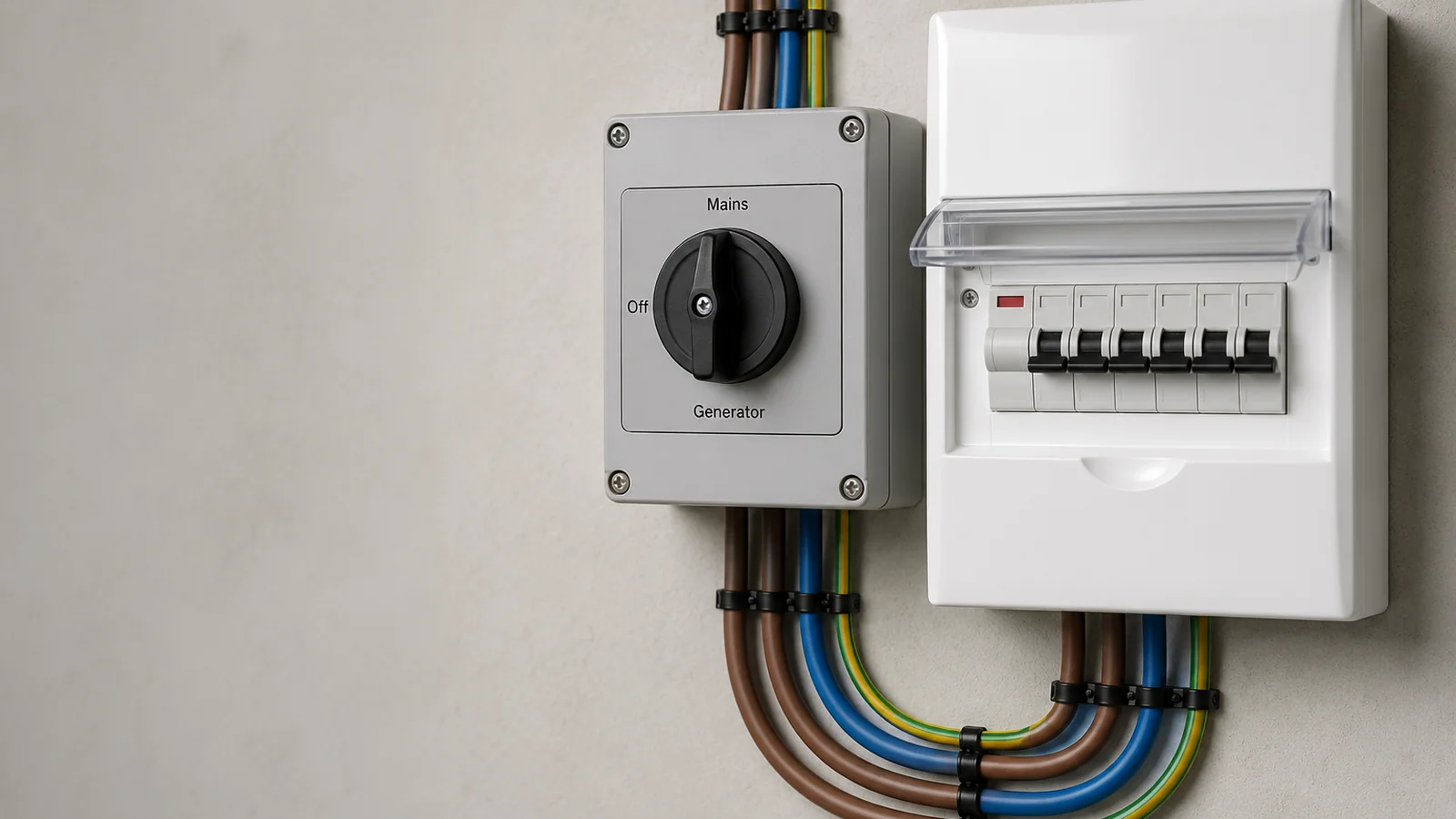
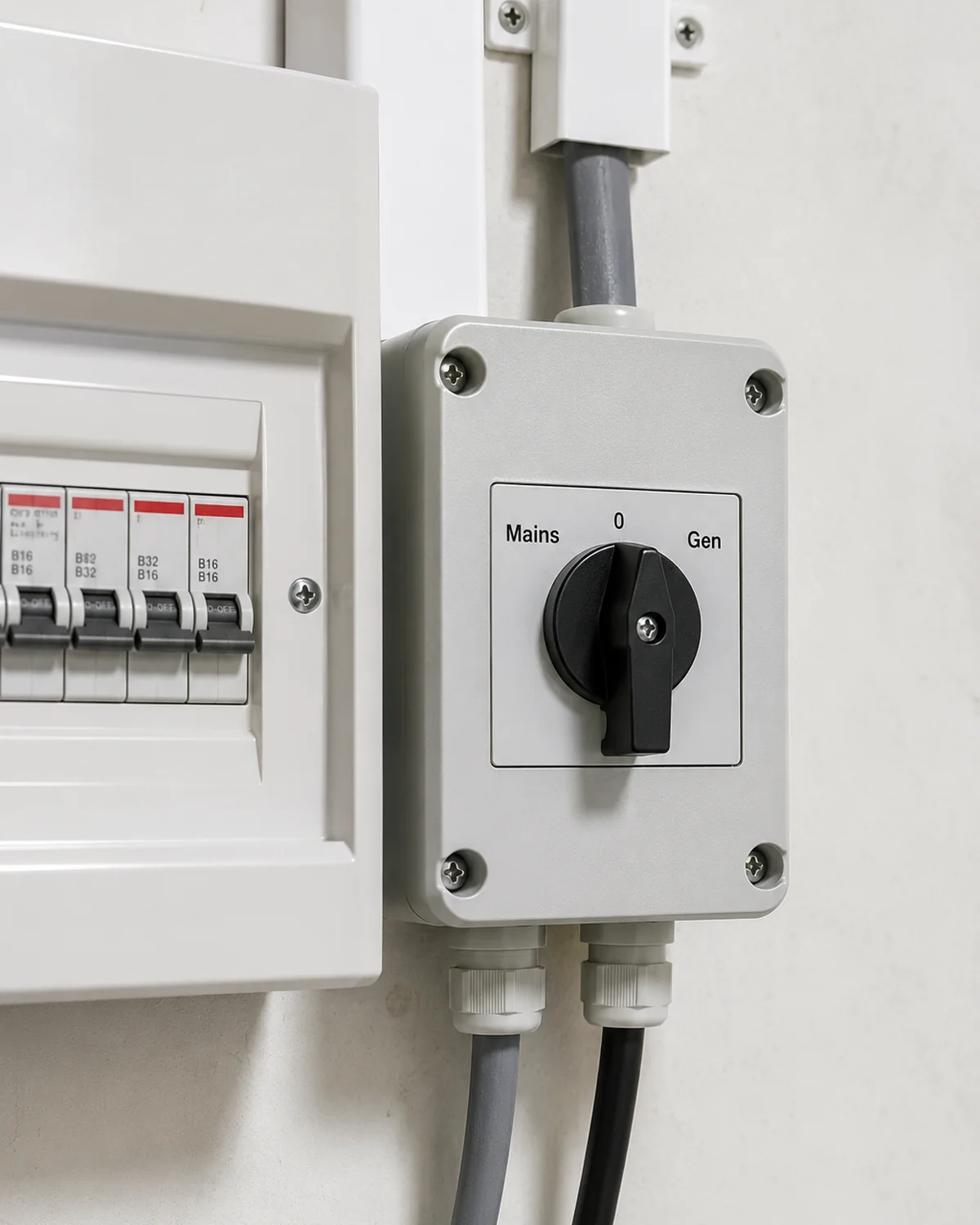
A transfer switch (also called a changeover switch or generator interlock) is a device that disconnects your property from the ESB Networks supply before connecting it to generator power. It ensures only one supply source is active at any time, preventing a process called back-feeding.
Back-feeding is extremely dangerous: generator power fed back onto the public network re-energises distribution lines that ESB engineers assume are dead while working on them. Under Irish electrical regulations and ESB Networks requirements, a transfer switch is legally required for any permanently connected generator. Installation must be carried out by a RECI-registered electrical contractor. See the full backup generator installation guide for costs and sizing.
Transfer Switch Installation Cost in Ireland 2026
Prices are for the switch installation only. They do not include the generator unit or additional cabling. Manual changeover switches cost less than automatic units.
These prices are for the transfer switch installation only. If the consumer unit needs modification to accommodate the switch, or if a long cable run to the generator is required, allow additional cost for that work.
Need a Transfer Switch Installed for Your Generator?
Find a RECI-registered electrician in your county. Every installer on Safe Electric can fit a manual or automatic transfer switch and issue the required completion certificate.
What Affects the Cost of Transfer Switch Installation?
Beyond the choice of manual or automatic, several factors influence the final installed price.
01Manual vs automatic
A manual changeover switch is wired by hand when an outage occurs. An ATS monitors the supply continuously and switches without any manual action, typically within 10 to 30 seconds of detecting a failure. ATS units cost €400 to €800 more than a manual switch.
02Single-phase vs three-phase supply
Most Irish homes are single-phase. A single-phase ATS is significantly cheaper than a three-phase unit. Three-phase ATS installations are most common on farms, small commercial properties, and larger rural homes with three-phase supply.
03Consumer unit location and access
The transfer switch is installed adjacent to the consumer unit. A consumer unit in an accessible utility room is straightforward. Awkward access, for example in a loft or behind a kitchen unit, adds labour time.
04Number of circuits transferred
A whole-house ATS that transfers all circuits costs more than an essential-circuits-only ATS that transfers only lighting, heating, and selected sockets. Essential-circuits ATS requires an additional sub-board but uses a smaller, cheaper ATS unit.
05Generator compatibility
Some ATS units are designed for a specific generator brand and include integrated start/stop control. Universal ATS units work with any generator but may require a separate start relay. Brand-specific units can cost more but simplify commissioning.
06Cable sizing
The cable between the generator and the transfer switch must be rated for the full generator output. A 10kW generator requires heavier cable than a 5kW unit. Cable cost increases with both rating and run length.
What Does Transfer Switch Installation Involve?
A straightforward manual transfer switch installation typically takes 3 to 5 hours. An ATS installation with generator commissioning takes a full day. Here is what happens at each stage.
01Survey
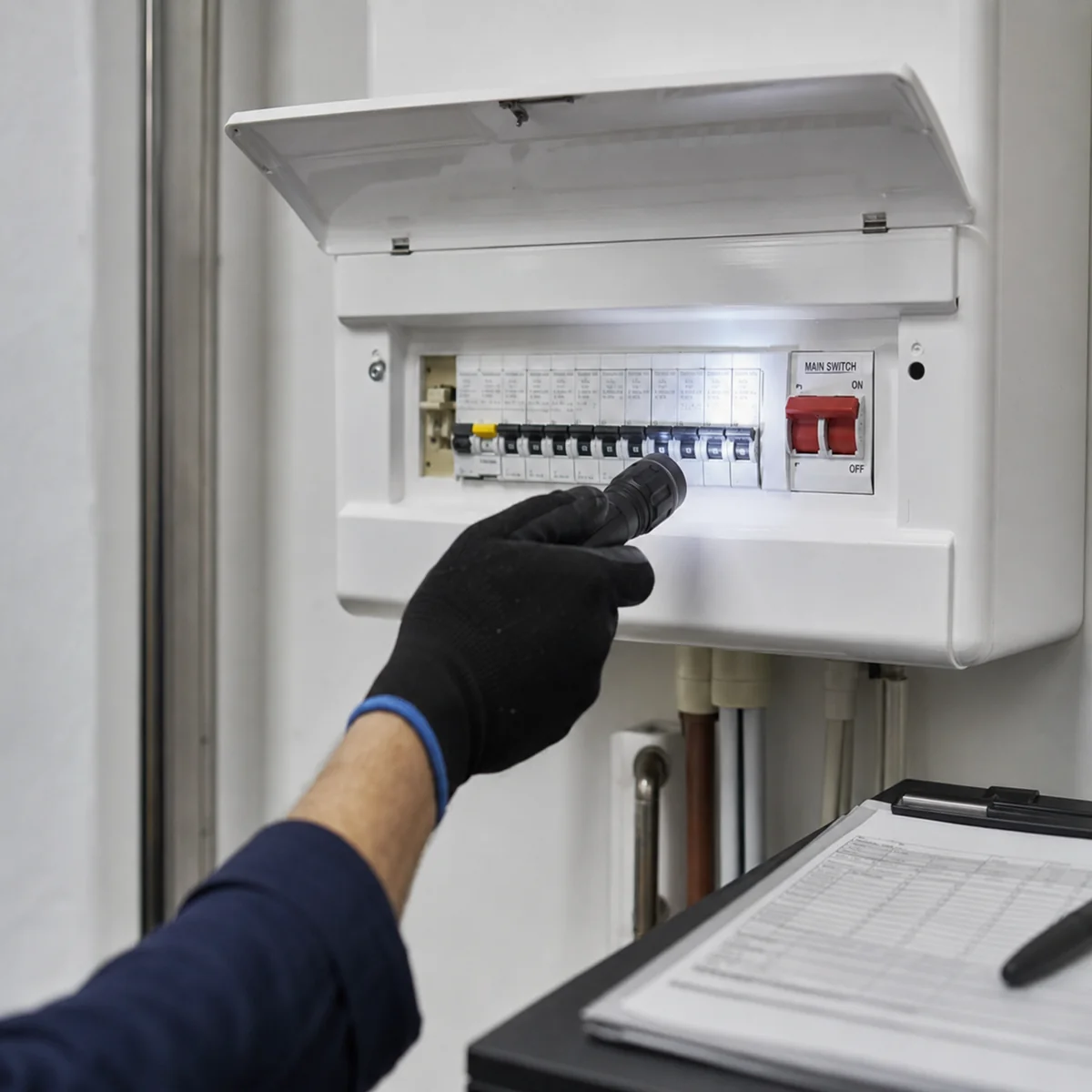
The electrician assesses the consumer unit layout, the proposed generator location, the available cable route, and confirms the appropriate transfer switch type and cable sizing for the generator output.
02Isolation
The supply is safely isolated. ESB Networks may need to be notified depending on the scope of work. The consumer unit is opened and prepared for the transfer switch connection.
03Transfer switch wired
The switch is installed between the incoming mains supply and the consumer unit. For a manual switch, this is a physical rotary or toggle device. For an ATS, it also includes the monitoring and control logic.
04Generator connection
The output cable is run from the generator to the transfer switch input. The cable is sized for the full generator output and the run is secured and protected appropriately.
05Test and commission
The manual or auto-start function is tested under load. Back-feed prevention is confirmed: the switch cannot connect both supplies simultaneously. The completion certificate is issued and the homeowner is walked through operation.
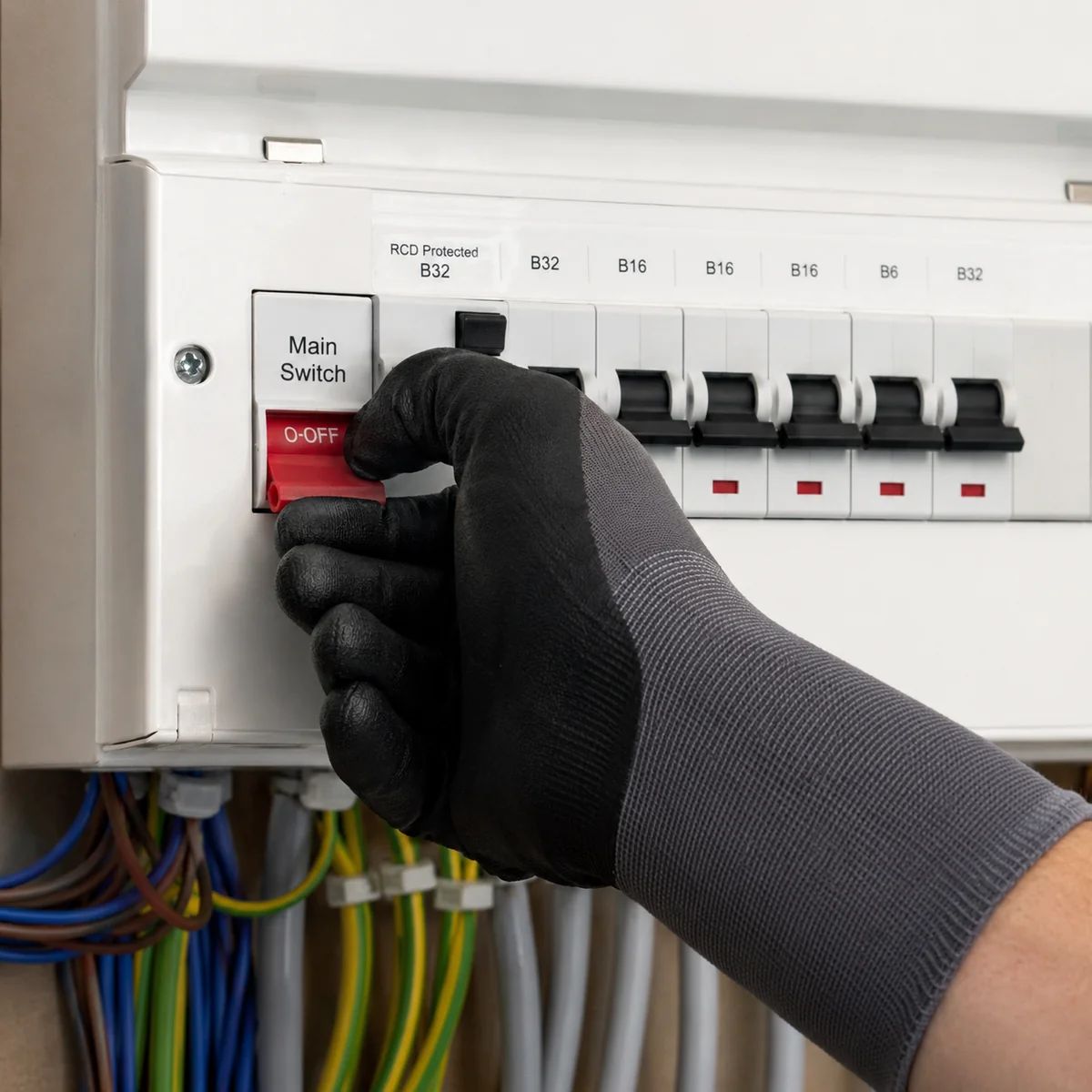
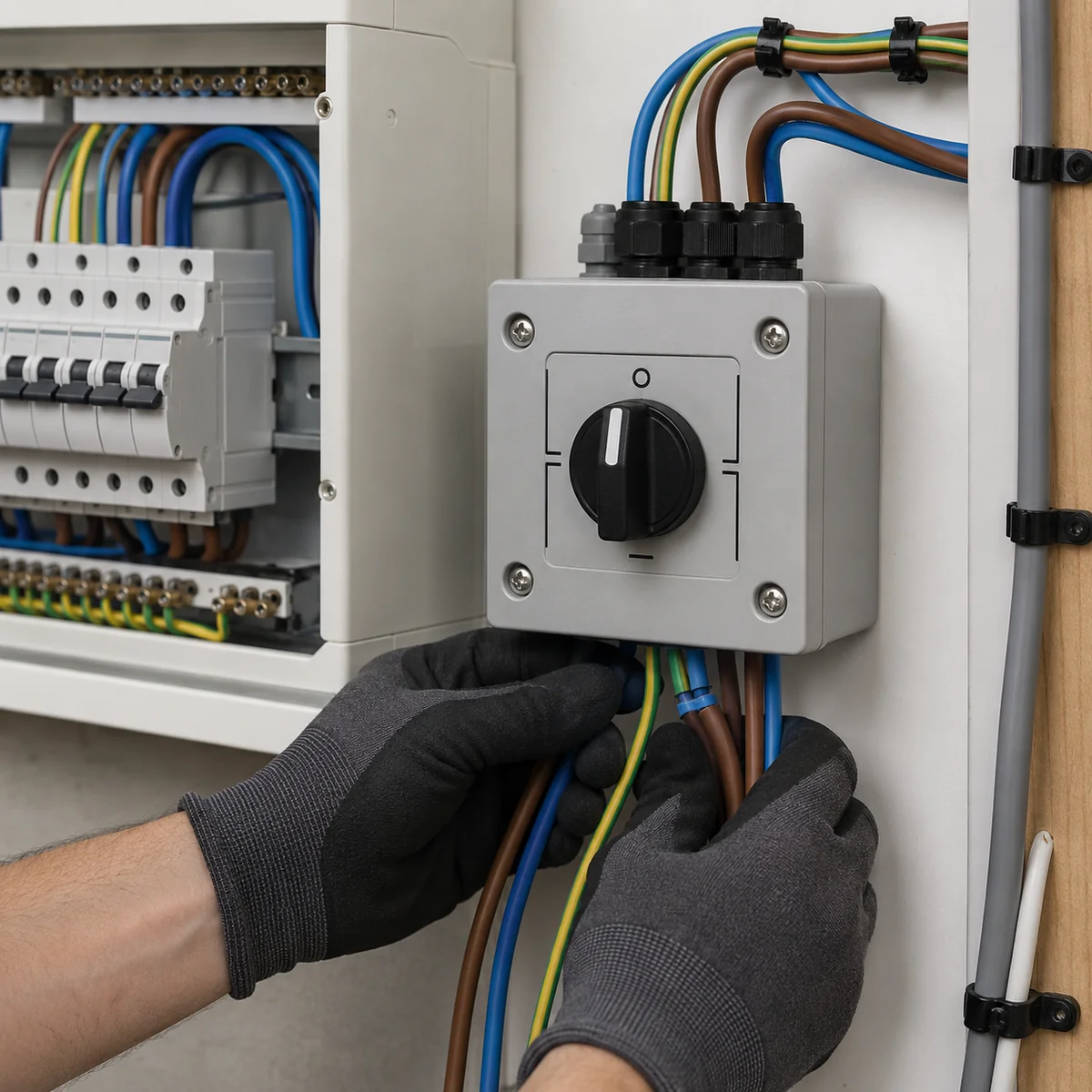
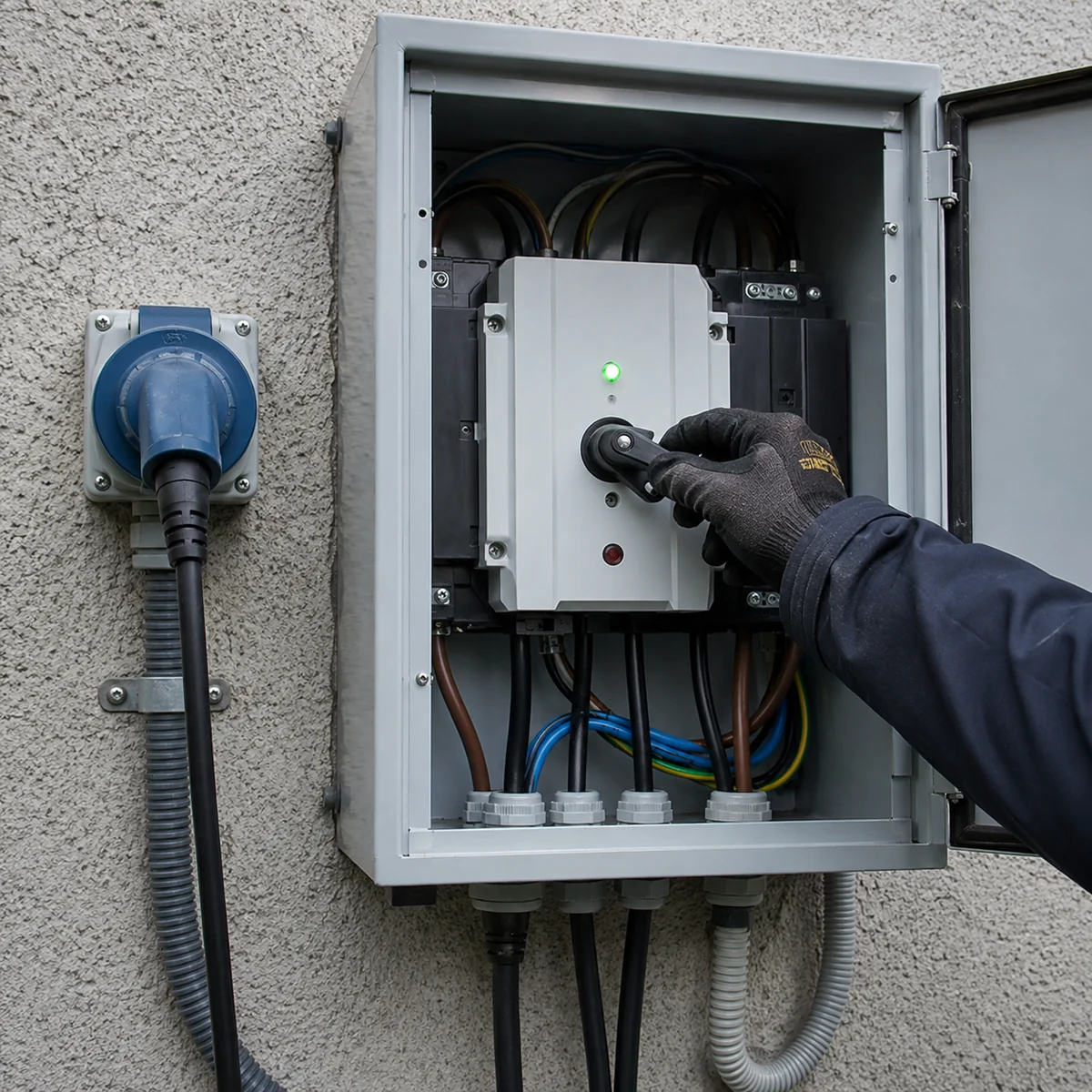
Manual Changeover Switch vs Automatic Transfer Switch
Both types are safe and legally compliant when installed by a RECI-registered contractor. The right choice depends on your property and how you use it.
Lower cost, manual operation
You physically turn the switch when power fails and again when mains returns. Simple, reliable, and easier to service. Suits properties where someone is usually present. Dublin fitted: €350 to €650
Higher cost, fully automatic
Monitors the mains supply continuously. Starts the generator and switches over automatically when it detects a failure. Essential for medical equipment, unattended properties, or remote farms. Dublin fitted: €900 to €1,800
Does ESB Networks Need to Be Notified?
For most residential transfer switch installations, ESB Networks notification is handled as part of the notifiable works process through the RECI registration scheme. Your registered electrician will advise if a separate notification to ESB Networks is required for your specific installation.
For larger commercial or farm installations, a formal application to ESB Networks for a generator connection may be required before work begins. Your electrical contractor can manage this process on your behalf.
Who Can Install a Transfer Switch in Ireland?
Transfer switch installation is restricted electrical work. It must be carried out by a RECI-registered electrical contractor who can issue a completion certificate for the installation.
An unregistered person installing a transfer switch cannot certify the work. An uncertified installation may invalidate your home insurance and will not satisfy a property solicitor on sale. Verify registration at safeelectric.ie before booking.
Transfer Switch Installation: Common Questions
Why can I not just connect a generator directly to a socket?
Connecting a generator to a socket using a back-feed cable feeds electricity backwards through your wiring and out onto the ESB distribution network. Distribution lines that ESB engineers assume are dead are re-energised without warning. This has caused fatalities. It is also illegal under Irish electrical regulations. A transfer switch is the only safe and legal way to connect a generator to your house wiring.
What is the difference between a manual and automatic transfer switch?
A manual changeover switch requires you to physically operate it when mains power fails and again when it is restored. An automatic transfer switch (ATS) continuously monitors the supply, detects a failure automatically, starts the generator, and switches the load over, all without any manual action. Both are safe and legal when installed by a registered contractor.
Does ESB Networks need to be notified about a generator connection?
For most residential installations, the RECI notifiable works process handles the necessary notifications. Your registered electrician will confirm whether a separate ESB Networks application is required for your specific installation. Larger commercial or farm connections may require a formal application to ESB Networks before work begins.
Can I install a transfer switch myself?
No. Transfer switch installation is restricted electrical work in Ireland. It must be carried out by a RECI-registered electrical contractor. An unregistered installation cannot be certified and does not meet the requirements of Irish electrical regulations, your home insurance policy, or a property conveyance.
What is back-feed and why is it dangerous?
Back-feed occurs when a generator connected to a property without a proper transfer switch sends electricity backwards through the property wiring and onto the ESB distribution network. ESB engineers working on distribution lines assume the lines are dead: back-feed re-energises them without warning and can cause electrocution. The transfer switch physically prevents both supplies from being connected at the same time.
How long does transfer switch installation take?
A manual changeover switch installation typically takes 3 to 5 hours. An automatic transfer switch installation, including commissioning the ATS with the generator and confirming auto-start behaviour, usually takes a full working day. Complex installations involving consumer unit modifications or long cable runs take longer.
Find a registered electrician for your transfer switch
Every contractor on Safe Electric is RECI-registered, can install a manual or automatic transfer switch, and will issue a completion certificate. Verified across all 26 counties.