EV Charger Installation
The single biggest growth area in the postcode. Off-street parking is near universal on the estates, so the install itself is usually simple, and the limiting factor is normally spare capacity on the existing board.

Dublin Postcode Guide
53 RECI-registered contractors covering Blanchardstown, Castleknock, Clonsilla, Mulhuddart and Clonee, every one checked against the Safe Electric register before it appears here.
Dublin 15 is one of the largest and fastest-growing postcodes in Ireland, anchored by Blanchardstown Town Centre and spreading west through Castleknock, Clonsilla, Mulhuddart, Tyrrelstown and into Clonee on the Meath border. Unlike much of inner Dublin, the housing here is predominantly from the 1980s onwards, with major new estates still being completed. The electrical infrastructure is therefore more modern, but the sheer scale of the population drives very high demand for EV charger installations, smart home wiring and additional circuits.
Each electrician listed on this page is shown with their RECI registration number, so you can check it on the Safe Electric register at safeelectric.ie. Notifiable work should be carried out and certified by a registered electrician, and Safe Electric explains what counts as notifiable. Confirm with your electrician that they will issue the completion certificate for your job.
Dublin 15 is one of the largest and fastest-growing postcodes in Ireland, and unusually for Dublin, most of its housing is recent. Blanchardstown, Clonsilla, Mulhuddart, Ongar and Clonee were built out largely from the 1990s onward, with Castleknock carrying a mix of older and newer stock. That changes the electrical profile completely: full rewires are comparatively rare here, because the wiring is not old enough to need replacing. What the postcode generates instead is upgrade and addition work on houses whose original installation was adequate at the time and is now under-provisioned.
The pattern is consistent. A house built in 1998 was wired before home working, before EV charging, before heat pumps and before the average household ran several high-draw appliances at once. The board is modern enough to be safe but often has no spare capacity, so almost every new requirement in Dublin 15 starts with the same question: is there a free way on the board, and if not, what does it take to make one. That single constraint drives more quotes in this postcode than any fault does.
Adding a circuit is the characteristic Dublin 15 job, whether it is for a charge point, a home office, a garden room or a converted attic. The indicative Dublin figures below come from real job data across the county.
We do not publish prices by postcode or county, because no published source supports them. See the published price ranges and always get a written quotation from a registered contractor for your own property.
The variable in Dublin 15 is distance and route rather than the age of the wiring. Newer estate houses often have the board in a hall or utility position and the new circuit needs to reach an attic conversion, a rear garden room or a driveway on the far side of the house. A long run with an awkward route costs more than a short one, which is why two houses on the same road can receive quite different quotes for what sounds like the same job. Ask the contractor to walk the route with you so you can see what they are pricing.
The single biggest growth area in the postcode. Off-street parking is near universal on the estates, so the install itself is usually simple, and the limiting factor is normally spare capacity on the existing board.
Common across Clonsilla, Ongar and Blanchardstown, where growing families extend upward or convert. Both need new dedicated circuits rather than a spur off an existing one.
Unlike older postcodes, the driver here is running out of ways rather than an unsafe board. It is often quoted alongside whatever new circuit prompted the call.
A properly installed garden room needs its own protected supply from the house, not an extension lead. This is one of the most frequently under-specified jobs in the postcode.
Blanchardstown is the commercial and residential hub of Dublin 15, centred on one of Ireland's largest shopping centres and the Blanchardstown Corporate Park. The residential areas span from 1980s estates like Corduff and Millstead to more recent developments at Porterstown and Whitestown. While the wiring is more modern than inner Dublin, properties from the 1980s are now at the age where consumer units need upgrading to accommodate RCDs and additional circuits.
EV charger installation is one of the most common residential jobs in Blanchardstown: off-street parking is the norm in most estates, and the SEAI home charger grant makes the economics straightforward. A RECI-registered and SEAI-registered electrician is required for the grant to be valid; the installer claims the EUR 300 on your behalf so you only pay the net cost.
Castleknock is one of Dublin 15's more established residential areas, with housing ranging from larger detached properties on the Laurel Lodge and Castleknock Park estates to newer developments near the village. The mix of property sizes and eras means the electrical work varies considerably: older properties need consumer unit upgrades, while newer homes more often need additional circuits for home offices, EV chargers or home automation systems.
Smart home wiring in Castleknock can include pre-wiring for home automation, structured cabling for broadband distribution and dedicated circuits for home cinema rooms. New circuits may be notifiable work that needs a registered electrician, while low-voltage structured cabling may not be. Check the Safe Electric guidance, or ask your electrician which parts of the job are notifiable.
Clonsilla is a quieter residential pocket within Dublin 15, built mainly in the late 1980s and 1990s along the Portersgate and Clonsilla Road corridors. Properties in this era of construction typically have consumer units with basic MCB protection but without the RCD coverage now required under current regulations. Adding RCD protection is often triggered by a home sale, a mortgage protection requirement or a landlord inspection.
Attic conversions and home extensions in Clonsilla usually involve new circuit work. New circuits may be notifiable work, so check the Safe Electric guidance and use a registered electrician who can certify it.
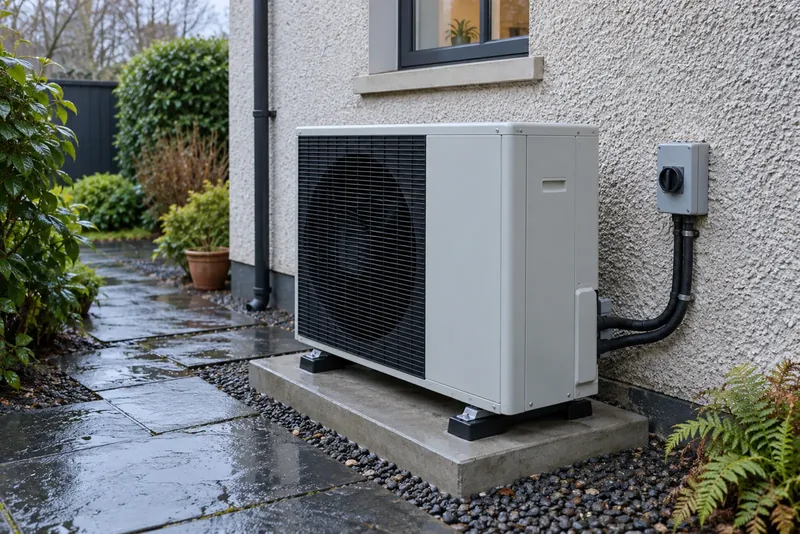
Mulhuddart and Hartstown sit at the western edge of Dublin 15, bordered by Blanchardstown to the south and the M50 to the east. The estates here were developed from the 1990s onwards, with housing that is modern by Dublin standards but now old enough that some consumer units need attention. Heat pump installations are driving a significant share of new electrical work in this area, as older gas boilers are replaced and new dedicated circuits are required.
The industrial and commercial development at the Northwest Business Park and Damastown brings a significant volume of commercial electrical work to the area. Many of the RECI-registered contractors based in Mulhuddart operate across both residential and commercial sectors.
Clonee is a newer development on the Dublin-Meath border, with most housing built from the 2000s onwards. Properties here are generally well-wired by current standards, but the rapid growth of the area means demand for additional circuits, EV chargers and smart home infrastructure is high. Newer estates built to Part L energy efficiency standards often have heat pumps already fitted, requiring dedicated electrical circuits that not all older consumer units can accommodate.
Being at the outer edge of the Dublin 15 postcode, Clonee residents sometimes struggle to attract electricians willing to travel. The contractors listed here are based in the postcode and familiar with the area's newer estate developments.
Age is rarely the issue here. The wiring in a 1990s or 2000s house is generally sound, but the board was sized for the demands of the time. Adding a charge point, an attic conversion, a garden room or a heat pump means adding load the original design did not allow for, and that is a capacity question rather than a safety one.
Look at the consumer unit for unused ways, though a free slot alone is not the whole answer, because the overall supply capacity matters too. A registered electrician assesses both before quoting. Where there is no spare capacity, the charge point and a board upgrade are normally quoted together, which is why some Dublin 15 quotes come back higher than expected.
Yes, use a registered electrician if it is getting a permanent supply from the house, which it should be. Ask for certification, and check Safe Electric guidance on notifiable work. Running an extension lead out to a garden room is not a substitute, it is an ongoing hazard, particularly where the cable crosses ground or is left out in the weather.
There is an SEAI grant toward home charge point installation for eligible properties. Terms and amounts change over time, so confirm the current position with SEAI directly rather than relying on a figure quoted by a contractor or repeated online.
An attic conversion needs its own circuits for lighting and sockets, along with smoke alarm provision that ties into the rest of the house. It is notifiable work, so it must be certified by a registered contractor, and the certification is part of what makes the conversion signable off later. Plan the electrical work at the same time as the build rather than after it.
For an emergency such as a burning smell or a total loss of power, many contractors will attend the same day. Planned work such as a charge point install or a new circuit is normally booked in advance. Dublin 15 is well served by registered contractors, so availability is generally better here than in more rural parts of the county.
For every registered contractor across the county rather than this postcode alone, seethe full Dublin listing. If the job involves a heat pump or solar, the equivalent registered installers are listed on hvacinireland.ie.
Every contractor covering Blanchardstown, Castleknock, Clonsilla, Mulhuddart and Clonee is checked against the Safe Electric register. Browse the list, ring them directly, and pay no fee to us.